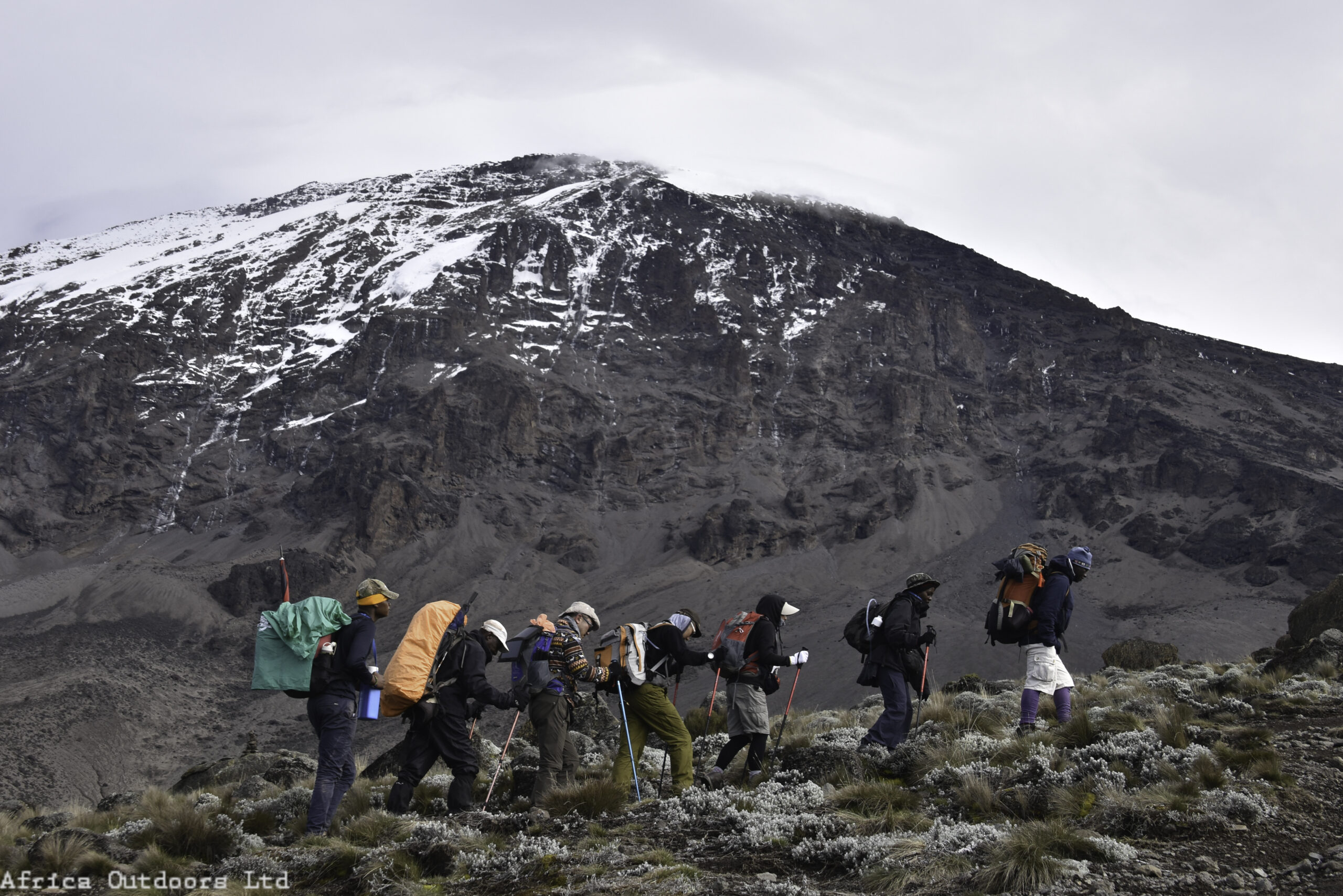
Climbing Mount Kilimanjaro is not a technical climb on the standard trekking routes, but it is a long, physically demanding high-altitude trek. You need enough endurance to walk for several hours on consecutive days, enough leg and core strength for steep and uneven terrain, and enough conditioning to handle the very long summit day.
The most important point is that fitness and acclimatization are different things. Training can prepare your muscles, heart and lungs for the physical effort, but it cannot make you immune to altitude sickness. Kilimanjaro reaches 5,895 m (19,341 ft), and the CDC recommends allowing additional days for acclimatization when possible.
Below is a practical 12-week program that can be adapted for beginners, intermediate hikers and experienced trekkers.
Kilimanjaro Training Plan: A Complete 12-Week Training Guide for Hikers
Climbing Mount Kilimanjaro is not a technical climb on the standard trekking routes, but it is a long, physically demanding high-altitude trek. You need enough endurance to walk for several hours on consecutive days, enough leg and core strength for steep and uneven terrain, and enough conditioning to handle the very long summit day.
The most important point is that fitness and acclimatization are different things. Training can prepare your muscles, heart and lungs for the physical effort, but it cannot make you immune to altitude sickness. Kilimanjaro reaches 5,895 m (19,341 ft), and the CDC recommends allowing additional days for acclimatization when possible. (CDC)
Below is a practical 12-week program that can be adapted for beginners, intermediate hikers and experienced trekkers.
At a Glance: What You Need to Train
Your Kilimanjaro preparation should develop five things:
- Walking endurance
- Uphill endurance
- Leg and core strength
- Ability to hike several days consecutively
- Mental endurance
You don’t need to become a marathon runner.
You need to become comfortable with slow, sustained movement for many hours.
How Fit Do You Need to Be?
A good target before starting Kilimanjaro is to be comfortable with:
- 4–8 hours of hiking
- Long uphill sections
- Uneven terrain
- Several consecutive days of walking
- Carrying a daypack
- Long descents
- Early starts
- Walking when tired
Kilimanjaro can involve roughly 3–8 hours of hiking on many days, while summit day can be dramatically longer. (REI)
You don’t need to be fast.
Think:
Slow + steady + consistent
rather than:
Fast + powerful + exhausted.
When Should You Start Training?
Ideally:
12 weeks before the climb
This gives most reasonably active hikers enough time to build endurance progressively.
If you are currently inactive, overweight, returning from an injury, or have not exercised for a long time, consider starting 16–20 weeks before departure.
If you already hike regularly, you may need less preparation.
The 12-Week Kilimanjaro Training Plan
The program is divided into four phases:
| Phase | Weeks | Main goal |
|---|---|---|
| Foundation | 1–3 | Build basic fitness |
| Endurance | 4–6 | Increase walking and hills |
| Mountain-specific | 7–9 | Long hikes + elevation |
| Peak & taper | 10–12 | Peak fitness, then recover |
The final week should be relatively light. General mountaineering training guidance recommends peaking before the trip and reducing training shortly beforehand to allow recovery. (REI)
PHASE 1 — FOUNDATION
Weeks 1–3
The objective is to establish consistency rather than immediately doing huge hikes.
Weekly target
- 3 cardio sessions
- 2 strength sessions
- 1 longer walk/hike
- 1 recovery day
WEEK 1
Monday
Rest
Tuesday
Brisk walk – 45 minutes
Comfortable but purposeful pace.
Wednesday
Strength – 40 minutes
- Squats — 3 × 10
- Step-ups — 3 × 10 each leg
- Lunges — 3 × 8 each leg
- Calf raises — 3 × 15
- Glute bridges — 3 × 12
- Plank — 3 × 30 seconds
Thursday
Cardio – 45 minutes
Choose:
- Cycling
- Jogging
- Incline treadmill
- Fast walking
- Elliptical
Friday
Rest or easy mobility
Saturday
Hike – 2 hours
Preferably with some hills.
Carry a light daypack.
Sunday
Easy walk – 30–45 minutes
WEEK 2
Increase slightly.
Tuesday
50-minute brisk walk
Wednesday
Strength
Thursday
50-minute cardio
Saturday
2.5-hour hike
Try to include hills.
Sunday
45-minute easy walk
WEEK 3
Tuesday
60-minute brisk walk
Wednesday
Strength
Thursday
60-minute cardio
Saturday
3-hour hike
Sunday
45–60-minute recovery walk
PHASE 2 — BUILD ENDURANCE
Weeks 4–6
Now start making your training more specific to Kilimanjaro.
The goal is to become comfortable walking uphill for extended periods.
WEEK 4
Monday
Rest
Tuesday
60-minute hill walk
Wednesday
Strength
Thursday
60-minute cardio
Friday
Rest
Saturday
3.5-hour hike
Sunday
60-minute easy walk
WEEK 5
Tuesday
70-minute hill walk
Wednesday
Strength
Thursday
60–75-minute cardio
Saturday
4-hour hike
Sunday
60–90-minute easy walk
WEEK 6
This is your first major progression week.
Tuesday
75-minute hill session
Wednesday
Strength
Thursday
60-minute cardio
Saturday
4.5–5-hour hike
Sunday
2-hour easy hike
This is important because Kilimanjaro isn’t just one long walk.
You’re going to walk:
Day 1 → Day 2 → Day 3 → Day 4 → Day 5 → …
Your body needs to learn how to recover while continuing to move.
PHASE 3 — MOUNTAIN-SPECIFIC TRAINING
Weeks 7–9
This is where your preparation starts looking much more like Kilimanjaro.
Your priority becomes:
Time on feet + hills + consecutive hiking days.
REI’s mountaineering guidance recommends progressively building day hikes toward the duration, elevation gain and pack demands of the actual trip. (REI)
WEEK 7
Tuesday
75-minute hill workout
Wednesday
Strength
Thursday
75-minute cardio
Saturday
5-hour mountain hike
Carry your intended daypack.
Sunday
2.5-hour hike
Keep Sunday slower.
WEEK 8
Tuesday
90-minute hill walk
Wednesday
Strength
Thursday
60–75-minute cardio
Saturday
5–6-hour hike
Sunday
3-hour hike
This is an important weekend.
You are teaching your body:
“I can walk again even when yesterday’s hike made me tired.”
WEEK 9
This is one of your most important training weeks.
Tuesday
90-minute hill session
Wednesday
Strength
Thursday
60-minute easy cardio
Saturday
6–7-hour hike
Sunday
3–4-hour hike
You don’t need to hike extremely fast.
Focus on:
steady pace + good technique + controlled breathing.
PHASE 4 — PEAK TRAINING
Weeks 10–11
You should now be approaching your strongest training period.
WEEK 10
Tuesday
90-minute hill workout
Wednesday
Strength
Thursday
60-minute cardio
Saturday
7–8-hour hike
Sunday
3-hour recovery hike
This should be challenging but controlled.
You should finish thinking:
“I’m tired, but I could continue if necessary.”
Not:
“I completely destroyed myself.”
WEEK 11
This is your final major training week.
Tuesday
75-minute hill workout
Wednesday
Strength
Thursday
60-minute cardio
Saturday
6-hour hike
Sunday
2–3-hour easy hike
Don’t attempt to set a personal speed record.
Your goal is to finish your training feeling strong.
WEEK 12 — TAPER
Do not try to gain fitness during the final week.
Your fitness has already been built.
Now you need recovery.
Monday
Rest
Tuesday
45-minute easy walk
Wednesday
30-minute easy cardio
Thursday
Rest
Friday
30-minute easy walk
Saturday
20–30-minute relaxed walk
Sunday
Rest
Get plenty of sleep.
The goal is to arrive in Tanzania:
Fresh—not exhausted.
Complete 12-Week Schedule
| Week | Long hike | Second hike | Strength | Cardio |
|---|---|---|---|---|
| 1 | 2 hr | 45 min | 2× | 2× |
| 2 | 2.5 hr | 45 min | 2× | 2× |
| 3 | 3 hr | 60 min | 2× | 2× |
| 4 | 3.5 hr | 60 min | 2× | 2× |
| 5 | 4 hr | 60–90 min | 2× | 2× |
| 6 | 5 hr | 2 hr | 2× | 2× |
| 7 | 5 hr | 2.5 hr | 2× | 2× |
| 8 | 6 hr | 3 hr | 2× | 2× |
| 9 | 7 hr | 3–4 hr | 1–2× | 2× |
| 10 | 7–8 hr | 3 hr | 1–2× | 2× |
| 11 | 6 hr | 2–3 hr | 1× | 2× |
| 12 | Taper | Easy walking | None/light | Easy |
This is a general training template, not a medical prescription. If you’re inactive, have a medical condition, or plan to begin vigorous exercise, discuss the program with a healthcare professional first. CDC guidance recommends consultation before vigorous activity for people who have been inactive or have certain health conditions. (CDC)
THE MOST IMPORTANT PART: HILL TRAINING
If you live somewhere without mountains, don’t worry.
You can train using:
Stairs
Walk stairs continuously for:
10 → 20 → 30 → 45+ minutes
Treadmill
Use:
5% → 8% → 10% → 12% incline
Hill repeats
Find a hill that takes:
5–15 minutes to climb.
Walk up.
Walk down.
Repeat.
Step-ups
Use a stable step or platform.
For example:
3 × 15 each leg
Progress gradually.
Strength Training for Kilimanjaro
Strength isn’t about becoming a bodybuilder.
You want strong:
- Quadriceps
- Hamstrings
- Glutes
- Calves
- Core
- Hips
Exercise 1: Squats
3 × 10–15
Builds:
- Quads
- Glutes
- Hips
Exercise 2: Step-Ups
3 × 10 each leg
One of the most useful exercises because it resembles climbing uphill.
Exercise 3: Walking Lunges
3 × 10 each leg
Useful for:
- Leg strength
- Balance
- Stability
Exercise 4: Calf Raises
3 × 15–20
Useful for long uphill and downhill walking.
Exercise 5: Glute Bridges
3 × 12–15
Strengthens the posterior chain.
Exercise 6: Plank
3 × 30–60 seconds
Builds core endurance.
Exercise 7: Side Plank
3 × 20–45 seconds each side
Useful for stability.
Example Strength Session
Do this twice per week during the early and middle phases:
Warm-up
5–10 minutes
Main workout
Squats
3 × 10
Step-ups
3 × 10 each leg
Lunges
3 × 10 each leg
Calf raises
3 × 15
Glute bridges
3 × 15
Plank
3 × 45 seconds
Side plank
2 × 30 seconds each side
Cool down
5–10 minutes
Cardio Training
You don’t have to run.
In fact, walking uphill is highly specific to Kilimanjaro.
Good options include:
Excellent
- Hiking
- Brisk uphill walking
- Stair climbing
- Incline treadmill
Good
- Cycling
- Jogging
- Elliptical
- Swimming
Best approach
Combine different forms of cardio.
For example:
Tuesday: Hill walking
Thursday: Cycling
Saturday: Hiking
CDC adult activity guidance recommends at least 150 minutes of moderate aerobic activity per week plus muscle-strengthening activities on at least two days as a general health baseline. A Kilimanjaro-specific program can progressively go beyond that baseline through longer hiking sessions. (CDC)
Don’t Train Too Fast
One of the biggest training mistakes is increasing everything simultaneously.
Don’t do this:
Distance ↑
Speed ↑
Elevation ↑
Weight ↑
Training days ↑
all in the same week.
Instead, increase gradually.
If your knees begin hurting, reduce the workload.
If your feet develop persistent pain or blisters, address the problem before increasing mileage.
Train With Your Hiking Boots
Don’t arrive in Tanzania with brand-new boots.
Start using your intended footwear during training.
By the final month, you should know:
- Where your boots rub
- Which socks work
- Whether your toes hit the front during descent
- Whether you need different insoles
- How your feet respond after 5–7 hours
Train With Your Daypack
Your actual Kilimanjaro daypack should also be tested.
Start light.
For example:
3–4 kg
and gradually work toward the weight you expect to carry.
You generally shouldn’t need to carry your main luggage because trekking crews carry the bulk of expedition equipment on commercial climbs.
Practice Descending
Many hikers focus entirely on uphill training.
That’s a mistake.
Downhill walking can put considerable stress on:
- Knees
- Quadriceps
- Ankles
- Feet
Include downhill hiking in your training whenever possible.
Your body needs to learn:
uphill → summit → downhill
Practice Consecutive Hiking Days
This may be one of the most valuable parts of your preparation.
Try:
Saturday
5-hour hike
Sunday
3-hour hike
Later:
Saturday
6–7-hour hike
Sunday
3–4-hour hike
You don’t need to do this every weekend.
Once every few weeks is enough during the specific-training phase.
Train Your Feet
Your feet are going to work hard.
During training:
- Use your hiking socks
- Test your boots
- Keep toenails trimmed
- Learn where you develop hot spots
- Carry blister treatment
- Practice downhill walking
Never wait until a blister becomes severe before dealing with it.
Practice Eating During Long Hikes
Your Kilimanjaro training is also an opportunity to discover what food works for you.
During long hikes, experiment with:
- Energy bars
- Bananas
- Nuts
- Dried fruit
- Chocolate
- Sandwiches
- Biscuits
- Sports drinks
Don’t try an entirely new nutrition strategy on summit day.
Hydration Training
Practice drinking regularly during your long hikes.
Learn:
- How much you normally drink
- What bottle system works
- Whether you prefer bottles or a hydration bladder
- How easily you can access your water
Don’t deliberately force excessive water intake.
Mental Training
Kilimanjaro isn’t only a physical challenge.
Summit night can be mentally difficult because you’re:
- Sleep-deprived
- Cold
- Tired
- At extreme altitude
- Moving slowly
- Walking in darkness
Practice staying calm when tired.
During long hikes, break the day into small objectives:
Next hill
→
Next rest
→
Next kilometre
→
Next camp
This mental strategy can be useful on summit night.
Training for “Pole Pole”
Kilimanjaro is not a race.
The Swahili expression:
Pole pole
means slowly, slowly.
Your training should therefore include slow long-distance hiking.
Don’t make every hike a speed workout.
You need to become comfortable walking for a long time at a sustainable pace.
Can Running Prepare You for Kilimanjaro?
Yes, running can improve cardiovascular fitness.
But running alone isn’t ideal preparation.
Someone who can run 10 km quickly may still struggle with:
- 7-hour hiking days
- Steep terrain
- Long descents
- Consecutive days
- Carrying a backpack
Therefore, combine running with:
hiking + hills + strength training.
What If You Live Somewhere Flat?
This is a common problem.
You can substitute elevation with:
Stair machine
Excellent.
Treadmill incline
Excellent.
Stadium stairs
Excellent.
Hill repeats
Excellent.
Step-ups
Excellent.
Weighted stair walking
Useful later in your training, but progress gradually.
What If You Live at High Altitude?
This can be useful for general conditioning, but remember:
Living at altitude is not the same as training for the physical demands of Kilimanjaro.
You still need long hiking, strength and endurance training.
Also, previous altitude exposure doesn’t guarantee immunity from altitude illness. Individual responses vary.
Can I Train at Home?
Absolutely.
A simple home program can use:
- Stairs
- Backpack
- Step
- Bodyweight squats
- Lunges
- Calf raises
- Planks
- Walking
You don’t need an expensive gym membership.
Home Kilimanjaro Workout
30–40 minutes
Warm-up — 5 minutes
Then:
Squats
15
Step-ups
10 each leg
Lunges
10 each leg
Calf raises
20
Glute bridges
15
Plank
45 seconds
Rest 60–90 seconds.
Repeat 3 rounds.
Finish with:
10–20 minutes brisk walking or stairs.
Sample Weekly Schedule
A practical intermediate schedule might look like:
| Day | Training |
|---|---|
| Monday | Rest |
| Tuesday | Hill walking 60–90 min |
| Wednesday | Strength 45–60 min |
| Thursday | Cardio 45–60 min |
| Friday | Rest / mobility |
| Saturday | Long mountain hike |
| Sunday | Recovery hike/walk |
This provides a good balance between training and recovery.
How to Know You’re Ready
About 2–3 weeks before departure, you should ideally be able to complete something like:
Test hike
6–8 hours
with:
- Significant uphill walking
- Uneven terrain
- Your hiking boots
- Your daypack
- Your hiking socks
- Your normal food
- Your normal hydration system
Then, ideally:
3–4 hours the following day.
You don’t need to reach Kilimanjaro-level altitude during this test.
You’re testing your physical endurance, not trying to artificially reproduce 5,895 m.
What Training Cannot Do
This is extremely important.
Training can improve:
Strength
Endurance
Cardiovascular fitness
Walking economy
Confidence
But training cannot guarantee that you won’t experience altitude sickness.
Altitude acclimatization occurs primarily through exposure to altitude itself. The CDC recommends gradual ascent and additional acclimatization time; fitness alone does not substitute for this. (CDC)
Consider an Altitude Acclimatization Strategy
For people who have the time, the CDC’s East Africa guidance notes that prior exposure to places such as:
- Ngorongoro Crater — approximately 2,286 m
- Mount Meru — approximately 4,566 m
- Point Lenana on Mount Kenya — approximately 4,895 m
can provide useful altitude exposure before Kilimanjaro. (CDC)
This is not a guarantee against altitude sickness, and your overall itinerary should be discussed with your trekking operator and, where appropriate, a travel-medicine professional.
Choose Your Kilimanjaro Route Carefully
Training and route selection work together.
A shorter itinerary means less time to acclimatize.
For example:
5-day Marangu
Very compressed.
6-day Marangu
More time.
6-day Machame
Possible, but relatively compressed.
7-day Machame
More gradual.
8-day Lemosho
Longer approach.
8–9-day Northern Circuit
More time on the mountain.
The CDC specifically recommends adding 1–2 days to planned Kilimanjaro ascents to facilitate acclimatization, particularly for routes marketed as 4–6 days.
The Final 48 Hours Before Kilimanjaro
Don’t try to cram in extra training.
Avoid:
❌ 20 km run
❌ Huge mountain hike
❌ Heavy leg workout
❌ New boots
❌ New supplements
❌ Deliberate dehydration
❌ All-night travel without rest
Instead:
Walk lightly
Stretch/mobilize
Eat normally
Hydrate normally
Sleep
Prepare your equipment
Relax
Kilimanjaro Training Checklist
Before departure, ask yourself:
Fitness
☐ Can I walk for 6+ hours?
☐ Can I walk uphill for extended periods?
☐ Can I hike two consecutive days?
☐ Are my legs strong enough for long descents?
Equipment
☐ Have I broken in my boots?
☐ Have I tested my socks?
☐ Have I tested my daypack?
☐ Have I tested my rain gear?
☐ Have I tested my trekking poles?
Nutrition
☐ Do I know which snacks work for me?
☐ Do I know my hydration system?
Mental preparation
☐ Am I comfortable walking slowly?
☐ Am I prepared for cold?
☐ Am I prepared for a long summit night?
☐ Do I understand altitude sickness?
Medical
☐ Have I discussed altitude travel with my healthcare professional if appropriate?
☐ Do I understand the warning signs of serious altitude illness?
Beginner, Intermediate and Advanced Training
Beginner
If you rarely exercise:
Start 16–20 weeks before Kilimanjaro.
Focus on:
- Walking
- Hills
- Basic strength
- Gradual progression
Don’t immediately attempt 6-hour hikes.
Intermediate
If you exercise several times per week:
12 weeks may be appropriate.
Focus on:
- Long hikes
- Hills
- Strength
- Consecutive hiking days
Experienced Hiker
If you already regularly hike:
8–12 weeks of mountain-specific preparation may be sufficient.
Focus on:
- Elevation gain
- Long days
- Back-to-back hikes
- Pack training
- Summit-day endurance
The Biggest Training Mistakes
1. Waiting until the last month
You can’t build endurance overnight.
2. Only running
Running doesn’t fully replicate long mountain hiking.
3. Ignoring strength
Strong legs make climbing and descending easier.
4. Never hiking downhill
Descending is a major part of Kilimanjaro.
5. Training only once a week
Consistency matters.
6. Increasing mileage too quickly
This increases injury risk.
7. Wearing new boots on the mountain
Always break them in.
8. Ignoring recovery
Rest is part of training.
9. Training too hard immediately before departure
You want to arrive recovered.
10. Assuming fitness prevents altitude sickness
It doesn’t.
The Ideal Kilimanjaro Training Formula
Think of your preparation as:
40% hiking endurance
25% hill/elevation training
20% strength
10% cardio cross-training
5% mobility/recovery
The exact percentages aren’t scientifically fixed—they’re a practical way to prioritize training that resembles the demands of the trek.
The most important training component is specificity: progressively spending more time walking and hiking, including hills and consecutive days. REI similarly recommends building toward the duration, elevation and pack demands of the actual trip. (REI)
One Week Before Kilimanjaro
Your job is no longer to become fitter.
Your job is to arrive:
Rested + healthy + confident + prepared.
Do light exercise.
Get enough sleep.
Check your equipment.
Prepare your documents.
Avoid unnecessary physical stress.
Final Kilimanjaro Training Advice
You don’t need to become an elite athlete to climb Kilimanjaro.
You need to become durable.
You need to be able to wake up tired and still walk.
You need to walk uphill slowly.
You need to handle several consecutive days.
You need strong legs for the descent.
And you need to understand that fitness cannot replace acclimatization.
A good training program therefore combines:
Long hikes + hill training + strength + recovery + gradual progression.
If you have 12 weeks, follow the plan above consistently rather than trying to train extremely hard for a few weeks and then stopping.
And remember: Kilimanjaro reaches 5,895 m, so physical preparation is only one part of the preparation. Choosing an itinerary that allows adequate acclimatization is equally important.