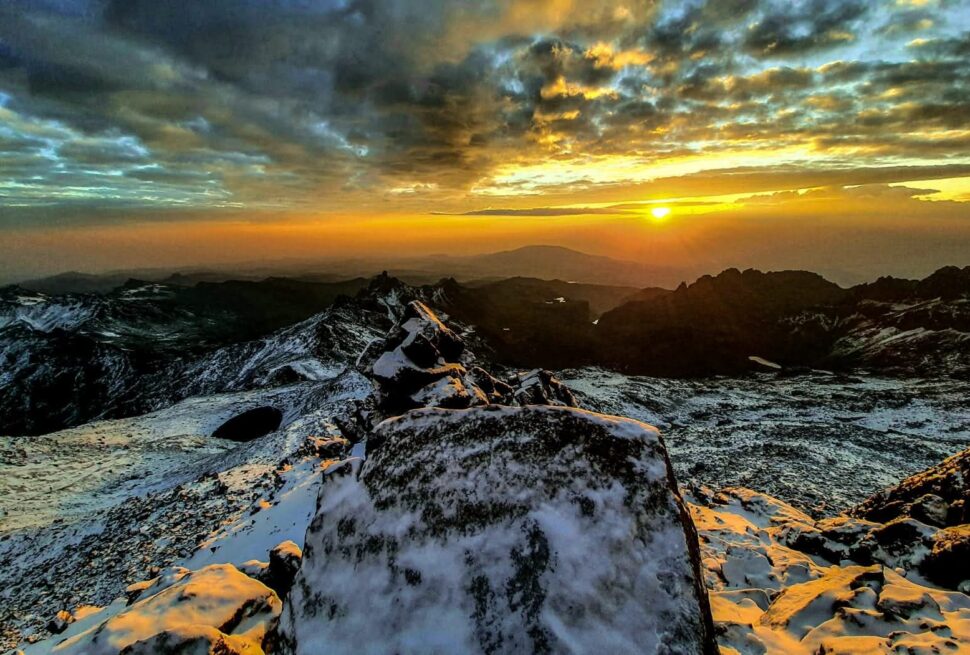
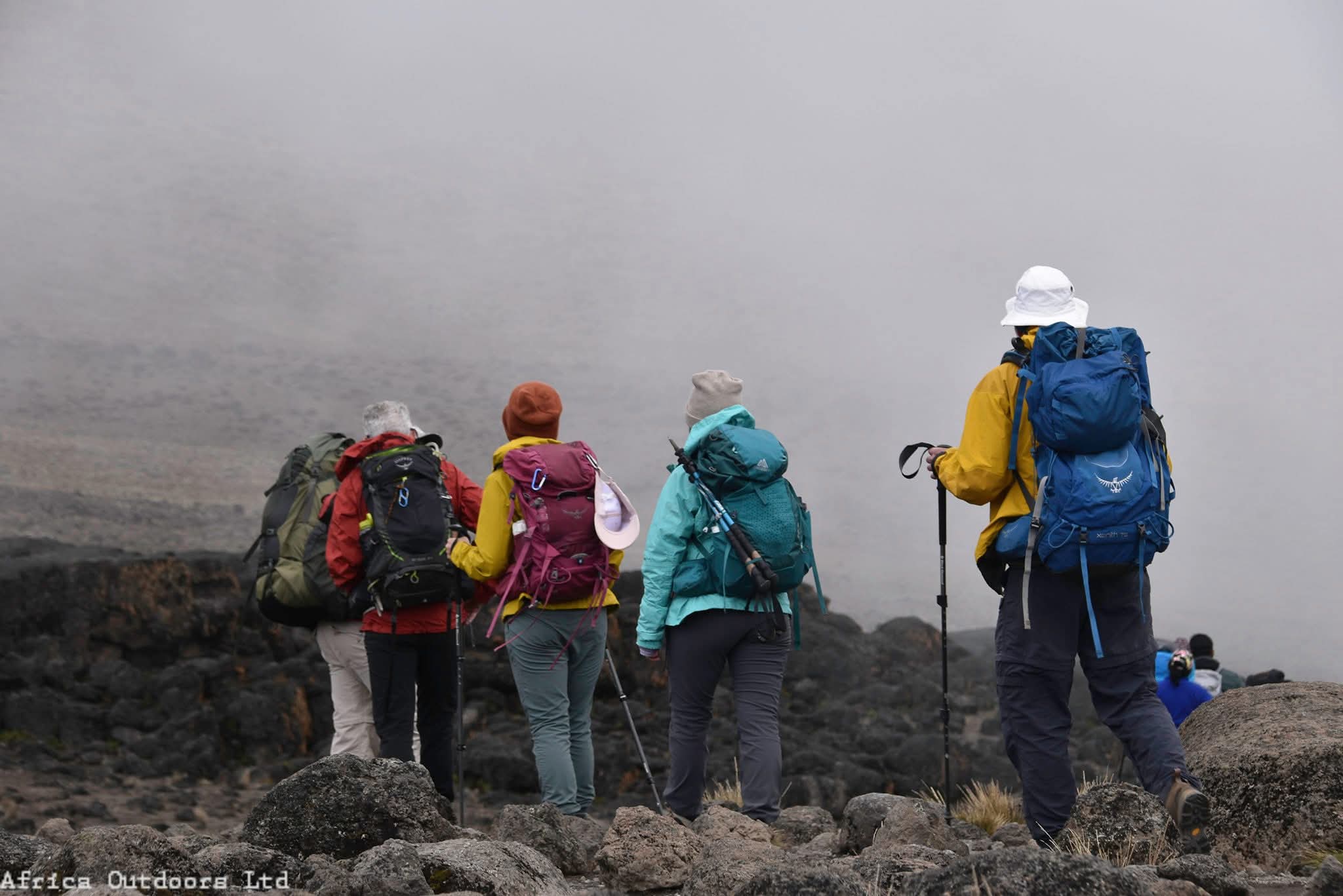
Mount Kilimanjaro reaches 5,895 metres (19,341 feet) above sea level, making altitude one of the most important challenges hikers need to understand before attempting the climb.
Unlike technical mountaineering, reaching Uhuru Peak does not normally require ropes or advanced climbing skills on the standard trekking routes. However, altitude can affect anyone, regardless of age, fitness or previous hiking experience. The CDC specifically notes that physical fitness does not protect someone from altitude illness. (CDC)
The good news is that altitude illness can often be reduced through gradual acclimatization, sensible pacing, appropriate itineraries and early recognition of symptoms.
What Is Altitude Sickness?
Altitude sickness, also called altitude illness, occurs when your body has difficulty adapting to the reduced oxygen availability at higher elevations.
As you climb higher, atmospheric pressure decreases. This means each breath contains less available oxygen than it does at sea level.
Kilimanjaro is particularly challenging because hikers can travel from relatively low elevation around Moshi to almost 5,900 m within several days. The CDC identifies altitude illness as the most common major health risk for people climbing mountains in East Africa. (CDC)
Altitude illness includes three main conditions:
- Acute Mountain Sickness (AMS)
- High-Altitude Cerebral Edema (HACE)
- High-Altitude Pulmonary Edema (HAPE)
AMS is the most common and generally less severe. HACE and HAPE are rare but potentially life-threatening emergencies requiring immediate action. (CDC)
Why Does Kilimanjaro Cause Altitude Problems?
The problem isn’t that there is literally no oxygen at the summit.
Rather, atmospheric pressure is much lower, so the partial pressure of oxygen available to your lungs decreases.
At approximately 3,050 m, the inspired oxygen pressure is only about 69% of that at sea level, according to the CDC. At Kilimanjaro’s summit, the reduction is substantially greater. (CDC)
Your body needs time to respond.
During acclimatization, your breathing increases and your body makes other physiological adjustments that improve oxygen delivery.
The initial acclimatization process is particularly important during the first 3–5 days after ascent. (CDC)
Who Can Get Altitude Sickness?
Almost anyone who is not acclimatized can develop altitude illness.
This includes:
- Young hikers
- Older hikers
- Very fit hikers
- Experienced mountaineers
- First-time hikers
- Runners
- Athletes
Being physically fit does not guarantee protection.
The CDC notes that susceptibility varies between individuals and that there is no simple test that can reliably predict who will develop altitude illness. Previous personal experience at a similar altitude and ascent rate is one of the better indicators, but it is not foolproof. (CDC)
When Does Altitude Sickness Start?
Altitude illness can occur once you reach elevations where your body has not yet acclimatized.
The risk becomes particularly relevant above approximately 2,450–2,500 m.
Symptoms of AMS commonly begin 2–12 hours after arriving at a higher altitude or after ascending, often during or after the first night. (CDC)
On Kilimanjaro, symptoms can therefore appear several days before summit day.
Acute Mountain Sickness (AMS)
AMS is the most common form of altitude illness.
Think of it as a condition that can resemble a bad hangover after gaining altitude.
Common symptoms include:
- Headache
- Tiredness
- Dizziness
- Nausea
- Loss of appetite
- Vomiting
- Poor sleep
- General weakness
The classic presentation involves a headache accompanied by at least one additional symptom such as nausea, dizziness, fatigue or loss of appetite. (CDC)
How Serious Is AMS?
Mild AMS is usually not life-threatening.
However, it should never be ignored.
The most important rule for hikers is:
Do not continue ascending to sleep at a higher altitude while experiencing worsening altitude symptoms.
The CDC advises that someone with altitude illness should not ascend further until symptoms have resolved, and worsening symptoms despite rest at the same altitude are a reason to descend. (CDC)
What Should You Do If You Develop Mild AMS?
If symptoms are mild:
1. Stop ascending
Don’t continue to a higher sleeping altitude while symptoms are present.
2. Tell your guide
Don’t hide your symptoms because you’re worried about missing the summit.
3. Rest
Reduce physical exertion.
4. Monitor your symptoms
Your guide team should continue assessing your condition.
5. Consider descent if symptoms worsen
Descent is one of the most effective treatments for altitude illness.
The CDC notes that symptoms can improve rapidly after descending approximately 300 m or more, although the appropriate descent depends on the severity of the illness and circumstances. (CDC)
High-Altitude Cerebral Edema (HACE)
HACE is a much more serious form of altitude illness.
It involves swelling of the brain and can become fatal if not treated promptly.
Warning signs include:
- Confusion
- Altered mental state
- Severe drowsiness
- Loss of coordination
- Difficulty walking normally
- Unusual behaviour
- Severe weakness
- Reduced consciousness
One particularly important warning sign is ataxia, meaning a person is unable to walk normally or coordinate their movements.
The CDC describes HACE as a medical emergency requiring immediate descent, with oxygen and medication used when available. (CDC)
What to do
DESCEND IMMEDIATELY.
Do not wait to see if the person feels better the following morning.
Do not allow a severely affected hiker to descend alone.
Guides and trekking teams should arrange assistance and emergency evacuation where necessary.
High-Altitude Pulmonary Edema (HAPE)
HAPE affects the lungs and is another potentially life-threatening altitude emergency.
Warning signs include:
- Shortness of breath at rest
- Severe breathing difficulty
- Persistent cough
- Weakness
- Chest tightness
- Increasing difficulty breathing
- Reduced ability to walk
A particularly concerning sign is breathlessness while resting.
The CDC recommends immediate descent for suspected HAPE, with oxygen and medical treatment where available. (CDC)
AMS vs HACE vs HAPE
| Condition | Typical symptoms | Seriousness | Action |
|---|---|---|---|
| AMS | Headache, nausea, fatigue, dizziness | Usually mild but can worsen | Stop ascent, rest and monitor |
| HACE | Confusion, severe drowsiness, poor coordination | Life-threatening | Immediate descent + emergency care |
| HAPE | Breathlessness at rest, cough, weakness | Life-threatening | Immediate descent + emergency care |
A hiker should never attempt to diagnose a serious condition alone.
How Can You Prevent Altitude Sickness?
The most important prevention strategy is:
Ascend gradually.
Your body needs time to adapt to reduced oxygen.
The CDC recommends that once above approximately 3,000 m, sleeping elevation should generally increase by no more than about 500 m per day, with an additional acclimatization day for roughly every 1,000 m of sleeping-altitude gain. (CDC)
Kilimanjaro itineraries don’t always follow these guidelines perfectly because of the mountain’s terrain and fixed camps, which is one reason additional days on the mountain can be valuable.
Choose a Longer Kilimanjaro Itinerary
One of the best decisions a hiker can make is not to choose an unnecessarily short itinerary.
The CDC’s Kilimanjaro-specific guidance states that adding 1–2 days to the planned ascent facilitates acclimatization, including for routes commonly promoted as 4–6-day climbs. (CDC)
For example:
Shorter itinerary
5-day Marangu
Less time for acclimatization.
Longer itinerary
6-day Marangu
Provides an additional day.
Similarly:
6-day Machame
versus
7-day Machame
The extra day can make the itinerary less compressed.
Why 7–9 Days Can Be Valuable
Longer routes such as:
- 7-day Machame
- 8-day Lemosho
- 8–9-day Northern Circuit
give hikers more time to adapt compared with very short itineraries.
This does not guarantee that someone will avoid altitude sickness.
Individual responses vary considerably.
But longer itineraries can provide a more gradual progression.
“Climb High, Sleep Low”
Another important acclimatization principle is:
Climb high during the day and sleep lower.
For example, a route may take you to a higher elevation during the day before descending to a lower camp for the night.
This exposes your body to higher altitude without requiring you to sleep at the highest elevation reached that day.
This approach is commonly incorporated into Kilimanjaro itineraries, particularly around areas such as Lava Tower and the southern circuit.
Don’t Walk Too Fast
One of the most common mistakes on Kilimanjaro is trying to maintain the pace you would use at home.
At altitude:
Slow is good.
You will frequently hear:
“Pole pole”
This means “slowly” in Swahili.
Your objective isn’t to reach camp first.
Your objective is to arrive at camp in a condition that allows your body to continue acclimatizing.
Should You Drink More Water?
Hydration is important, but forcing excessive amounts of water does not prevent altitude sickness.
Drink regularly according to thirst and your guide’s recommendations.
Overhydration can itself create problems.
Focus on:
- Regular drinking
- Eating adequately
- Replacing fluids lost through exertion
- Avoiding excessive alcohol
The CDC specifically recommends avoiding alcohol during the first 48 hours at high altitude and limiting strenuous exercise during initial acclimatization. (CDC)
Avoid Alcohol During Acclimatization
Alcohol can interfere with sleep and may worsen dehydration or other symptoms that can be confused with altitude illness.
For that reason, the CDC recommends avoiding alcohol during the first 48 hours at high altitude. (CDC)
For a Kilimanjaro trek, there is little reason to drink alcohol during the climb.
Eat Even If You Don’t Feel Hungry
Altitude can reduce appetite.
But trekking for several hours every day requires energy.
Try to eat:
- Breakfast
- Lunch
- Dinner
- Snacks throughout the day
Useful hiking snacks include:
- Energy bars
- Nuts
- Dried fruit
- Chocolate
- Biscuits
- Fruit
- Electrolyte drinks where appropriate
Don’t rely solely on drinking water for energy.
Does Physical Fitness Prevent Altitude Sickness?
No.
This is one of the most important things hikers should understand.
A person who runs marathons can still develop AMS.
A person who doesn’t normally run may acclimatize successfully.
Fitness helps you handle the physical effort of hiking, but it doesn’t eliminate the physiological effects of altitude. The CDC specifically states that physical fitness does not affect susceptibility to altitude illness. (CDC)
Can You Train for Altitude at Home?
You can train your cardiovascular system and hiking muscles at home, but normal fitness training doesn’t reproduce the full physiological process of acclimatization.
Useful preparation includes:
- Long-distance walking
- Hill walking
- Stair climbing
- Strength training
- Back-to-back hikes
- Cardiovascular training
But don’t assume that being extremely fit means you can ascend rapidly without risk.
What About Sleeping at Altitude?
Sleep can become difficult as altitude increases.
You may experience:
- Frequent waking
- Restlessness
- Headache
- Periodic breathing
- Difficulty falling asleep
Poor sleep does not automatically mean you have AMS.
However, if poor sleep occurs together with significant headache, nausea, dizziness or worsening symptoms, inform your guide.
Can a Pulse Oximeter Tell If You Have Altitude Sickness?
A pulse oximeter can measure blood oxygen saturation, but it should not be used by itself to diagnose altitude sickness.
Oxygen saturation naturally decreases with increasing altitude, and expected readings vary.
The CDC notes that pulse oximetry can be useful for monitoring acclimatization but should be interpreted in the context of altitude and symptoms. (CDC)
A hiker who has a concerning combination of symptoms should not be reassured simply because a pulse oximeter gives a particular reading.
Does Diamox Prevent Altitude Sickness?
Acetazolamide, commonly known by the brand name Diamox, is a medication that can help prevent and treat acute mountain sickness.
It works by accelerating the body’s acclimatization process.
The CDC states that acetazolamide speeds acclimatization and is commonly used for prevention. (CDC)
However, it is a prescription medication in many countries, and hikers should discuss whether it is appropriate with a qualified healthcare professional before the trip.
Do not start medication simply because another hiker is taking it.
A doctor can consider:
- Your medical history
- Allergies
- Other medications
- Kidney function
- Previous altitude reactions
- Your planned itinerary
What About Dexamethasone?
Dexamethasone can be used for prevention or treatment of altitude illness in certain circumstances.
It can rapidly improve symptoms of AMS and is also used in emergencies involving HACE.
However, it does not replace acclimatization and should be used according to medical advice.
The CDC generally describes acetazolamide as preferable for routine prevention while ascending, with dexamethasone having an important role in treatment and certain specific situations. (CDC)
Can Ibuprofen Help?
Research has shown that ibuprofen can reduce the risk of AMS in some circumstances.
The CDC notes that ibuprofen 600 mg every eight hours has preventive effects, although it is not as effective as acetazolamide. (CDC)
Because medication has risks and contraindications, hikers should discuss this with a healthcare professional rather than treating this article as a medication prescription.
Does Diamox Guarantee You Won’t Get Sick?
No.
Medication can reduce risk but does not eliminate it.
The CDC’s Kilimanjaro-specific guidance notes that even among people taking acetazolamide on some short Kilimanjaro ascents, a substantial proportion still reported AMS symptoms. (CDC)
This is another reason not to use medication as an excuse for rapid ascent.
Can You Get Altitude Sickness Even If You Have Climbed Kilimanjaro Before?
Yes.
Previous success doesn’t guarantee future success.
Your response can vary depending on:
- Starting altitude
- Rate of ascent
- Number of days
- Health
- Sleep
- Hydration
- Previous acclimatization
- Individual susceptibility
Previous experience at a similar altitude and ascent rate is useful information, but it is not an absolute predictor. (CDC)
Can You Get Altitude Sickness on Summit Day?
Yes.
In fact, summit day is particularly demanding because you are reaching the highest elevation of the entire trip.
You may spend several hours above 5,000 m.
At this altitude:
- Walking becomes slower
- Breathing becomes harder
- Recovery takes longer
- Cold becomes more significant
- Fatigue increases
This is why summit night should never be treated as an ordinary hiking day.
What Should Guides Monitor?
A professional Kilimanjaro guide team should pay attention to:
- Headaches
- Nausea
- Vomiting
- Dizziness
- Coordination
- Walking ability
- Confusion
- Unusual fatigue
- Breathing difficulty
- Changes in behaviour
- Overall ability to continue
Guides working on high-altitude expeditions should be trained to recognize altitude illness and know the emergency procedures appropriate to the mountain. The CDC specifically advises travelers using guide services to check that guides are trained to recognize and manage altitude sickness. (CDC)
When Should a Hiker Descend?
This is the most important part of the guide.
Descend immediately if there are signs of:
HACE
- Confusion
- Severe drowsiness
- Loss of coordination
- Altered mental status
HAPE
- Difficulty breathing at rest
- Severe shortness of breath
- Persistent cough
- Rapid deterioration
Also descend if mild altitude symptoms are getting worse despite rest at the same elevation.
The CDC emphasizes that descent is the most important treatment for serious altitude illness. (CDC)
Never Hide Symptoms From Your Guide
This deserves its own section.
Some hikers are afraid to tell their guide that they have:
- Headache
- Nausea
- Dizziness
- Weakness
because they don’t want to be told to descend.
This is dangerous.
Your guide needs accurate information to make decisions about your safety.
Missing the summit is disappointing. A serious altitude emergency is much more important.
What About Evacuation?
Kilimanjaro is a remote mountain environment.
If a hiker becomes seriously ill, evacuation may involve:
- Assisted descent
- Porter assistance
- Mountain rescue procedures
- Vehicle evacuation after reaching an accessible point
- Medical treatment
The exact arrangements depend on the route, location, weather and operator.
Before booking, ask your operator:
“What is your emergency evacuation procedure for altitude illness?”
Also ask what rescue and evacuation insurance is included and what is not.
Can You Prevent Altitude Sickness Completely?
No.
There is no method that guarantees prevention.
The objective is to reduce risk and recognize problems early.
The most important strategies are:
1. Take enough days
2. Acclimatize gradually
3. Walk slowly
4. Don’t ascend while symptomatic
5. Tell your guide about symptoms
6. Avoid alcohol during early acclimatization
7. Eat and drink regularly
8. Follow your guide’s instructions
9. Know the emergency signs
10. Descend when necessary
Kilimanjaro Acclimatization Example
A simplified example might look like this:
| Day | Approximate environment | Acclimatization |
|---|---|---|
| Day 1 | Lower mountain | Initial exposure |
| Day 2 | ~3,000 m+ | Adaptation begins |
| Day 3 | ~3,500–4,000 m | Increasing exposure |
| Day 4 | ~4,000–4,600 m | Higher exposure |
| Day 5 | ~4,000–4,500 m | Continued adaptation |
| Day 6 | ~4,600–4,700 m | High-altitude preparation |
| Day 7 | 5,895 m summit | Summit attempt |
Actual elevations and sleeping altitudes vary significantly by route.
This is why comparing a 5-day itinerary with a 7- or 8-day itinerary solely by price can be misleading.
What About Acclimatizing Before Kilimanjaro?
Some hikers spend time at altitude before starting Kilimanjaro.
The CDC’s East Africa guidance specifically mentions:
- Ngorongoro Crater — approximately 2,286 m
- Mount Meru — approximately 4,566 m
- Point Lenana on Mount Kenya — approximately 4,895 m
as possible pre-Kilimanjaro altitude exposures. (CDC)
However, simply visiting altitude doesn’t automatically guarantee protection. The timing and duration of exposure matter.
If you are planning a Mount Kenya + Kilimanjaro combination, this can be discussed with a travel-medicine professional and your trekking operator when designing the itinerary.
Is Kilimanjaro Safe for Beginners?
Many beginners successfully climb Kilimanjaro.
The important distinction is:
Beginner climber ≠ unprepared climber.
You don’t need previous mountaineering experience, but you should understand altitude and prepare properly.
A beginner should consider:
- A longer itinerary
- Gradual acclimatization
- Professional guides
- Proper equipment
- Travel insurance
- Emergency procedures
- Physical preparation
10 Golden Rules for Kilimanjaro Altitude
Rule 1
Go slowly.
Rule 2
Give your body time to acclimatize.
Rule 3
Don’t ascend to sleep higher if you have altitude symptoms.
Rule 4
Tell your guide about symptoms early.
Rule 5
Don’t confuse fitness with acclimatization.
Rule 6
Eat regularly.
Rule 7
Drink regularly, but don’t force excessive water.
Rule 8
Avoid alcohol during early acclimatization.
Rule 9
Know the warning signs of HACE and HAPE.
Rule 10
When serious symptoms occur, descend.
These principles are consistent with current CDC and Wilderness Medical Society guidance. (CDC)
Frequently Asked Questions
Is altitude sickness guaranteed on Kilimanjaro?
No. Some hikers experience little or no altitude illness, while others develop significant symptoms. Individual susceptibility varies.
Can very fit people get altitude sickness?
Yes. Fitness improves your ability to handle physical exertion but does not prevent altitude illness. (CDC)
What is the most common symptom?
Headache is the classic symptom of AMS, particularly when accompanied by symptoms such as nausea, dizziness or fatigue. (CDC)
Is vomiting normal on Kilimanjaro?
Vomiting can occur with AMS, but persistent or severe vomiting should be reported to your guide and assessed rather than dismissed as normal.
Can I continue climbing with a headache?
It depends on the overall situation. A headache after ascent may be an early sign of AMS, especially if accompanied by other symptoms. Tell your guide and do not ascend to a higher sleeping altitude while symptomatic.
Does drinking lots of water prevent altitude sickness?
No. Hydration is important, but excessive water consumption does not replace gradual acclimatization.
Does Diamox guarantee success?
No. Acetazolamide can reduce the risk and speed acclimatization, but it does not eliminate altitude illness. (CDC)
Is a longer Kilimanjaro route better for acclimatization?
Generally, more days provide more opportunity for acclimatization, although the exact altitude profile of the itinerary matters. (CDC)
What is the most dangerous altitude sickness?
HACE and HAPE are the major life-threatening forms of altitude illness and require urgent treatment and descent. (CDC)
Final Advice for Kilimanjaro Hikers
Altitude is the part of Kilimanjaro that deserves the most respect.
You can train for hiking fitness.
You can buy good equipment.
You can prepare your legs for long days.
But you cannot train your way out of the need for acclimatization.
The most sensible approach is to choose an itinerary that gives your body adequate time to adapt, walk slowly, communicate honestly with your guide and understand when symptoms require you to stop ascending or descend.
Most importantly:
The summit is optional. Your health is not.
Anyone planning a Kilimanjaro climb should discuss their individual altitude risk, medical history and any preventive medication with a qualified healthcare professional before travelling. This article is educational information and should not replace medical advice. (CDC)