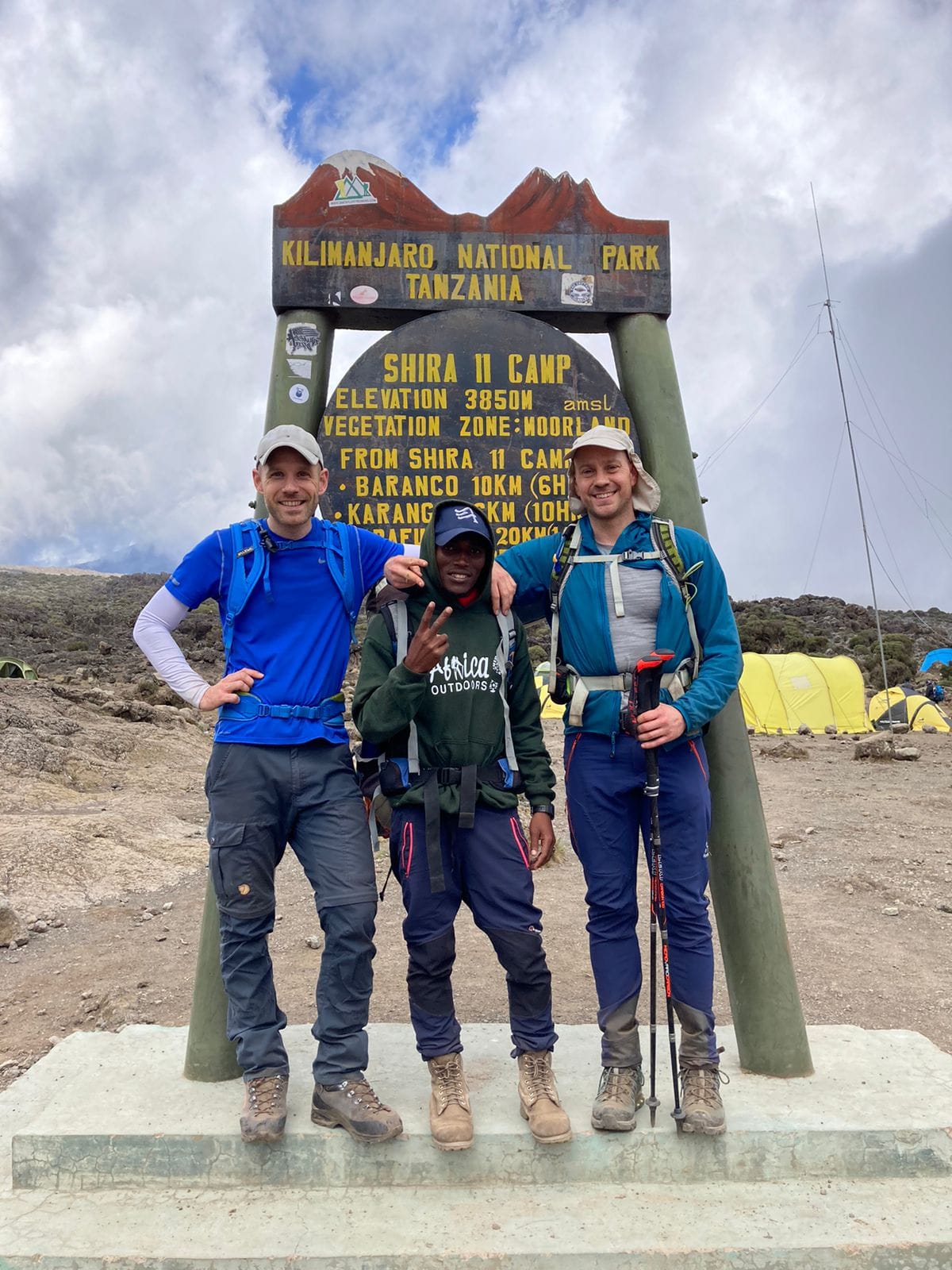
Mount Kilimanjaro is Africa’s highest mountain, rising to 5,895 metres (19,341 feet) above sea level. It is a non-technical trekking mountain, meaning that most people do not need ropes or technical mountaineering skills to reach Uhuru Peak. However, the altitude makes Kilimanjaro a serious high-altitude expedition.
There are several established routes to the summit, each offering a different combination of scenery, acclimatization, difficulty, crowds and duration.
For most first-time climbers, 8-day Lemosho or 9-day Northern Circuit are particularly attractive choices because they provide more time on the mountain for acclimatization. The CDC specifically recommends adding 1–2 days to short Kilimanjaro itineraries when possible because additional acclimatization time improves the body’s adjustment to altitude.
Kilimanjaro Routes at a Glance
| Route | Typical Duration | Difficulty | Scenery | Crowds | Acclimatization | Summit Potential* |
|---|---|---|---|---|---|---|
| Northern Circuit | 9 days | High | ⭐⭐⭐⭐⭐ | Low | ⭐⭐⭐⭐⭐ | Very High |
| Lemosho | 8 days | High | ⭐⭐⭐⭐⭐ | Medium | ⭐⭐⭐⭐⭐ | Very High |
| Machame | 7 days | High | ⭐⭐⭐⭐⭐ | High | ⭐⭐⭐⭐ | High |
| Rongai | 7 days | Moderate–High | ⭐⭐⭐⭐ | Low | ⭐⭐⭐⭐ | High |
| Marangu | 6 days | Moderate | ⭐⭐⭐ | High | ⭐⭐⭐ | Moderate–High |
| Umbwe | 6–7 days | Very High | ⭐⭐⭐⭐ | Low | ⭐⭐ | Lower on short itinerary |
| Shira | 7–8 days | High | ⭐⭐⭐⭐⭐ | Low | ⭐⭐ | High |
*“Summit Potential” is a practical comparison of route characteristics, not a guaranteed success rate. Published success-rate figures vary substantially by operator, itinerary length, climber selection and reporting methodology.
1. Northern Circuit Route
Best for:
- Maximum acclimatization time
- Climbers who want a quieter route
- First-time high-altitude trekkers with sufficient time
- Excellent scenery
- People prioritizing a longer itinerary
The Northern Circuit is the longest established trekking route on Kilimanjaro. It approaches the mountain from the west and then travels around the quieter northern slopes before reaching the summit.
The standard itinerary is generally 9 days, making it one of the longest options and providing substantial time for acclimatization. It also gives trekkers views from many different sides of Kilimanjaro.
Typical route
Londorossi Gate → Mti Mkubwa → Shira 1 → Shira 2 → Moir Hut → Buffalo Camp → Third Cave → School Hut → Uhuru Peak → Mweka
Advantages
- Excellent acclimatization opportunity
- Very scenic
- Less crowded northern slopes
- Longest standard route
- More gradual progression than very short routes
- Excellent for people who want a more immersive Kilimanjaro experience
Disadvantages
- More expensive because of the additional days
- Longer overall trek
- Summit day can be relatively long
- Not ideal for travelers with limited time
Summit potential
Some operators publish very high success rates for their own 9-day Northern Circuit groups, but these are operator-specific figures and should not be interpreted as a mountain-wide guarantee. One published industry estimate puts 9-day Northern Circuit success around 85–95% across operators, while the same operator reports higher results for its own clients.
Overall assessment
Excellent choice for climbers who have enough time and want maximum acclimatization and quieter trails.
2. Lemosho Route
Best for:
- First-time Kilimanjaro climbers
- Beautiful scenery
- Better acclimatization
- A balance between scenery and crowds
- Climbers who want a premium trekking experience
The Lemosho Route starts on the western side of Kilimanjaro and crosses the beautiful Shira Plateau before joining the southern circuit.
It is widely regarded as one of the most scenic routes on Kilimanjaro.
Typical 8-day route
Londorossi Gate → Mti Mkubwa → Shira 1 → Shira 2 → Barranco → Karanga → Barafu → Uhuru Peak → Mweka
Actual camps and daily arrangements can vary by operator and itinerary.
Highlights
- Rainforest
- Shira Plateau
- Lava Tower area
- Barranco Wall
- Karanga Valley
- Southern glaciers and alpine landscape
- Uhuru Peak
- Mweka descent
Advantages
- Excellent scenery
- Good acclimatization profile
- Longer itinerary than many budget climbs
- Less crowded during the early stages
- Allows the important “climb high, sleep low” pattern
- Excellent overall mountain experience
Disadvantages
- More expensive than short Marangu itineraries
- Requires more time
- Barranco Wall can look intimidating to inexperienced trekkers
- More demanding than a short Marangu itinerary
Summit potential
One published industry estimate puts 8-day Lemosho success around 90% across operators, while that operator reports historically higher results for its own 8-day Lemosho clients. These figures are not independently verified mountain-wide statistics and should therefore be treated as indicative rather than guaranteed.
Overall assessment
Lemosho is one of the strongest all-round choices for a first Kilimanjaro climb.
3. Machame Route
Best for:
- Climbers with good fitness
- Dramatic scenery
- People looking for a popular route
- Travelers with 7 days available
Machame is commonly called the “Whiskey Route.”
It is one of the most popular approaches to Kilimanjaro and provides a spectacular variety of landscapes.
Typical 7-day route
Machame Gate → Machame Camp → Shira → Barranco → Karanga → Barafu → Uhuru Peak → Mweka
The exact camping sequence varies between itineraries.
Highlights
- Rainforest
- Shira Plateau
- Lava Tower
- Barranco Wall
- Karanga Valley
- Barafu
- Uhuru Peak
Advantages
- Very scenic
- Good variety of landscapes
- 7-day itinerary gives better acclimatization than very short climbs
- Widely available
- Good choice for physically prepared hikers
Disadvantages
- Can be crowded
- More physically demanding
- Steeper sections
- Six-day versions are considerably less attractive from an acclimatization perspective
A published industry guide estimates approximately 85–90% success for its 7-day Machame clients, compared with approximately 70–75% for its 6-day Machame clients; again, these are operator-specific estimates rather than independent mountain-wide statistics.
Overall assessment
A very good route for fit hikers who want excellent scenery but cannot spend 8–9 days on the mountain.
4. Rongai Route
Best for:
- Quieter trekking
- Climbers who prefer a gradual northern approach
- People wanting a different perspective of Kilimanjaro
- Travelers who want to avoid some of the southern-route crowds
Rongai is the only major Kilimanjaro trekking route approaching from the north, near the Kenya–Tanzania border.
Typical 7-day route
Rongai Gate → Simba Camp → Kikelewa → Mawenzi Tarn → Kibo → Uhuru Peak → Horombo → Marangu Gate
The precise camping schedule depends on the itinerary.
Advantages
- Quieter than Machame and Marangu
- Northern side of Kilimanjaro
- Gradual approach
- Beautiful views toward Mawenzi
- Good choice during wetter periods because the northern side can sometimes be drier
Disadvantages
- Some trekkers find the scenery less dramatic than Lemosho
- Long summit approach
- Different logistics because the route starts on the northern side
Published industry estimates put 7-day Rongai success around 70% across operators and around 85–90% for one operator’s own clients. These figures should be regarded as estimates rather than guaranteed results.
Overall assessment
A very good option for travelers who want a quieter Kilimanjaro experience.
5. Marangu Route
Best for:
- Travelers with limited time
- Trekkers who prefer huts
- People who do not want to sleep in tents
- Those looking for a simpler trekking arrangement
Marangu is often called the “Coca-Cola Route.”
Unlike most Kilimanjaro routes, trekkers sleep in mountain huts rather than tents.
Typical 6-day route
Marangu Gate → Mandara Hut → Horombo Hut → Kibo Hut → Uhuru Peak → Horombo → Marangu Gate
Advantages
- Mountain huts
- No camping tents required
- Straightforward logistics
- Relatively gentle trail in some sections
- Often less expensive than longer routes
Disadvantages
- Same ascent and descent corridor
- More crowded
- Short itineraries provide less acclimatization
- Summit night is demanding
- Less varied scenery compared with Lemosho/Northern Circuit
Important point
The problem with Marangu is not that the route is inherently “bad.” The bigger issue is that many itineraries are compressed into 5–6 days, giving the body less time to acclimatize.
The CDC notes that altitude illness is a major risk on Kilimanjaro and specifically recommends adding 1–2 days to short itineraries when possible.
Overall assessment
A practical choice for hut accommodation, but a longer itinerary is preferable when available.
6. Umbwe Route
Best for:
- Experienced mountain trekkers
- Strong hikers
- People seeking a steep and challenging approach
- Climbers who understand high-altitude trekking
Umbwe is one of the steepest approaches to Kilimanjaro.
Advantages
- Very quiet
- Dramatic scenery
- Challenging
- Excellent wilderness feeling
Disadvantages
- Steep ascent
- Rapid altitude gain
- Less suitable for inexperienced trekkers
- Short itineraries can make acclimatization difficult
A published industry estimate considers Umbwe one of the most challenging routes and estimates lower success on shorter itineraries compared with longer routes.
Overall assessment
Not the route I would normally choose for a first-time Kilimanjaro climber.
7. Shira Route
The Shira Route approaches from the west and eventually joins the Lemosho/Machame section.
The major concern is that the route starts at relatively high elevation.
This means trekkers can be exposed to substantial altitude immediately rather than gradually gaining elevation from the lower rainforest.
For this reason, many modern itineraries favor Lemosho instead, because it provides a more gradual approach.
A published route comparison specifically notes that Lemosho improves the initial acclimatization profile compared with starting high on the Shira route.
Overall assessment
Beautiful, but Lemosho is generally the more attractive western-route option for most trekkers.
Kilimanjaro Route Difficulty Comparison
| Route | Difficulty | Main Reason |
|---|---|---|
| Northern Circuit | High | Long duration and high altitude |
| Lemosho | High | Long trek + summit altitude |
| Machame | High | Steeper terrain and long summit day |
| Rongai | Moderate–High | Gradual approach but demanding summit |
| Marangu | Moderate–High | Easier trail but shorter acclimatization on common itineraries |
| Umbwe | Very High | Steep and rapid ascent |
| Shira | High | Starts at high elevation |
Remember that difficulty is not determined only by physical fitness. At 5,895 m, altitude can affect even extremely fit athletes.
The CDC identifies altitude illness as the major health concern for Kilimanjaro trekkers. Symptoms can include headache, dizziness, nausea, fatigue, vomiting and shortness of breath.
Which Kilimanjaro Route Has the Highest Summit Success?
There is no single independently verified, universal success-rate database covering every operator and every itinerary.
Published figures differ because operators may measure:
- Different route durations
- Different client populations
- Different definitions of “success”
- Different years
- Different medical and evacuation policies
- Private versus group climbs
One current industry source estimates:
| Route | Typical Published Estimate |
|---|---|
| Northern Circuit – 9 days | 85–95% |
| Lemosho – 8 days | ~90% |
| Machame – 7 days | ~85–90% |
| Rongai – 7 days | ~70% overall estimate / 85–90% for one operator |
| Machame – 6 days | ~70–75% |
| Rongai – 6 days | ~50% overall estimate |
| Umbwe – 6 days | ~50% estimate |
These numbers come from one operator’s published industry estimates and should not be presented on a website as official Kilimanjaro-wide statistics.
For KiliBackpackers, it is better to say:
Longer Kilimanjaro routes generally provide more time for acclimatization and are associated with better summit outcomes than very short itineraries.
That statement is much more defensible than advertising a guaranteed percentage.
What Is the Best Route to Climb Kilimanjaro?
For most travelers, I would divide the decision like this:
Best overall: Lemosho – 8 days
Lemosho provides an excellent combination of:
- Scenery
- Acclimatization
- Route variety
- Reasonable crowds
- 8-day duration
- High reported summit success on longer itineraries
It is particularly suitable for first-time international trekkers.
Best for maximum acclimatization: Northern Circuit – 9 days
Choose Northern Circuit if:
- You have 9 days available
- Budget is less restrictive
- You want a quieter trail
- You want to spend more time acclimatizing
- You want to experience different sides of Kilimanjaro
The route’s longer duration is its biggest advantage.
Best 7-day option: Machame – 7 days
Machame is a strong option if you have only one week available.
It offers:
- Excellent scenery
- Good route variety
- 7 days on the mountain
- The popular Barranco/Lava Tower section
- A well-established trekking infrastructure
Best quieter alternative: Rongai – 7 days
Choose Rongai if you prefer:
- Fewer crowds
- Northern approach
- More gradual terrain
- A different Kilimanjaro experience
Best for huts: Marangu – 6 days
Choose Marangu if hut accommodation is important.
However, if your primary objective is giving your body more time to acclimatize, consider extending the itinerary rather than choosing the shortest available climb.
My Recommended Kilimanjaro Route Ranking by Purpose
Instead of simply calling one route “the best,” compare them according to what the climber wants:
| Your Priority | Route to Consider |
|---|---|
| Maximum acclimatization | Northern Circuit 9 days |
| Best all-round experience | Lemosho 8 days |
| Best scenery | Lemosho |
| Best 7-day option | Machame 7 days |
| Fewer crowds | Northern Circuit / Rongai |
| Hut accommodation | Marangu |
| Shorter budget climb | Marangu / Machame |
| Experienced trekkers seeking challenge | Umbwe |
| Western approach | Lemosho |
| First-time climber | Lemosho 8 days |
| Maximum mountain experience | Northern Circuit 9 days |
Kilimanjaro Acclimatization: The Most Important Factor
Kilimanjaro is not won simply by being physically strong.
The mountain reaches 5,895 m, and the body needs time to adapt to reduced oxygen availability.
Above approximately 3,000 m, the CDC cites recommendations to limit sleeping-altitude gains to about 500 m per day, with additional acclimatization time as elevation increases.
This is why longer routes are generally attractive.
A climber can be extremely fit but still develop altitude illness.
Conversely, a moderately fit person who walks slowly, follows a good acclimatization schedule and responds appropriately to altitude may perform very well.
The “Climb High, Sleep Low” Principle
Several Kilimanjaro itineraries deliberately use a pattern where hikers ascend to a higher elevation during the day and then descend to sleep.
A classic example is the Lava Tower/Barranco section.
The idea is to expose the body to a higher altitude during the day while sleeping at a lower elevation.
This is one reason route design matters—not simply the number of kilometers walked.
Summit Day
The summit is Uhuru Peak – 5,895 m.
Summit night normally begins around midnight or in the early hours of the morning.
A typical summit sequence is:
Camp → Stella Point → Uhuru Peak → descent to lower camp
The climb becomes progressively colder and the air becomes thinner.
Trekkers should expect:
- Very slow walking
- Cold temperatures
- Darkness
- Strong wind
- Reduced appetite
- Fatigue
- Shortness of breath
- Possible altitude symptoms
The final section should be approached slowly and conservatively.
Fitness vs Altitude
Fitness is important, but fitness does not eliminate altitude risk.
A good Kilimanjaro preparation program should include:
Cardiovascular training
- Hiking
- Stair climbing
- Incline treadmill
- Running
- Cycling
Strength training
- Squats
- Step-ups
- Lunges
- Calf raises
- Glute bridges
- Core exercises
Hiking practice
Before the climb, practice:
- Long uphill walks
- 5–8 hour hikes
- Consecutive hiking days
- Walking downhill
- Hiking with a backpack
The goal is to arrive on Kilimanjaro physically prepared so that altitude—not lack of fitness—is the main challenge you have to manage.
How to Choose Your Kilimanjaro Route
Ask yourself these six questions:
1. How many days do I have?
If you have:
5–6 days: Marangu/Machame may be available, but shorter itineraries provide less acclimatization time.
7 days: Machame or Rongai.
8 days: Lemosho.
9 days: Northern Circuit.
2. What is my budget?
Longer routes cost more because of:
- Park fees
- Staff wages
- Food
- Camping
- Logistics
- Additional guide/porter days
- Transfers
3. Do I prefer camping or huts?
Camping: Lemosho, Machame, Rongai, Northern Circuit, Umbwe.
Huts: Marangu.
4. Do I want fewer people?
Consider:
Northern Circuit or Rongai.
5. Is scenery important?
Consider:
Lemosho or Northern Circuit.
6. Is this my first high-altitude trek?
For many first-time trekkers, an 8-day Lemosho or 9-day Northern Circuit gives a more conservative acclimatization schedule than a short climb.
Recommended Routes for KiliBackpackers
For a Kilimanjaro operator website, I would focus your main sales pages around these routes:
1. 8 Days Lemosho Route
Primary recommendation for international first-time climbers
Suggested positioning:
8 Days Lemosho Route – Scenic Kilimanjaro Climb with Excellent Acclimatization
2. 9 Days Northern Circuit
Premium / maximum acclimatization option
Suggested positioning:
9 Days Northern Circuit – Kilimanjaro’s Longest and Most Scenic Trek
3. 7 Days Machame Route
Best 7-day product
Suggested positioning:
7 Days Machame Route – The Classic Kilimanjaro Adventure
4. 7 Days Rongai Route
Quiet northern alternative
Suggested positioning:
7 Days Rongai Route – A Quieter Route to Uhuru Peak
5. 6 Days Marangu Route
Hut-based option
Suggested positioning:
6 Days Marangu Route – Kilimanjaro’s Famous Hut Route
Final Recommendation
For a typical first-time international climber, I would make 8 Days Lemosho the main KiliBackpackers recommendation.
For someone who has more time and wants the longest acclimatization-focused itinerary, offer 9 Days Northern Circuit.
For someone limited to seven days, 7 Days Machame is a strong option.
For someone looking for a quieter route, offer 7 Days Rongai.
The most important message for your website should be:
Don’t choose a Kilimanjaro route based only on price or the shortest number of days. Route duration and acclimatization are important factors in giving your body time to adjust to 5,895 metres.
The CDC specifically recommends adding 1–2 days to planned Kilimanjaro ascents where possible, particularly for itineraries promoted as only 4–6 days.
Important health note
Altitude illness can become serious. Headache, nausea, dizziness, unusual fatigue, vomiting, breathing difficulty or worsening symptoms should not simply be treated as something to “push through.” Climbers should follow their guide’s altitude protocols and seek medical advice before the trip about their individual risk and medications.