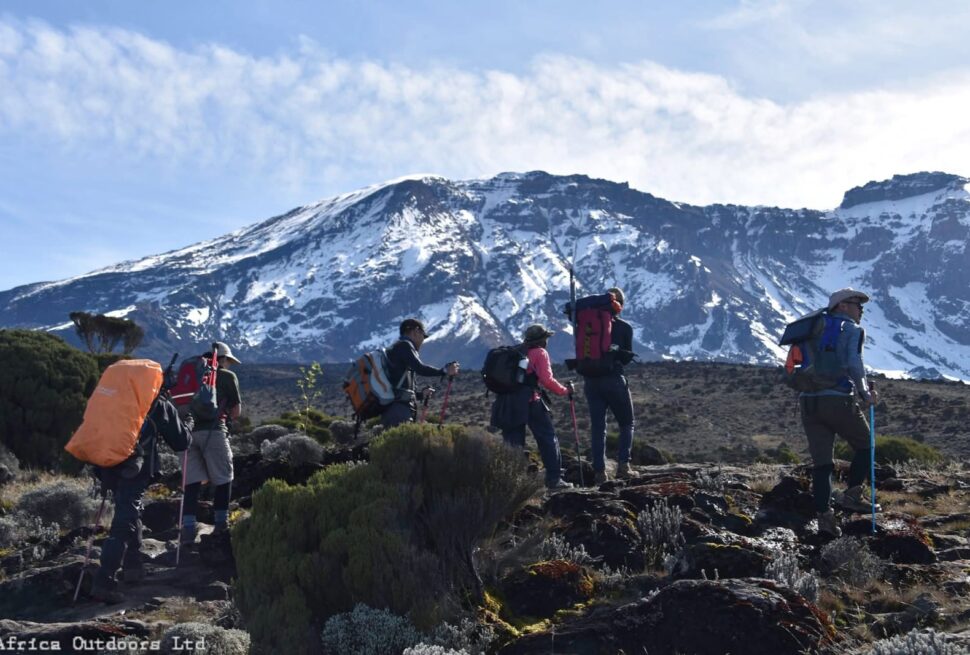
Choosing your Kilimanjaro route is one of the most important decisions you will make before your trek. The routes differ in number of days, scenery, terrain, accommodation, crowds, acclimatization profile and overall trekking experience.
All routes ultimately lead to the same destination: Uhuru Peak at 5,895 metres (19,341 feet). The main difference is how you get there and how much time you give your body to adapt to altitude. Current route guides consistently emphasize that longer itineraries generally provide more time for acclimatization.
Kilimanjaro Routes at a Glance
| Route | Typical duration | Accommodation | Scenery | Crowds | General character |
|---|---|---|---|---|---|
| Lemosho | 7–8 days | Camping | Excellent | Moderate | Scenic, gradual, excellent acclimatization |
| Machame | 6–7 days | Camping | Excellent | High | Scenic, challenging, popular |
| Northern Circuit | 8–9 days | Camping | Excellent | Low | Long, quieter, gradual |
| Rongai | 6–7 days | Camping | Very good | Low | Remote, northern approach |
| Marangu | 5–6 days | Huts | Good | Moderate–high | More gradual, hut accommodation |
| Umbwe | 5–6+ days | Camping | Excellent | Low | Steep and demanding |
There are also established routes such as Shira, while Mweka is primarily used as a descent route rather than an independent ascent route.
1. Lemosho Route

Typical duration: 7–8 days
Accommodation: Camping
Starting side: Western Kilimanjaro
Difficulty: Moderate to challenging
Scenery: Excellent
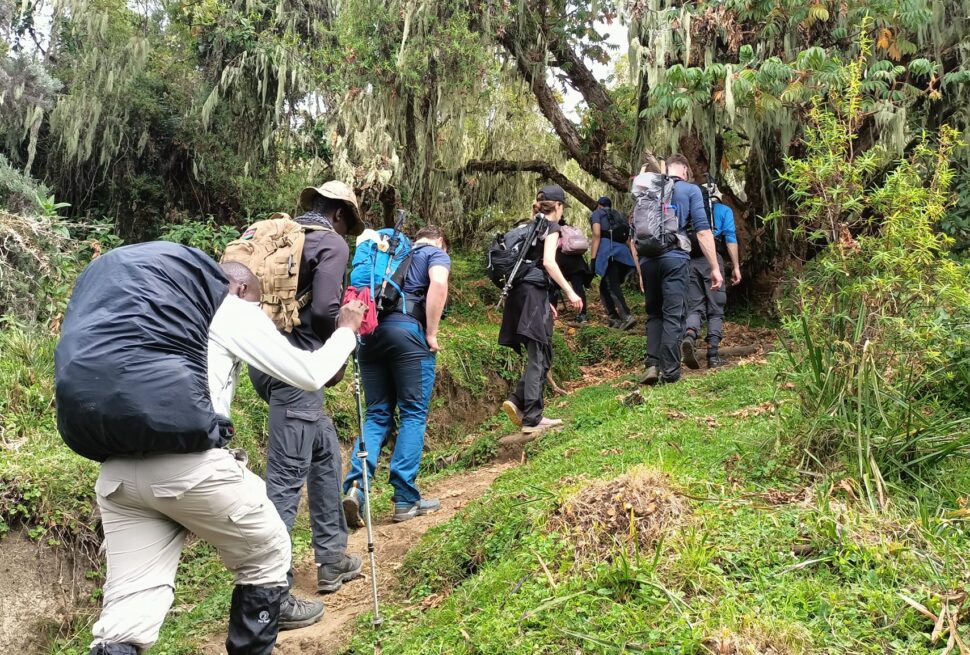
The Lemosho Route is one of the most scenic approaches to Kilimanjaro. It begins on the western side of the mountain and passes through rainforest before reaching the Shira Plateau.
One of its major advantages is the relatively gradual approach and longer itinerary options, giving hikers more time to adapt to altitude. It later joins the southern circuit used by Machame.
Typical highlights
- Montane rainforest
- Shira Plateau
- Shira Camp
- Lava Tower
- Barranco Valley
- Barranco Wall
- Karanga
- Barafu Camp
- Uhuru Peak
Why hikers choose Lemosho
Lemosho is particularly attractive to hikers who want:
- More time for acclimatization
- Excellent scenery
- A quieter beginning
- A longer trekking experience
- Camping
- A less rushed summit attempt
Things to consider
The route is longer and generally costs more than shorter routes because of the additional days and logistics.
Recommended: 8 days if your schedule and budget allow.
2. Machame Route


Typical duration: 6–7 days
Accommodation: Camping
Starting side: Southern Kilimanjaro
Difficulty: Moderate to challenging
Scenery: Excellent
Machame is one of the most popular routes on Kilimanjaro. It is often called the “Whiskey Route.”
The route provides considerable scenery and includes the famous Barranco Wall.
The 7-day version gives hikers more time for acclimatization than the shorter itinerary. Current route comparisons generally describe 7-day Machame as having a stronger acclimatization profile than the compressed version.
Major highlights
- Machame rainforest
- Shira Plateau
- Lava Tower
- Barranco Valley
- Barranco Wall
- Karanga Valley
- Barafu Camp
- Uhuru Peak
What makes Machame special?
One of the major features is the “climb high, sleep low” pattern.
For example, you may ascend toward Lava Tower at approximately 4,600 m before descending to a lower camp.
This provides valuable exposure to altitude while sleeping at a lower elevation.
Advantages
- Excellent scenery
- Strong acclimatization profile on 7 days
- More affordable than some longer routes
- Well-established route
- Good choice for hikers wanting a challenging trek
Disadvantages
- Can be busy
- Some sections are steep
- Barranco Wall can look intimidating
- 6-day itineraries provide less acclimatization time
Recommended: 7 days rather than 6 for most hikers.
3. Northern Circuit Route


Typical duration: 8–9 days
Accommodation: Camping
Starting side: Western side
Difficulty: Moderate to challenging
Scenery: Excellent
Crowds: Generally lower
The Northern Circuit is the longest of the commonly used Kilimanjaro routes.
Instead of taking the more direct southern approach toward the summit, it travels around the northern slopes before eventually approaching the summit area. Published route comparisons put it at roughly 8–10 days depending on itinerary, with substantially more distance than shorter routes.
Why choose Northern Circuit?
The main advantages are:
- More time for acclimatization
- Longer trekking experience
- Quieter sections
- Views from the northern side
- More gradual progression
- Less time on the busiest southern sections
Who is it suitable for?
It can be particularly attractive to hikers who:
- Have enough time
- Want a quieter experience
- Prefer a gradual itinerary
- Want to spend more time on the mountain
- Don’t mind the additional cost
Disadvantages
The biggest disadvantage is simply time.
A 9-day trek requires more vacation days and normally costs more than a 6- or 7-day itinerary.
4. Rongai Route

Typical duration: 6–7 days
Accommodation: Camping
Starting side: Northern Kilimanjaro
Difficulty: Moderate
Crowds: Generally lower
Rongai is the main route approaching Kilimanjaro from the north, near the Kenya border.
The northern side of Kilimanjaro has a different character from the southern routes.
Highlights
- Remote northern landscape
- Forest
- Moorland
- Mawenzi views
- Mawenzi Tarn
- Kibo
- Uhuru Peak
Why choose Rongai?
It can suit hikers who want:
- A quieter route
- A northern approach
- Different scenery
- Camping
- A route with a more remote feel
Some route guides also note that the northern side can be advantageous during wetter periods because of its relative rain-shadow effect, although weather conditions vary by season.
One major advantage
Rongai is generally less crowded than Machame.
Disadvantage
Some hikers consider its scenery less varied than Lemosho or Machame during the early stages.
5. Marangu Route

Typical duration: 5–6 days
Accommodation: Mountain huts
Starting side: Southeast
Difficulty: Moderate to challenging
Camping: No
Marangu is often called the “Coca-Cola Route.”
It is unique because it uses mountain huts rather than tents. The huts are basic shared accommodation. Marangu is also unusual because the ascent and descent largely use the same corridor.
Major highlights
- Marangu Gate
- Rainforest
- Mandara Hut
- Horombo Hut
- Kibo Hut
- Gillman’s Point
- Uhuru Peak
Why hikers choose Marangu
- Hut accommodation
- No sleeping tents
- Generally straightforward trail
- Shorter itinerary
- Often lower-priced than longer camping routes
The important consideration
The 5-day Marangu itinerary is very compressed.
The 6-day version gives additional time for acclimatization.
For someone choosing Marangu, it is worth considering the 6-day itinerary rather than selecting five days simply because it is cheaper.
6. Umbwe Route


Typical duration: 5–6+ days
Accommodation: Camping
Starting side: Southern Kilimanjaro
Difficulty: Challenging
Crowds: Low
Umbwe is known for its steep and direct approach.
It is substantially less forgiving than the more gradual routes and is generally better suited to experienced trekkers who understand the demands of steep terrain and high altitude. Published route comparisons consistently identify Umbwe as one of the most demanding approaches.
Highlights
- Umbwe rainforest
- Steep ridges
- Dramatic scenery
- Barranco Valley
- Uhuru Peak
Why choose Umbwe?
Primarily if you want:
- A challenging route
- Fewer people
- A more direct approach
- Dramatic terrain
Why beginners should think carefully
The route is steep early on, and shorter itineraries provide less time for acclimatization.
For most first-time Kilimanjaro hikers, there are other routes that provide a more gradual progression.
Route Comparison by Scenery
If scenery is one of your priorities, the routes offer different experiences.
Lemosho
Excellent variety from rainforest to alpine desert.
Machame
Excellent and dramatic scenery, particularly around Shira, Barranco and the southern circuit.
Northern Circuit
Excellent panoramic views and a more complete experience of the mountain’s northern side.
Rongai
More remote northern landscapes with impressive views toward Mawenzi.
Marangu
Beautiful rainforest and mountain scenery, but less varied because the route follows the same corridor on the ascent and descent.
Umbwe
Dramatic, steep landscapes and forested ridges.
Route Comparison by Accommodation
This is a major difference.
Marangu
Huts
You sleep in mountain huts rather than tents.
Machame
Camping
You sleep in tents at designated camps.
Lemosho
Camping
Tents throughout the trekking itinerary.
Northern Circuit
Camping
Longer camping experience.
Rongai
Camping
Most itineraries use tents.
Umbwe
Camping
Tents are used along the route.
Marangu is therefore the obvious choice if hut accommodation is a major priority.
Route Comparison by Crowds
Crowd levels vary by season and camp, but generally:
Higher traffic
Machame and Marangu
These are among the most frequently used routes.
Moderate
Lemosho
The beginning is generally quieter before the route joins the southern circuit.
Lower
Rongai and Northern Circuit
These routes generally provide a quieter experience.
Very low
Umbwe
Because it is steeper and less commonly selected.
Which Route Has the Best Acclimatization?
The answer depends heavily on how many days you spend on the route, rather than simply the route name.
For example:
6-day Machame
is very different from
7-day Machame.
Likewise:
5-day Marangu
is different from
6-day Marangu.
Longer itineraries give the body more time to adapt to altitude. Current route guidance consistently emphasizes this relationship.
A useful general principle is:
When choosing between a shorter and longer itinerary on the same route, the additional acclimatization day can be more important than the small difference in route difficulty.
Which Route Is Best for Beginners?
Beginners do not necessarily need the “easiest” trail.
A beginner should instead consider:
- Number of days
- Acclimatization
- Fitness
- Terrain
- Weather
- Camping versus huts
- Budget
- Desired scenery
For a first Kilimanjaro trek, 7-day Machame, 8-day Lemosho, 7-day Rongai or 8–9-day Northern Circuit can all be considered depending on the hiker’s priorities.
The key is not to choose an itinerary that is unnecessarily short.
Which Route Is Best for Scenic Hiking?
Lemosho and Machame provide particularly varied scenery.
A typical Lemosho journey can take you through:
Rainforest → Shira Plateau → Moorland → Alpine Desert → Summit Zone
Machame provides a similarly diverse experience with major highlights including:
Rainforest → Shira → Lava Tower → Barranco → Karanga → Barafu → Summit
Which Route Is Best for Avoiding Crowds?
If avoiding busy trails is important, consider:
Northern Circuit
Long and remote sections.
Rongai
Northern approach with generally lower traffic.
Lemosho
Quieter at the beginning before joining the southern circuit.
The exact crowd level depends on season, departure dates and the number of operators using each camp.
Which Route Is Best If You Want Huts?
Marangu
Marangu is the route to choose if you strongly prefer hut accommodation instead of camping.
However, huts do not eliminate the altitude challenge.
You still reach 5,895 m.
Which Route Is Best If You Have Only 6 Days?
You have several possibilities, including:
- 6-day Machame
- 6-day Marangu
- 6-day Rongai
- 6-day Umbwe
But having six days does not mean every six-day route provides the same experience.
If your schedule allows an additional day, it is worth considering whether extending the trek will provide a better acclimatization profile.
Which Route Is Best If You Have 7 Days?
Seven days opens up more possibilities:
7-day Machame
Excellent combination of scenery and acclimatization.
7-day Lemosho
Longer western approach.
7-day Rongai
Quieter northern approach.
The best choice depends on whether your priority is scenery, solitude, accommodation, budget or acclimatization.
Which Route Is Best If You Have 8–9 Days?
This gives you more flexibility.
Consider:
8-day Lemosho
or
8–9-day Northern Circuit
These longer itineraries allow you to spend more time acclimatizing and exploring the mountain.
Kilimanjaro Routes: What Kind of Hiker Should Choose Each?
| If you want… | Consider |
|---|---|
| Scenic and gradual trek | Lemosho |
| Popular scenic route | Machame |
| Hut accommodation | Marangu |
| Quiet northern approach | Rongai |
| Longest and gradual itinerary | Northern Circuit |
| Steep, challenging route | Umbwe |
| 7-day balance of time and scenery | Machame |
| 8-day scenic experience | Lemosho |
| More solitude | Northern Circuit / Rongai |
| No camping | Marangu |
What About Summit Success Rates?
Be careful when comparing operators’ published summit-success percentages.
There is no single universally comparable success-rate dataset covering every operator and every route, and operators may calculate success differently.
Some published commercial figures vary considerably. For that reason, it is better to focus on the underlying factors:
- Number of days
- Acclimatization schedule
- Guide practices
- Group pace
- Weather
- Individual response to altitude
rather than assuming that a particular route has a guaranteed percentage of reaching the summit.
The consistent point across current route guides is that longer itineraries generally allow better acclimatization.
How Much Does Route Choice Affect the Cost?
Generally:
Shorter route = lower price
Longer route = higher price
But price isn’t determined by distance alone.
It can include:
- Kilimanjaro National Park fees
- Conservation fees
- Camping/hut fees
- Rescue fees
- Guide wages
- Porter wages
- Cook wages
- Food
- Tents
- Camping equipment
- Transportation
- Accommodation before/after the trek
- Operator logistics
Longer routes require more park days, food, crew time and accommodation.
How Should You Choose Your Kilimanjaro Route?
Ask yourself these questions:
1. How many days do I have?
If you have only five days, your options are limited.
If you have eight or nine days, you have considerably more flexibility.
2. Do I want camping or huts?
Camping → Machame, Lemosho, Northern Circuit, Rongai, Umbwe
Huts → Marangu
3. Do I want a quieter route?
Consider Rongai or Northern Circuit.
4. Is scenery important?
Consider Lemosho or Machame.
5. Am I concerned about acclimatization?
Consider a longer itinerary.
6. Do I have previous high-altitude hiking experience?
If you have little experience, a gradual itinerary is generally preferable to choosing a route simply because it is short and cheap.
7. What’s my budget?
Compare the total trip price, not just the advertised daily rate.
Our Practical Route Guide
For KiliBackpackers, a useful way to explain the routes to potential hikers is:
🏔️ Lemosho — 8 Days
For hikers who want: scenery, gradual acclimatization and a longer experience.
🥾 Machame — 7 Days
For hikers who want: dramatic scenery, camping and a well-established route.
🌄 Northern Circuit — 9 Days
For hikers who want: more time, quieter trails and a longer acclimatization profile.
🌿 Rongai — 7 Days
For hikers who want: a quieter northern approach and a different perspective of Kilimanjaro.
🛖 Marangu — 6 Days
For hikers who want: hut accommodation and a more straightforward trail.
⛰️ Umbwe — 6+ Days
For hikers who want: a steeper, more demanding and less crowded approach.
Final Kilimanjaro Route Comparison
There is no universally best Kilimanjaro route. The appropriate route depends on what you value most.
If you want scenery and a longer acclimatization profile, look closely at Lemosho.
If you want a scenic 7-day trek with a strong balance of time and cost, Machame is a common option.
If you want more time and a quieter mountain experience, consider the Northern Circuit.
If you want a northern and generally quieter approach, consider Rongai.
If you prefer huts rather than tents, Marangu is the distinctive choice.
If you specifically want a steep and demanding route, Umbwe is the more direct option.
The most important thing is not simply choosing a route with the word “easy” or “difficult.” Look at the number of days, altitude profile, terrain and your own preparation.
Suggested KiliBackpackers SEO title
Kilimanjaro Climbing Routes Compared: Machame, Lemosho, Marangu, Rongai & Northern Circuit
Meta description
Compare Kilimanjaro climbing routes including Machame, Lemosho, Marangu, Rongai, Northern Circuit and Umbwe. Learn about duration, difficulty, scenery, accommodation, crowds, acclimatization and how to choose the right route.
Recommended URL
/kilimanjaro-climbing-routes/
Internal links to add
From this page, link to:
- Machame Route 7 Days
- Lemosho Route 8 Days
- Marangu Route 6 Days
- Rongai Route 7 Days
- Northern Circuit 9 Days
- How Hard Is Kilimanjaro?
- How Much Does It Cost to Climb Kilimanjaro?
- Best Time to Climb Kilimanjaro
- Kilimanjaro Packing List
- Kilimanjaro Training Guide
- Kilimanjaro Altitude Sickness Guide