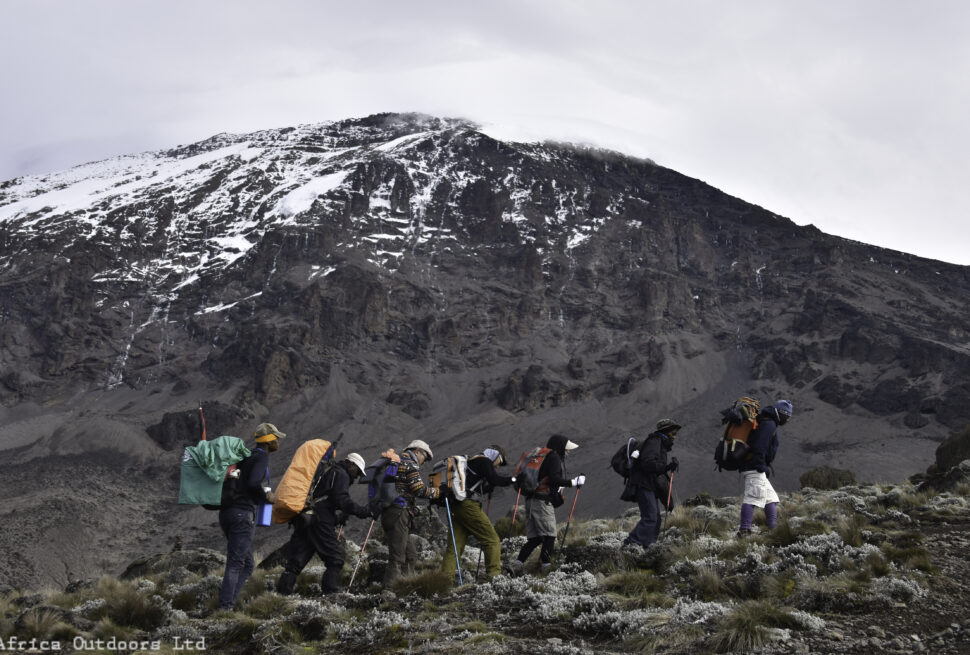
Yes, beginners can climb Mount Kilimanjaro.
You do not need previous mountaineering experience, technical climbing skills, or years of high-altitude trekking experience to attempt the summit. Mount Kilimanjaro is a trekking mountain rather than a technical climbing mountain on the standard routes to Uhuru Peak.
However, Kilimanjaro should not be underestimated.
At 5,895 metres (19,341 feet), Mount Kilimanjaro is the highest mountain in Africa. The biggest challenge for many first-time climbers is not technical climbing but altitude, long trekking days, cold temperatures, changing weather, and the physical and mental demands of summit night.
The good news is that with the right preparation, a sensible itinerary, proper equipment, gradual acclimatization and a steady pace, a person with no previous mountain-climbing experience can prepare for and attempt Kilimanjaro.
Is Kilimanjaro Suitable for Beginners?
Kilimanjaro is one of the world’s best-known high-altitude trekking destinations partly because reaching Uhuru Peak does not normally require technical mountaineering equipment or advanced climbing skills.
Tanzania National Parks states that adults of normal health and fitness can climb Kilimanjaro without specialist climbing equipment, while emphasizing the importance of suitable clothing, footwear, patience and determination.
That does not mean Kilimanjaro is easy.
The summit is almost 5,900 metres above sea level, where the amount of available oxygen is significantly lower than at sea level. Altitude illness is therefore one of the most important risks to understand before starting the trek.
For a beginner, the goal should not simply be:
“Can I walk far enough?”
It should be:
“Can I prepare my body, allow enough time for acclimatization, walk at an appropriate pace and respond properly to the conditions on the mountain?”
What Makes Kilimanjaro Difficult?
Kilimanjaro does not involve the same type of technical climbing found on many high mountains.
The main challenges are:
- High altitude
- Reduced oxygen
- Long walking days
- Steep sections
- Summit night
- Cold temperatures
- Variable weather
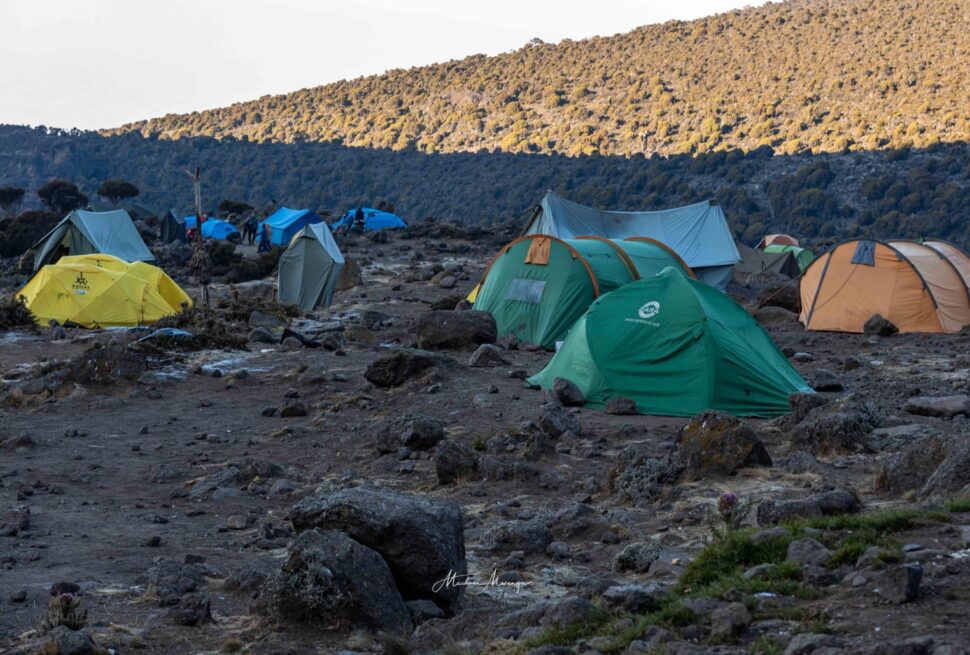
- Sleeping in tents or mountain huts depending on route
- Several consecutive days of physical activity
- Fatigue
- Possible altitude-related symptoms
- Mental exhaustion
For many beginners, altitude is the biggest unknown.
You can be very fit and still experience altitude illness. Conversely, someone who is not an elite athlete may successfully reach the summit if they prepare properly and acclimatize well.
Fitness and altitude tolerance are not the same thing.
How High Is Mount Kilimanjaro?
Uhuru Peak stands at:
5,895 metres / 19,341 feet
This makes Kilimanjaro the highest mountain in Africa.
The mountain contains several distinct ecological zones, and trekkers experience major changes in climate as they ascend.
A typical climb can take you through:
- Cultivated land
- Rainforest
- Moorland
- Alpine desert
- Arctic/summit zone
At lower elevations, the environment can be warm and humid.
Higher on the mountain, temperatures can fall dramatically.
Near the summit, trekkers may experience freezing temperatures, strong winds, snow or ice, and very low oxygen availability.
This is why packing appropriate clothing is essential.
Do You Need Previous Hiking Experience?
No.
Previous hiking experience is helpful, but it is not an absolute requirement.
A beginner can prepare for Kilimanjaro through regular walking, hiking, cardiovascular exercise and strength training.
If you have never completed a multi-day hike before, however, it is useful to do some longer hikes before your Kilimanjaro trip.
This allows you to discover:
- How your feet respond to long walks
- Which boots are comfortable
- How much water you normally need
- How your body responds to hills
- How you handle several hours of walking
- How your backpack feels
- How you perform when tired
You do not want your first experience of a full-day mountain hike to happen on Kilimanjaro.
Do You Need to Be Extremely Fit?
No.
You do not need to be a marathon runner, professional athlete or experienced mountaineer.
But you should have a reasonable level of cardiovascular fitness and be able to walk for several hours.
Useful activities include:
- Walking
- Hiking
- Jogging
- Cycling
- Stair climbing
- Swimming
- Incline treadmill walking
- Strength training
The most important thing is consistency.
Walking for a long time at a comfortable pace is particularly useful because Kilimanjaro is an endurance challenge.
How Long Should a Beginner Train Before Kilimanjaro?
The ideal preparation period depends on your current fitness.
If you already exercise regularly
Around 8–12 weeks of focused preparation can be useful.
If you are relatively inactive
Consider allowing 3–6 months to gradually build your fitness.
Do not try to transform your fitness in a few weeks by suddenly doing very long and intense workouts.
A gradual training program is more sustainable.
Beginner Kilimanjaro Training Plan
Weeks 1–4: Build a Base
Focus on consistency.
Aim for:
- 3–4 cardio sessions per week
- 2 strength sessions
- Regular walking
- One longer walk or hike each week
Example:
Monday: 45-minute walk
Tuesday: Strength training
Wednesday: 45-minute cardio
Thursday: Rest
Friday: Strength training
Saturday: 2–3 hour hike/walk
Sunday: Easy recovery walk
Weeks 5–8: Increase Endurance
Gradually increase the duration of your walks.
Include:
- Hills
- Stairs
- Incline treadmill
- Longer weekend hikes
- Strength training
- Longer continuous walking
Try to become comfortable with spending several hours on your feet.
Weeks 9–12: Mountain-Specific Preparation
If you have enough time before departure, begin doing longer hikes.
A useful target is to become comfortable walking for 5–7 hours at a moderate pace, particularly on hilly terrain.
You should also practice using the equipment you intend to take to Kilimanjaro.
Test:
- Hiking boots
- Socks
- Backpack
- Trekking poles
- Rain jacket
- Warm layers
- Water bottles
- Headlamp
Never make summit night the first time you use important equipment.
Do You Need to Train at High Altitude?
No.
Living at sea level does not automatically prevent you from climbing Kilimanjaro.
If you have access to mountains, however, hiking at elevation can provide useful experience.
Tanzania National Parks and the CDC both emphasize the importance of acclimatization and additional time at altitude when preparing for Kilimanjaro.
The key point is:
Training improves fitness; acclimatization is the body’s response to altitude.
You cannot completely replace acclimatization with fitness training.
What Is Altitude Sickness?
Altitude sickness, commonly called acute mountain sickness (AMS), occurs when the body has difficulty adapting to reduced oxygen availability at altitude.
Possible symptoms include:
- Headache
- Nausea
- Dizziness
- Fatigue
- Shortness of breath
- Loss of appetite
- Difficulty sleeping
- Vomiting
The CDC identifies altitude illness as one of the most important hazards for people climbing East African mountains.
Altitude illness can affect people regardless of age, gender or physical fitness.
Being extremely fit does not guarantee protection.
How Can Beginners Reduce the Risk of Altitude Sickness?
One of the most important strategies is gradual ascent.
The CDC recommends ascending gradually and notes that once above approximately 3,000 metres, sleeping elevation should generally increase by no more than about 500 metres per day, with additional acclimatization time as elevation increases.
On Kilimanjaro, this means itinerary length matters.
A short itinerary can provide less time for your body to adapt.
Tanzania National Parks states that climbs generally take 5–8 days depending on the route and notes that more days increase the possibility of reaching the summit.
The CDC specifically recommends adding one or two days to planned Kilimanjaro ascents to facilitate acclimatization, particularly for shorter itineraries.
Why Longer Kilimanjaro Routes Can Be Better for Beginners
Beginners sometimes focus only on price and ask:
“What is the shortest Kilimanjaro route?”
A better question is:
“How much time should I allow my body to adjust to altitude?”
A longer itinerary can provide:
- More gradual ascent
- Additional acclimatization time
- More rest opportunities
- Less rushed trekking
- More time to enjoy the mountain
This is particularly important for first-time high-altitude trekkers.
Adding a day to the itinerary costs more, but it can provide additional time for acclimatization.
Which Kilimanjaro Route Is Best for a Beginner?
There is no single route that is right for every beginner.
The main factors to consider are:
- Number of days
- Acclimatization profile
- Budget
- Scenery
- Camping or hut preference
- Fitness
- Previous hiking experience
- Available vacation time
Common routes include:
- Machame
- Lemosho
- Marangu
- Rongai
- Northern Circuit
- Umbwe
Kilimanjaro National Park officially recognizes several routes, each with different characteristics and challenges.
For a first-time climber, it is generally sensible to prioritize an itinerary with enough days for gradual acclimatization rather than simply choosing the shortest possible option.
Machame Route for Beginners
Machame is a camping route and is commonly completed in 6 or 7 days.
The 7-day version gives more time on the mountain than the shorter itinerary.
The route includes:
- Rainforest
- Moorland
- Shira Plateau
- Lava Tower area
- Barranco
- Karanga
- Barafu
- Uhuru Peak
A beginner who chooses Machame should consider the longer itinerary if their schedule and budget allow.
Lemosho Route for Beginners
Lemosho is commonly offered over 7 or 8 days.
Its longer itineraries can provide more time for acclimatization.
The route begins on the western side of the mountain before joining the higher sections of the Kilimanjaro trail system.
It is known for:
- Beautiful scenery
- Rainforest
- Moorland
- Shira Plateau
- Lava Tower
- Barranco
- Karanga
- Barafu
- Uhuru Peak
For a beginner who has enough vacation time, a longer Lemosho itinerary can be an attractive option.
Marangu Route for Beginners
Marangu is different because it uses mountain huts rather than tents.
The route is sometimes chosen by trekkers who prefer hut accommodation.
However, accommodation type should not be the only consideration.
The number of days and acclimatization profile are still extremely important.
A longer itinerary should generally be considered where available and appropriate.
Rongai Route for Beginners
Rongai approaches Kilimanjaro from the northern side.
It offers a different landscape and mountain experience compared with the southern routes.
Like the other routes, beginners should focus on:
- Appropriate itinerary length
- Gradual ascent
- Fitness preparation
- Equipment
- Pacing
- Altitude awareness
How Far Do You Walk Each Day?
Daily distances vary considerably according to the route and itinerary.
Some days may involve relatively short distances but significant elevation gain.
Other days may involve longer distances over gentler terrain.
The most demanding day is usually summit day.
A typical summit attempt begins during the night, with trekkers leaving their high camp and climbing toward the summit before descending later the same day.
This can be physically and mentally demanding.
What Is Summit Night Like?
Summit night is often the hardest part of the entire trek.
Trekkers normally wake up very early—often around midnight or shortly afterward.
You will:
- Dress in warm clothing
- Eat a light meal
- Prepare your headlamp
- Begin walking slowly
- Climb toward the summit
- Reach the higher summit area
- Continue toward Uhuru Peak
- Spend a short time at the summit depending on conditions
- Descend to a lower camp
The climb is slow because of the altitude.
You may take very small steps.
Your guide will normally encourage a controlled pace.
The famous Kilimanjaro principle is:
Pole pole — slowly, slowly.
For beginners, this is one of the most important lessons on the mountain.
Can Someone Who Never Hikes Climb Kilimanjaro?
It is possible, but preparation is strongly recommended.
If you currently do little exercise, do not assume that you can simply arrive in Tanzania and walk to the summit.
Start training months in advance.
Begin with:
- Regular walking
- Hills
- Stairs
- Cardio
- Strength training
Gradually increase duration and intensity.
If you have enough time, add weekend hikes.
What If I Am Overweight?
Being overweight does not automatically mean you cannot climb Kilimanjaro.
However, carrying additional body weight can increase the physical demands of:
- Uphill walking
- Descending
- Long trekking days
- Carrying a backpack
- Moving at high altitude
The most useful approach is to focus on gradually improving cardiovascular fitness, leg strength and walking endurance.
If you have medical conditions or concerns about whether strenuous high-altitude exercise is appropriate for you, speak with a qualified healthcare professional before planning the climb.
What If I Am Over 50?
Age alone does not determine whether someone can climb Kilimanjaro.
Many older adults participate in high-altitude trekking.
The important considerations include:
- General health
- Cardiovascular fitness
- Training
- Previous hiking experience
- Pace
- Acclimatization
- Ability to handle long walking days
Older trekkers should discuss the trip with a healthcare professional if they have medical concerns or existing conditions that could affect high-altitude travel.
What If I Am Under 18?
Young trekkers require additional consideration.
Parents or guardians should consider:
- Physical maturity
- Previous hiking experience
- Ability to handle long trekking days
- Altitude
- Cold temperatures
- Medical considerations
- Park and operator requirements
Age restrictions and requirements should be confirmed before booking.
What Equipment Does a Beginner Need?
You do not need technical mountaineering equipment for the standard trek to Uhuru Peak, but you do need appropriate trekking equipment.
Essential clothing
- Waterproof hiking jacket
- Warm fleece
- Insulating jacket
- Base layers
- Hiking trousers
- Thermal trousers
- Waterproof trousers
- Warm hat
- Sun hat
- Gloves
- Warm socks
Footwear
- Comfortable broken-in hiking boots
- Lightweight camp shoes
- Several pairs of trekking socks
Personal equipment
- Headlamp
- Water bottles or hydration system
- Sunglasses
- Sunscreen
- Backpack
- Trekking poles
- Personal medication
- Toiletries
- Small first-aid supplies
Summit equipment
The summit can be extremely cold.
You should have:
- Warm insulated jacket
- Warm gloves
- Thermal layers
- Warm hat
- Headlamp
- Appropriate socks
- Weatherproof outer layers
Tanzania National Parks specifically advises climbers to bring warm, weatherproof clothing and sound footwear.
Do You Need Trekking Poles?
Trekking poles are not mandatory, but many people find them useful.
They can help with:
- Steep ascents
- Descents
- Balance
- Uneven ground
- Reducing stress on knees
Beginners should practice with trekking poles before arriving on the mountain.
Do You Need a Sleeping Bag?
If you choose a camping route, a suitable sleeping bag is important.
Temperatures at higher camps can become very cold, particularly before summit night.
A sleeping bag should be appropriate for the expected conditions rather than chosen solely because it is lightweight.
A sleeping bag liner can also provide additional warmth.
What Do You Eat on Kilimanjaro?
Food is an important part of maintaining energy during the trek.
Meals generally include a combination of:
- Carbohydrates
- Protein
- Vegetables
- Fruit
- Soups
- Rice
- Pasta
- Potatoes
- Bread
- Eggs
- Meat or alternative protein sources
- Hot drinks
Your appetite may change at altitude.
Some people experience reduced appetite or nausea.
It is important to continue taking in food and fluids even when you do not feel particularly hungry.
How Much Water Should You Drink?
Hydration is important during trekking, but there is no universal amount that every person should drink.
Your needs depend on:
- Temperature
- Exercise level
- Body size
- Sweat rate
- Food intake
- Altitude
Drink regularly rather than waiting until you become extremely thirsty.
Your trekking team should explain how drinking water is supplied and treated during the climb.
What About Toilets?
Toilet facilities vary depending on the route, camp and trekking package.
Some camps have basic public facilities.
Private portable toilet arrangements may also be available depending on the package.
If toilet privacy is important to you, ask about the exact arrangements before booking.
Can Beginners Get Lost on Kilimanjaro?
Kilimanjaro should not be treated as a mountain where inexperienced trekkers simply walk alone.
Tanzania National Parks states that climbs must be guided and that solo trekking is not permitted.
The guide’s role includes helping with:
- Route navigation
- Pace
- Camp routines
- Weather awareness
- Altitude monitoring
- Safety procedures
- Communication
- Emergency response
This is particularly important for first-time high-altitude trekkers.
What Happens If You Become Sick?
If you develop symptoms of altitude illness, tell your guide immediately.
Do not hide symptoms because you are afraid of being turned around.
Depending on the situation, the appropriate response may involve:
- Rest
- Monitoring
- Slowing the ascent
- Descending
- Medical assessment
- Evacuation
Severe altitude illness can become life-threatening.
The CDC advises travelers to understand altitude illness symptoms and to ensure that guides are trained to recognize and respond to altitude-related problems.
Can You Take Medication for Altitude Sickness?
Some travelers use medication such as acetazolamide to help prevent altitude illness.
However, medication is not a replacement for gradual acclimatization.
Whether medication is appropriate depends on the individual.
Speak with a qualified healthcare professional before the trip about:
- Your medical history
- Current medications
- Altitude exposure
- Potential side effects
- Whether preventive medication is appropriate
Do not start prescription medication simply because another climber used it.
Should You Spend Time at Altitude Before Kilimanjaro?
Prior altitude exposure can sometimes help with acclimatization.
The CDC notes that previous exposure to elevations above approximately 2,750 metres for two or more nights can be useful before a high-altitude trip, particularly when the exposure occurs relatively close to the climb.
However, previous altitude experience does not guarantee that you will have no problems on Kilimanjaro.
Your response can vary from one trip to another.
What Should Beginners Do Before Arriving in Tanzania?
A few weeks before your trip:
1. Break in your boots
Never take brand-new boots onto Kilimanjaro.
2. Test your clothing
Make sure your layers work together.
3. Practice with your backpack
Use the same backpack you intend to take.
4. Complete longer hikes
Try several longer walks before departure.
5. Build leg strength
Squats, lunges, step-ups and controlled strength exercises can be useful.
6. Improve cardiovascular fitness
Walking, running, cycling and stair climbing can help.
7. Learn about altitude sickness
Know the symptoms before arriving.
8. Get appropriate medical advice
Discuss high-altitude travel with a healthcare professional when appropriate.
What Should You Not Do on Kilimanjaro?
Beginners should avoid several common mistakes.
Do not rush
Walking too quickly can make the trek unnecessarily difficult.
Do not ignore symptoms
Tell your guide if you feel unwell.
Do not choose a route solely because it is cheaper
Consider the number of days and acclimatization profile.
Do not wear brand-new boots
Blisters can ruin an otherwise successful trek.
Do not underestimate the cold
The summit environment can be very cold.
Do not carry unnecessary weight
Pack carefully.
Do not compare yourself with faster hikers
Everyone responds differently to altitude.
Do not hide behind fitness
Being fit does not make you immune to altitude illness.
Beginner Mistakes to Avoid
Mistake 1: Choosing the shortest itinerary
A shorter trek may look attractive because of price and time, but additional days can help with acclimatization.
Mistake 2: Training only in the gym
Gym workouts are useful, but you should also practice walking for several hours.
Mistake 3: Buying equipment at the last minute
Test everything before your trip.
Mistake 4: Ignoring footwear
Your feet are one of your most important assets on the mountain.
Mistake 5: Walking too fast
Use a slow and sustainable pace.
Mistake 6: Ignoring nutrition
Eat regularly and maintain energy.
Mistake 7: Drinking too little
Drink regularly according to your needs and your trekking team’s guidance.
Mistake 8: Hiding altitude symptoms
Report symptoms early.
How Mentally Difficult Is Kilimanjaro?
The mental challenge can be as important as the physical challenge.
There will probably be moments when you are tired and wonder:
“Can I really make it to the summit?”
The mountain requires patience.
You may have to walk slowly for hours.
You may be cold.
You may sleep poorly.
You may wake up in the middle of the night for summit day.
The best approach is to focus on the next step rather than thinking about the entire mountain.
Instead of thinking:
“I still have thousands of metres to go.”
Think:
“I will keep moving slowly and steadily.”
What Makes a Successful Beginner?
A successful beginner does not necessarily have the strongest legs.
Important qualities include:
- Patience
- Consistency
- Preparation
- Willingness to walk slowly
- Respect for altitude
- Proper equipment
- Positive attitude
- Listening to the guide
- Being honest about symptoms
- Determination
Kilimanjaro is an endurance experience.
How Much Does It Cost for a Beginner to Climb Kilimanjaro?
The price depends on:
- Route
- Number of days
- Group size
- Private or group trek
- Park fees
- Camping or hut arrangements
- Accommodation before/after the climb
- Transfers
- Food
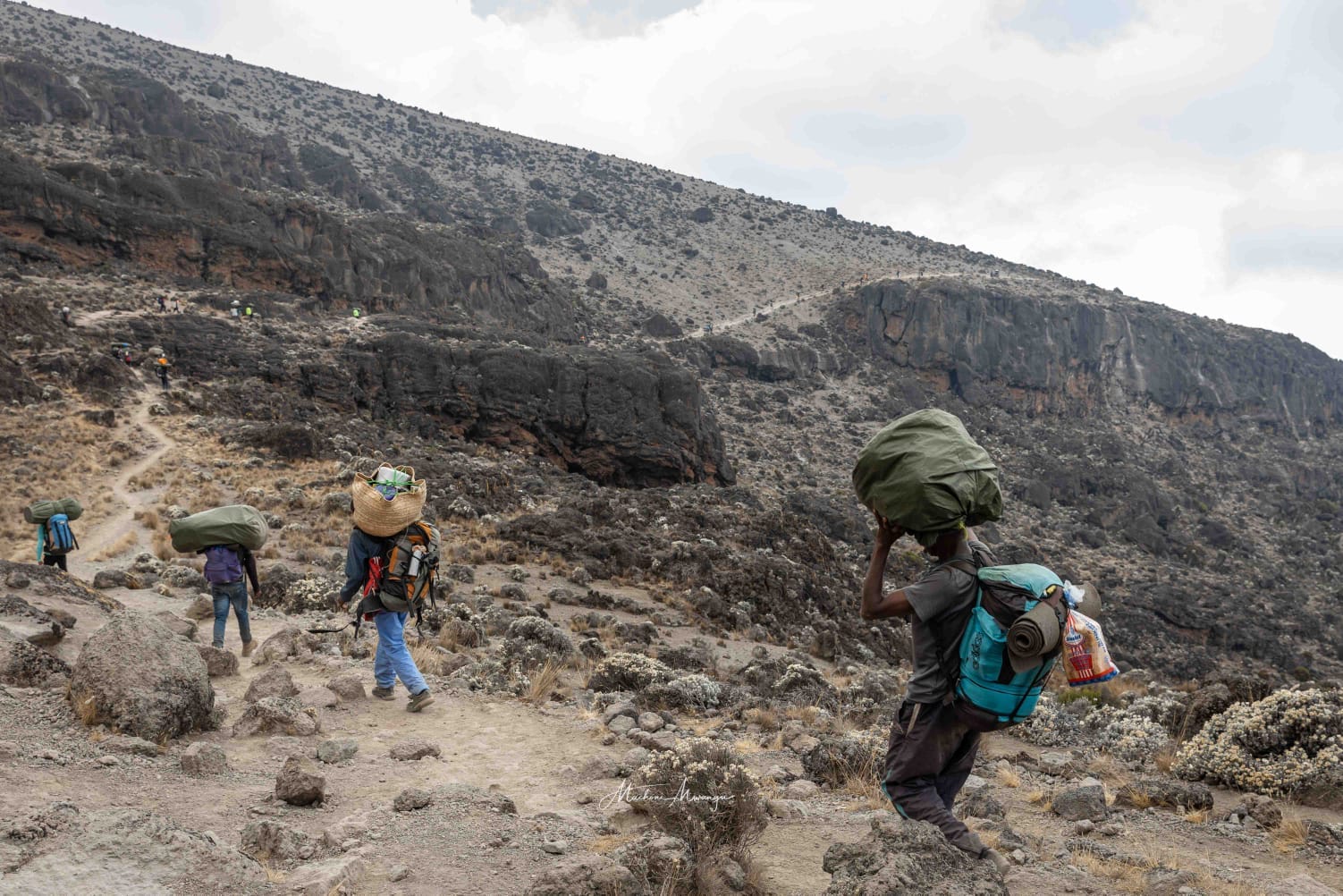
- Guide and porter team
- Equipment
- Additional services
A beginner should compare complete itineraries rather than choosing the cheapest advertised price.
A quotation should clearly explain what is included and excluded.
How Many Days Should a Beginner Spend on Kilimanjaro?
Tanzania National Parks states that climbs generally take 5–8 days depending on the route, while also noting that additional days increase the possibility of reaching the summit.
For a beginner, an itinerary that allows more time for acclimatization is generally worth considering.
Typical options include:
| Trek length | General consideration |
|---|---|
| 5 days | Very compressed |
| 6 days | Physically demanding |
| 7 days | More gradual |
| 8 days | More time for acclimatization |
| 9+ days | Possible on selected itineraries |
The exact route and itinerary should be considered together.
Beginner Kilimanjaro Checklist
Before departure, make sure you have:
Fitness
- Regular walking routine
- Cardiovascular training
- Strength training
- Long hikes
- Hill training
Equipment
- Broken-in hiking boots
- Warm layers
- Waterproof jacket
- Waterproof trousers
- Warm gloves
- Warm hat
- Headlamp
- Trekking poles
- Sunglasses
- Sunscreen
- Backpack
- Sleeping bag if required
Preparation
- Understand altitude sickness
- Understand the route
- Check your itinerary
- Check accommodation arrangements
- Check transfers
- Confirm what equipment is included
- Confirm what is excluded
- Arrange appropriate travel insurance
- Seek medical advice if necessary
Can a Beginner Really Reach Uhuru Peak?
Yes, a person without previous mountaineering experience can prepare for and attempt the summit of Kilimanjaro.
But nobody should approach the mountain with the attitude that reaching the summit is guaranteed.
The mountain’s altitude, weather and individual response can change the experience dramatically.
The best strategy is to give yourself the best possible conditions:
Train properly.
Choose enough days.
Acclimatize gradually.
Walk slowly.
Use appropriate equipment.
Listen to your guide.
Take altitude symptoms seriously.
Final Answer: Can a Beginner Climb Kilimanjaro?
Yes — beginners can climb Kilimanjaro.
You do not need to be an experienced mountaineer or technical climber.
What you need is adequate preparation, reasonable fitness, suitable equipment, patience and respect for the altitude.
The most important thing for a beginner is not to underestimate the mountain.
Kilimanjaro reaches 5,895 metres, and altitude is a serious consideration for every climber.
Choose an itinerary that gives your body enough time to adapt, prepare physically before arriving, walk at a controlled pace and communicate honestly with your guide throughout the trek.
For many first-time trekkers, the journey is not about being the fastest person on the mountain.
It is about taking one step at a time.
Pole pole — slowly, slowly.
And eventually, you may find yourself standing at Uhuru Peak, 5,895 metres above sea level, on the Roof of Africa.
Frequently Asked Questions
Can a complete beginner climb Kilimanjaro?
Yes. Previous mountaineering experience is not required for the standard trekking routes, although good preparation and acclimatization are important.
How fit do I need to be?
You should be comfortable walking for several hours and should prepare through regular cardiovascular exercise, walking, hiking and strength training.
Is Kilimanjaro dangerous for beginners?
High altitude creates real risks, particularly altitude illness. Proper acclimatization, gradual ascent, preparation and appropriate guidance are important.
What is the biggest challenge for beginners?
For many trekkers, the biggest challenge is altitude rather than technical climbing.
How long should a beginner climb Kilimanjaro?
A longer itinerary generally gives more time for acclimatization. Seven or eight-day options are commonly considered when planning a more gradual climb.
Do I need climbing experience?
No technical climbing experience is normally required for the standard trekking routes to Uhuru Peak.
Do I need special mountaineering equipment?
Standard summit treks generally do not require technical climbing equipment, but high-quality cold-weather clothing, footwear, a sleeping system where required and other trekking equipment are essential.
Can I train for Kilimanjaro at home?
Yes. Walking, hiking, stair climbing, cycling, running and strength training can all help prepare you physically.
What if I get altitude sickness?
Tell your guide immediately. Depending on the severity, the response may include rest, monitoring, descent or medical evacuation.
Is being young and fit enough to guarantee success?
No. Fitness is helpful, but it does not guarantee that your body will acclimatize well to high altitude.