
Mount Kilimanjaro has several trekking routes, but Lemosho and Machame are two of the most popular choices for hikers who want scenic trails, good acclimatization opportunities, and a more wilderness-oriented Kilimanjaro experience.
Both routes eventually approach the summit from the south/southwest and use Barafu Camp and the Southern Circuit for summit preparation. The main differences are in the starting point, scenery, number of trekking days, acclimatization profile, trail experience, and overall cost.
So, which route should you choose?
The answer depends on your available time, fitness, budget, previous hiking experience, and preference for scenery and trail conditions.
Lemosho vs Machame at a Glance
| Feature | Lemosho Route | Machame Route |
|---|---|---|
| Typical duration | 7–8 days | 6–7 days |
| Starting point | Lemosho Gate | Machame Gate |
| Starting elevation | Approximately 2,100–2,400 m | Approximately 1,800 m |
| Summit | Uhuru Peak – 5,895 m | Uhuru Peak – 5,895 m |
| Scenery | Excellent | Excellent |
| Forest experience | Extensive | Extensive |
| Acclimatization | Generally better with longer itineraries | Good with 7-day itinerary |
| Crowds | Generally quieter at the beginning | Usually busier |
| Difficulty | Moderate to challenging | Moderate to challenging |
| Camping | Yes | Yes |
| Hut accommodation | No | No |
| Best for | Trekkers wanting more time and scenery | Trekkers wanting a classic route |
| Cost | Usually higher | Usually slightly lower |
| Summit approach | Barafu → Uhuru Peak | Barafu → Uhuru Peak |
Exact elevations, distances, camps and itinerary details can vary depending on the operator and itinerary.
1. Lemosho Route
The Lemosho Route begins on the western side of Mount Kilimanjaro. It is known for its beautiful scenery, quieter beginning, gradual approach and excellent opportunities for acclimatization when completed over 7 or 8 days.
The route crosses several ecological zones, beginning in the montane forest before reaching the moorland and high-altitude alpine desert.
One of the major advantages of Lemosho is that the longer itinerary gives trekkers more time on the mountain.
Typical Lemosho itinerary
A common 7-day Lemosho itinerary may look like:
Day 1: Lemosho Gate → Forest Camp
Day 2: Forest Camp → Shira Camp
Day 3: Shira Camp → Lava Tower → Barranco Camp
Day 4: Barranco → Karanga Camp
Day 5: Karanga → Barafu Camp
Day 6: Barafu → Uhuru Peak → Mweka Camp
Day 7: Mweka Camp → Mweka Gate
An 8-day itinerary adds an additional acclimatization day and generally spreads the ascent over a longer period.
2. Machame Route
The Machame Route, sometimes called the “Whiskey Route,” starts from Machame Gate on the southern side of Kilimanjaro.
It is one of the mountain’s best-known routes and is particularly popular because of its combination of scenery, camping experience and relatively efficient itinerary.
Machame is normally completed in 6 or 7 days, although a 7-day itinerary gives trekkers more time for acclimatization than the shorter version.
Typical 7-day Machame itinerary
Day 1: Machame Gate → Machame Camp
Day 2: Machame Camp → Shira Camp
Day 3: Shira Camp → Lava Tower → Barranco Camp
Day 4: Barranco → Karanga Camp
Day 5: Karanga → Barafu Camp
Day 6: Barafu → Uhuru Peak → Mweka Camp
Day 7: Mweka Camp → Mweka Gate
The similarity between the upper sections of the two routes is important: after joining the Shira Plateau, Lemosho and Machame largely converge.
3. Scenery: Lemosho vs Machame
Both routes are exceptionally scenic, but the experience is somewhat different.
Lemosho scenery
Lemosho provides a longer western approach to Kilimanjaro.
Trekkers can experience:
- Montane rainforest
- Giant trees
- Moorland
- Shira Plateau
- Volcanic formations
- Lava Tower
- Barranco Valley
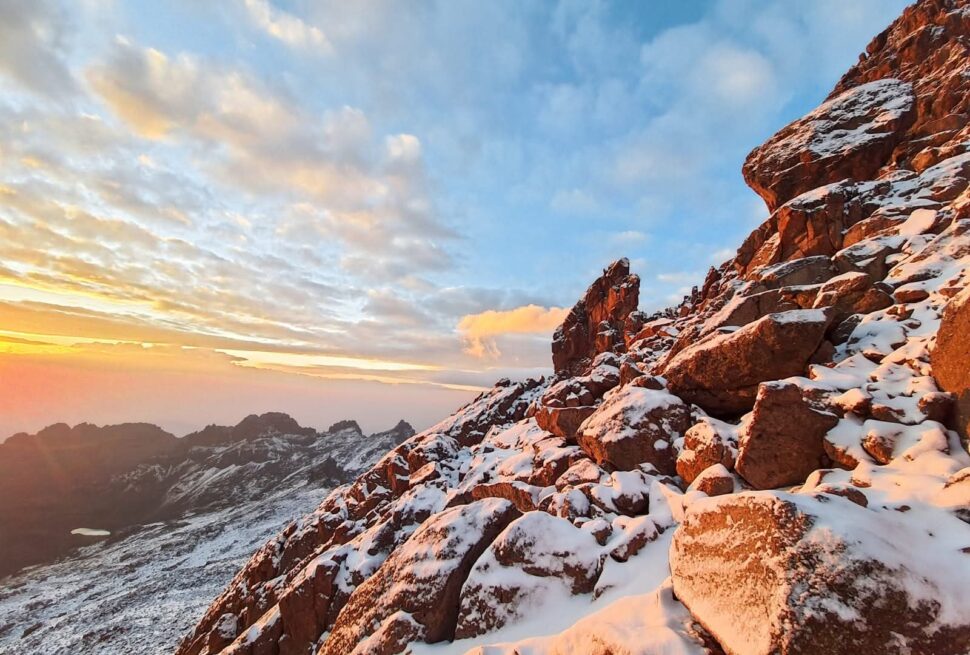
- Alpine desert
- Southern glaciers and ice fields, where visible
- Uhuru Peak
The relatively remote beginning of the route is one of its attractions.
Machame scenery
Machame also passes through several ecological zones:
- Rainforest
- Moorland
- Shira Plateau
- Lava Tower area
- Barranco Valley
- Karanga Valley
- Alpine desert
- Summit zone
The Barranco area is particularly spectacular, with the imposing Barranco Wall forming one of the route’s most recognizable sections.
Which has better scenery?
There is no objective “winner.”
Lemosho provides a longer and more varied western approach, while Machame provides excellent scenery on a somewhat more compact itinerary.
If scenery and wilderness experience are major priorities, Lemosho’s longer itinerary can be attractive.
4. Acclimatization: Lemosho vs Machame
Acclimatization is one of the most important considerations when selecting a Kilimanjaro itinerary.
Kilimanjaro rises from relatively low elevations to 5,895 metres at Uhuru Peak, so the body needs time to adjust to decreasing oxygen availability.
A longer itinerary generally provides more time for gradual ascent and acclimatization.
Lemosho
Lemosho is commonly offered as a 7- or 8-day trek.
This gives trekkers more time on the mountain and allows the itinerary to be structured with acclimatization in mind.
The route also includes the important Lava Tower section before descending toward Barranco, allowing the trekker to gain significant elevation during the day and then sleep lower.
Machame
Machame can also provide a good acclimatization profile, particularly on the 7-day itinerary.
The route follows the well-known:
“Climb high, sleep low”
principle on the Shira Plateau/Lava Tower/Barranco section.
The 6-day Machame itinerary is more compressed, while the 7-day version gives additional time.
Important
No route can guarantee that a person will avoid altitude sickness.
Fitness helps with the physical demands of trekking, but altitude illness is not simply a fitness problem. Proper pacing, acclimatization, monitoring symptoms and following the guidance of qualified mountain staff are important.
5. Difficulty
Both Lemosho and Machame should be considered moderate to challenging high-altitude treks.
The biggest challenge is not technical climbing. Most trekkers do not need ropes or mountaineering skills to reach Uhuru Peak.
The primary challenges include:
- Long trekking days
- High altitude
- Cold temperatures
- Steep sections
- Limited oxygen at altitude
- Summit night
- Variable weather
- Sleeping in tents
- Several consecutive days of walking
Is Lemosho easier than Machame?
Not necessarily.
Lemosho can feel more gradual because it is usually completed over more days, but it is still a serious high-altitude trek.
A 7- or 8-day Lemosho itinerary gives more time for adaptation than a compressed itinerary.
Machame can also be very manageable when completed over 7 days with appropriate pacing.
6. Crowds
Crowds vary according to:
- Season
- Day of the week
- Operator schedules
- Park regulations
- Number of groups starting on a particular day
Machame is one of Kilimanjaro’s most popular routes, so the trail can be busy, especially during peak trekking periods.
Lemosho generally offers a quieter beginning because the route starts farther west and follows a different approach before joining the main southern circuit.
Once the routes converge around the Shira Plateau and later camps, trekkers from different routes may share the same trail.
If avoiding crowds is important
Lemosho may provide a more remote feeling during the early days.
However, it would be misleading to describe the entire Lemosho route as uncrowded because the upper mountain is shared with several routes.
7. Camping Experience
Both Lemosho and Machame are camping routes.
Unlike Marangu, which uses mountain huts, trekkers on Lemosho and Machame normally sleep in tents.
A typical trekking camp includes:
- Sleeping tent
- Sleeping mattress
- Dining tent
- Camp chairs/table where included
- Mountain toilet arrangements depending on the package
- Cook and kitchen equipment
The exact camping setup depends on the tour operator and package.
If you prefer sleeping in huts, Marangu is the main Kilimanjaro route to consider.
8. Lemosho vs Machame: Which Is More Scenic?
Both are highly scenic.
Lemosho advantages
- Longer western approach
- Beautiful rainforest
- Open moorland
- Shira Plateau
- Remote feeling during the early days
- Excellent variety of landscapes
- Longer itineraries available
Machame advantages
- Beautiful rainforest
- Shira Plateau
- Lava Tower
- Barranco Valley
- Barranco Wall
- Karanga Valley
- Classic southern approach
For someone who wants a longer wilderness experience, Lemosho is particularly attractive.
For someone who wants a classic Kilimanjaro camping route with excellent scenery in fewer days, Machame is a popular option.
9. Lemosho vs Machame: Which Is Cheaper?
The price depends on:
- Number of trekking days
- Group size
- Park fees
- Number of guides and porters
- Food
- Accommodation before/after the trek
- Transfers
- Equipment
- Camping arrangements
- Operator standards
- Private vs group trekking
Generally, a 6-day Machame trek can cost less than a 7- or 8-day Lemosho trek, partly because there are fewer trekking days and therefore fewer park and operational costs.
However, comparing prices solely by the advertised total can be misleading.
A very cheap Kilimanjaro package may not provide the same:
- Staff-to-client ratio
- Food quality
- Equipment
- Accommodation
- Safety arrangements
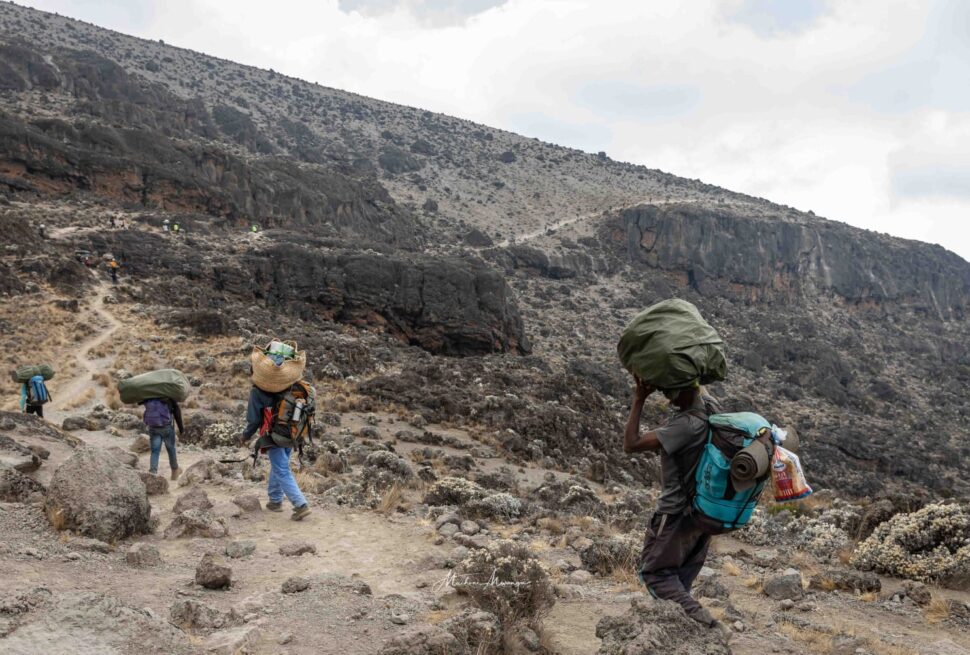
- Porter welfare
- Guide experience
- Emergency support
When comparing quotations, check exactly what is included.
10. Private vs Group Trek
Both Lemosho and Machame can be organized as:
- Private climbs
- Small group climbs
- Scheduled group climbs
Private climb
A private trek provides greater flexibility regarding:
- Starting date
- Pace
- Rest stops
- Group composition
- Accommodation
- Route itinerary
It generally costs more per person.
Group climb
A group trek can reduce the per-person cost because operational expenses are shared among trekkers.
For budget-conscious hikers, joining a group can therefore be an attractive option.
11. Which Route Is Better for Beginners?
Both routes can be suitable for beginners who are properly prepared.
A first-time Kilimanjaro trekker should pay particular attention to:
- Number of trekking days
- Acclimatization
- Physical preparation
- Walking pace
- Previous hiking experience
- Medical considerations
- Quality of the trekking operator
For a beginner choosing between the two, a 7-day itinerary is generally preferable to compressing the trek into fewer days, because it allows more time on the mountain.
Lemosho’s 7- or 8-day options are therefore worth considering for people who have sufficient time.
Machame’s 7-day itinerary is also a strong option for those who prefer its trail.
12. Which Route Is Better for Experienced Hikers?
Experienced hikers have more flexibility.
Someone with extensive high-altitude trekking experience may be comfortable with either route, but previous hiking experience does not eliminate the physiological effects of altitude.
Experienced trekkers should still:
- Ascend gradually
- Maintain a controlled pace
- Hydrate appropriately
- Eat regularly
- Monitor symptoms
- Follow their guide’s instructions
- Be prepared to turn around if necessary
13. Summit Day on Lemosho and Machame
One of the biggest similarities between the two routes is summit day.
Trekkers generally leave Barafu Camp during the night, often around midnight or shortly afterward, depending on the itinerary and conditions.
The ascent toward Uhuru Peak involves:
Barafu Camp → Stella Point → Uhuru Peak
The climb is slow and demanding.
At approximately 5,895 metres, Uhuru Peak is the highest point in Africa.
After reaching the summit, trekkers descend to a lower camp, commonly Mweka Camp on these southern routes.
The summit day can involve many hours of walking, so preparation and pacing are essential.
14. What Is the Barranco Wall?
The Barranco Wall is one of the most famous sections of both Lemosho and Machame.
Despite its dramatic appearance, it is primarily a scrambling/hiking section rather than a technical rock-climbing pitch.
Trekkers normally use their hands occasionally for balance and follow the route under the direction of their guides.
The wall provides an exciting part of the trek and offers impressive views once trekkers reach the top.
15. Lemosho vs Machame: Route Differences
The key difference occurs during the early stages.
Lemosho
Lemosho Gate → Western Forest → Shira Plateau → Lava Tower → Barranco → Karanga → Barafu → Uhuru Peak
Machame
Machame Gate → Machame Camp → Shira Plateau → Lava Tower → Barranco → Karanga → Barafu → Uhuru Peak
After the routes converge around the Shira Plateau, their itineraries become increasingly similar.
This means that choosing Lemosho versus Machame is largely about the approach to the Shira Plateau and how many days you want to spend on the mountain.
16. Lemosho vs Machame Comparison
| Category | Lemosho | Machame |
|---|---|---|
| Duration | 7–8 days commonly | 6–7 days commonly |
| Starting side | Western | Southern |
| Scenery | Excellent | Excellent |
| Early trail | Quieter/remote feeling | More established/popular |
| Acclimatization | Very good on longer itineraries | Good on 7-day itinerary |
| Camping | Yes | Yes |
| Huts | No | No |
| Difficulty | Moderate–challenging | Moderate–challenging |
| Cost | Usually higher | Usually lower |
| Best for | More time and scenery | Classic route and shorter itinerary |
| Beginner suitability | Good with adequate preparation | Good with adequate preparation |
| Summit route | Barafu → Uhuru | Barafu → Uhuru |
17. Lemosho vs Machame: Which One Should You Choose?
Instead of asking which route is universally “better,” consider what you want from your Kilimanjaro trek.
Choose Lemosho if you want:
- A longer trekking experience
- A quieter beginning
- Extensive scenery
- More time for acclimatization
- A 7- or 8-day itinerary
- A more gradual introduction to the mountain
- A wilderness-oriented experience
Choose Machame if you want:
- A classic Kilimanjaro route
- Excellent scenery
- A 6- or 7-day option
- A well-established trekking route
- Camping throughout the trek
- A potentially lower overall cost
18. Recommended Itinerary Length
For many trekkers, the number of days is more important than simply choosing between Lemosho and Machame.
Lemosho
7 days: Good balance between duration, acclimatization and cost.
8 days: More time on the mountain and an additional acclimatization opportunity.
Machame
6 days: More compact and physically demanding.
7 days: More gradual and generally preferable if time and budget allow.
For a first Kilimanjaro climb, choosing a longer itinerary can provide a more gradual ascent.
19. What Should You Consider Before Booking?
Before paying a deposit, ask your Kilimanjaro operator:
About the itinerary
- How many days is the trek?
- Which camps will we use?
- What is the daily elevation gain?
- How long are the walking days?
- What time does summit night begin?
About safety
- Are qualified mountain guides provided?
- What emergency procedures are in place?
- How are altitude problems handled?
- What communication equipment is available?
- Is evacuation included or separately charged?
About porters
- How many porters are assigned?
- What luggage allowance is included?
- Are porter welfare standards followed?
About accommodation
- Is pre- and post-climb accommodation included?
- What standard of hotel is provided?
- Are airport transfers included?
About food
- How many meals are provided?
- Is drinking water included?
- Can dietary requirements be accommodated?
A transparent quotation makes it much easier to compare different operators.
20. Frequently Asked Questions
Is Lemosho harder than Machame?
Both are challenging high-altitude treks. Lemosho is often completed over more days, which can make the ascent more gradual. Difficulty depends on the specific itinerary, pace, altitude response and individual preparation.
Is Lemosho more scenic than Machame?
Both routes offer excellent scenery. Lemosho provides a longer western approach and a quieter beginning, while Machame offers spectacular rainforest, Shira Plateau, Lava Tower and Barranco scenery.
Which route has a higher summit success rate?
Summit success depends on several factors, including itinerary length, acclimatization, weather, pacing, guide practices and individual response to altitude. A route name alone does not guarantee summit success.
Is Machame good for beginners?
Yes. Beginners regularly use Machame, particularly the 7-day itinerary, provided they prepare properly and understand that Kilimanjaro is a serious high-altitude trek.
Is Lemosho good for beginners?
Yes. The 7- or 8-day Lemosho itineraries can provide a gradual approach and additional time for acclimatization.
Which route is less crowded?
Lemosho generally has a quieter beginning, while Machame is one of Kilimanjaro’s most popular routes. However, both eventually join sections of the southern circuit.
Which route is cheaper?
Machame is often cheaper when comparing a 6-day Machame itinerary with a 7- or 8-day Lemosho itinerary. Actual prices depend on the operator and inclusions.
Do Lemosho and Machame reach the same summit?
Yes. Both routes reach Uhuru Peak at 5,895 metres, the highest point on Mount Kilimanjaro.
Do both routes use tents?
Yes. Lemosho and Machame are camping routes. They do not use the mountain huts associated with the Marangu Route.
Which route should I choose?
The decision depends on your available time, budget, preferred scenery, desired itinerary length and experience. Lemosho is particularly suitable for trekkers who want a longer western approach, while Machame is attractive for trekkers looking for a classic southern route over 6 or 7 days.
Final Thoughts: Lemosho vs Machame
Lemosho and Machame are both excellent routes for climbing Mount Kilimanjaro.
The most important difference is not the summit itself—both routes ultimately lead to Uhuru Peak—but the journey you take to get there.
Lemosho offers a longer western approach, beautiful scenery, a quieter beginning and 7- or 8-day options that allow more time on the mountain.
Machame offers a classic Kilimanjaro trekking experience with spectacular scenery and 6- or 7-day itineraries.
For trekkers with enough time, a 7-day or longer itinerary can provide a more gradual experience than a compressed climb.
Whatever route you choose, prioritize proper acclimatization, experienced guides, appropriate equipment, realistic pacing and a reputable trekking operator over choosing a route based solely on the lowest price.
Ready to Climb Kilimanjaro?
Kili Backpackers offers guided Kilimanjaro climbs on Lemosho, Machame, Marangu, Rongai and other routes, with private and group trekking options.
Before booking, compare the itinerary, inclusions, number of trekking days, accommodation, guide support, porter arrangements and safety procedures—not just the advertised price.
Start planning your Kilimanjaro adventure today.