Mount Kilimanjaro is physically demanding but achievable for many reasonably fit people without previous mountaineering experience. You do not need to be a technical climber, and there is no need for ropes or advanced climbing skills on the normal trekking routes.
The biggest challenge is altitude, not technical climbing. Uhuru Peak stands at 5,895 metres (19,341 feet), where the air contains considerably less available oxygen than at sea level. The pace, number of days, acclimatization schedule, fitness, weather and your individual response to altitude all influence how difficult the climb feels.
Is Kilimanjaro Really Difficult?
A useful way to think about Kilimanjaro is:
Walking difficulty: Moderate to strenuous
Technical climbing: Low on standard trekking routes
Altitude difficulty: Very high
Summit night: Extremely demanding
Fitness required: Moderate to good
Mental endurance: Important
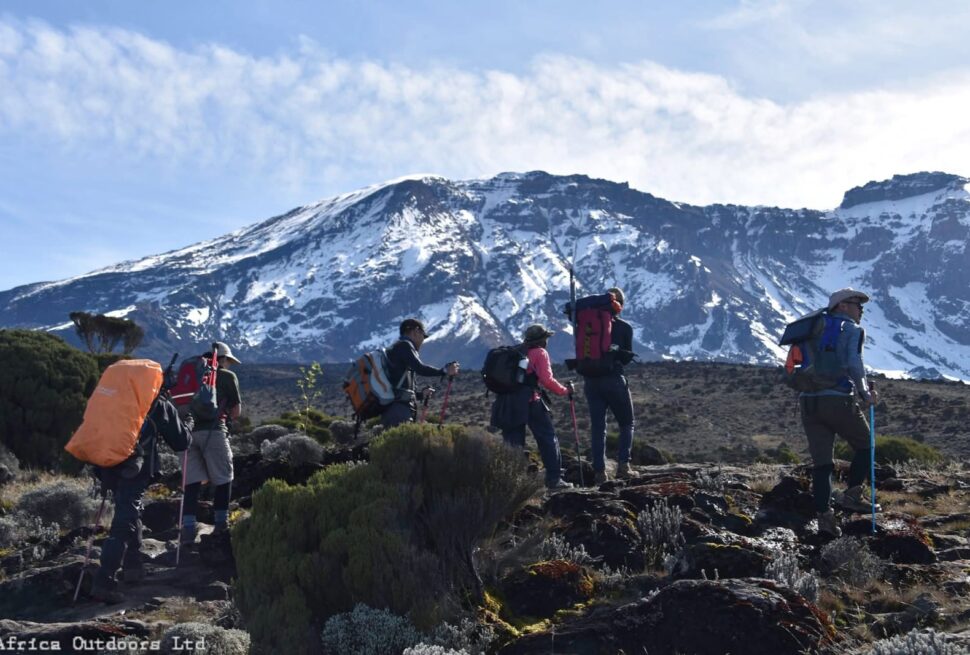
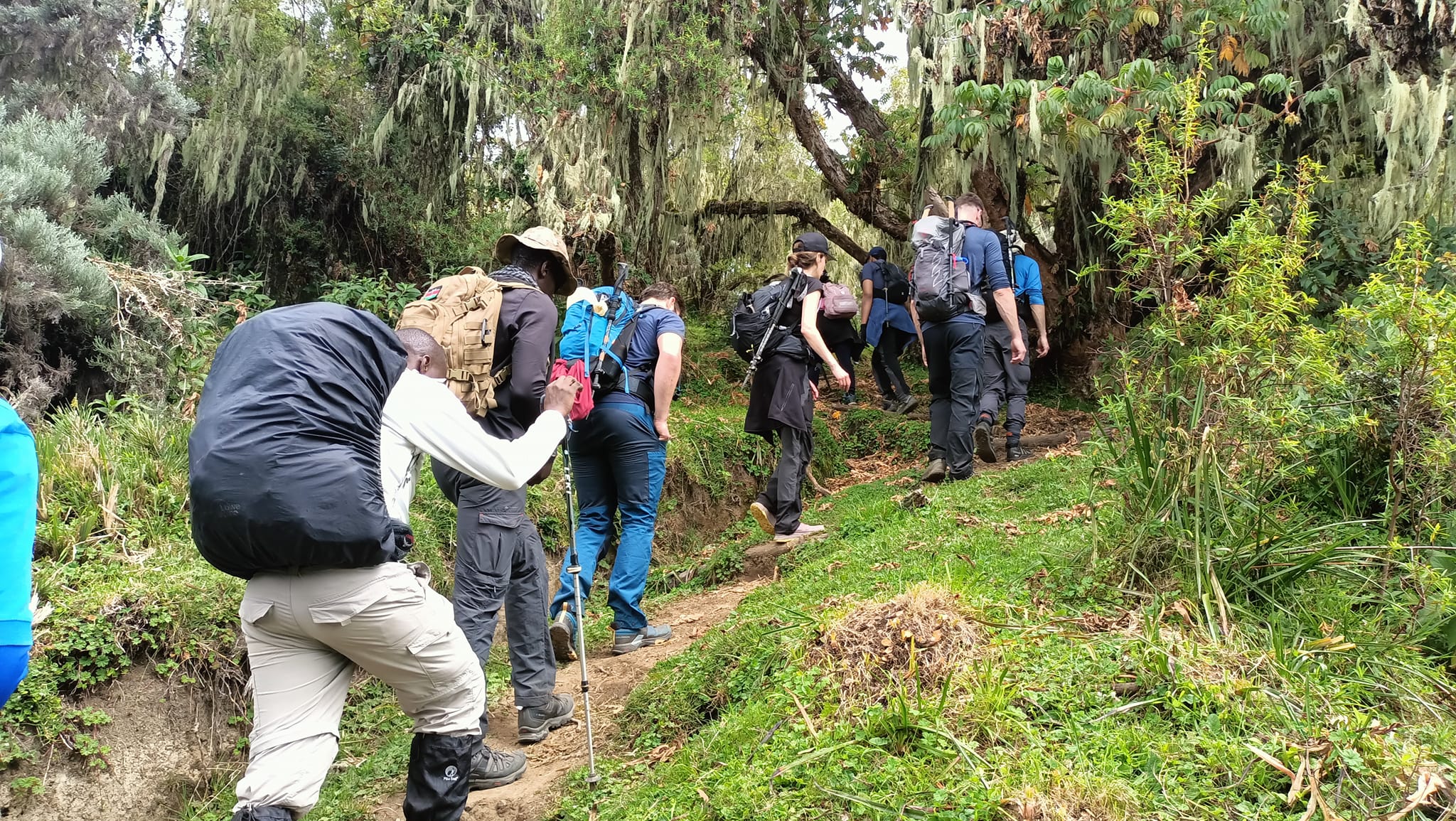
You will generally walk for several hours each day at a relatively slow pace. The terrain changes from tropical forest to moorland, alpine desert and finally the cold, rocky summit zone.
The final summit attempt is the hardest part.
You may start walking around midnight and continue for many hours, climbing from your high camp to Uhuru Peak and then descending substantially lower the same day.
The Biggest Challenge: Altitude
Altitude is what makes Kilimanjaro different from an ordinary long-distance hike.
At sea level, your body has plenty of oxygen available. As you ascend, atmospheric pressure decreases and the amount of oxygen available with each breath falls.
Kilimanjaro reaches 5,895 m, considerably higher than most people have previously experienced. The CDC identifies altitude illness as one of the principal hazards for people climbing Kilimanjaro.
Common symptoms of altitude sickness can include:
- Headache
- Fatigue
- Dizziness
- Nausea
- Loss of appetite
- Poor sleep
- Shortness of breath
- Reduced exercise performance
These symptoms can occur even in people who are very fit.
Being fit does not make you immune to altitude sickness.
Your body needs time to adapt to the lower oxygen availability. The CDC recommends gradual ascent and notes that acclimatization is particularly important once above approximately 3,000 m.
How High Is Kilimanjaro?
| Location | Approx. elevation |
|---|---|
| Moshi | ~800 m |
| Machame Gate | ~1,800 m |
| Shira Plateau | ~3,800 m |
| Barranco Camp | ~3,950 m |
| Lava Tower | ~4,630 m |
| Barafu Camp | ~4,670 m |
| Uhuru Peak | 5,895 m |
This dramatic increase in elevation is one reason you should not think of Kilimanjaro simply as a long hike.
You are taking your body from relatively low elevation to almost 5,900 metres within a matter of days.
How Difficult Is the Walking?
The trails themselves vary considerably.
You will encounter:
Forest trails
The lower slopes are generally comfortable hiking terrain, although trails can be muddy following rain.
Moorland
The vegetation becomes shorter and the landscape more exposed. The walking can involve uneven rocks and gradual climbs.
Alpine desert
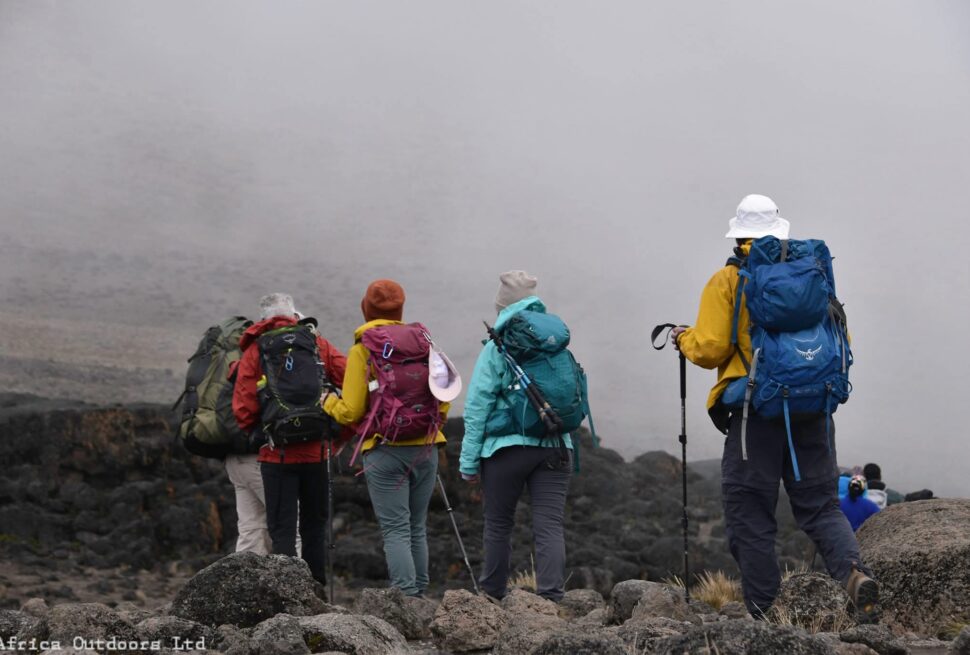
Above approximately 4,000 m, the landscape becomes much more barren. Temperatures also become colder.
Summit zone
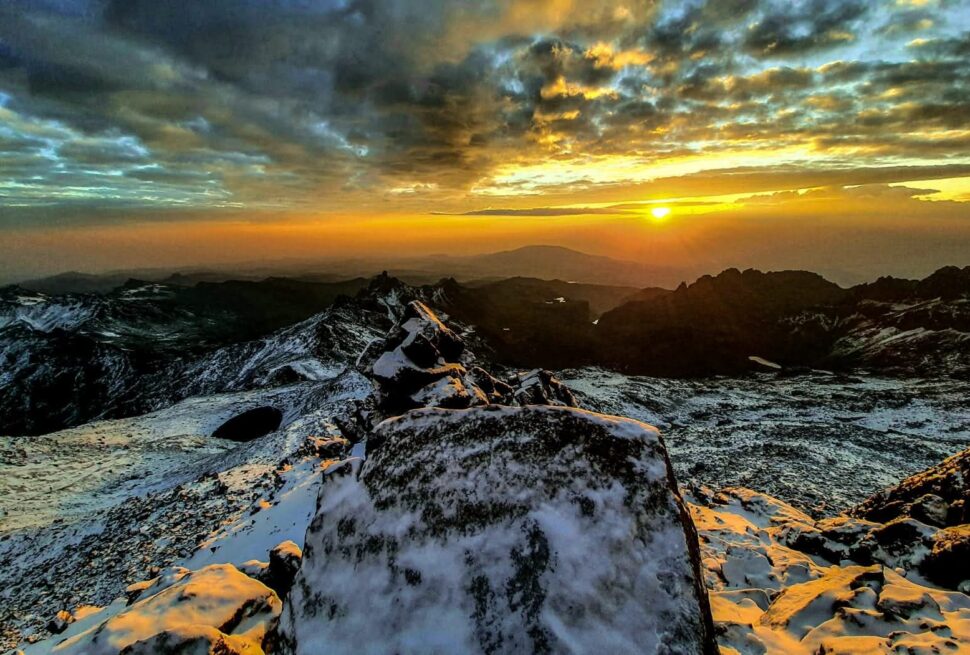
The final approach to Uhuru Peak involves steep, rocky terrain and often loose volcanic scree.
At this altitude, even a relatively gentle slope can feel extremely difficult.
The Summit Night Is the Hardest Part
For most hikers, summit night is by far the most physically and mentally demanding section of Kilimanjaro.
A typical summit push involves:
Barafu Camp → Stella Point → Uhuru Peak → descent
or, depending on the route:
Kibo Hut → Gilman’s Point → Uhuru Peak → descent
You normally begin around midnight or in the early hours of the morning.
The reasons it is difficult include:
- Very high altitude
- Cold temperatures
- Darkness
- Steep terrain
- Loose volcanic rock
- Limited oxygen
- Several hours of continuous walking
- Lack of normal sleep
- Physical fatigue accumulated from previous days
You may take a few steps and then stop to breathe.
This is normal at extreme altitude.
Your guides will generally encourage a very slow pace, often referred to as “pole pole”, meaning slowly.
How Long Does Summit Day Take?
It varies considerably depending on the route, camp and individual pace.
A typical summit day can involve:
5–8+ hours ascending
followed by:
5–7+ hours descending
and sometimes additional walking to the next camp.
That means summit day can become a 10–15+ hour day for some hikers.
The exact duration depends on:
- Starting elevation
- Weather
- Individual fitness
- Altitude response
- Group pace
- Summit conditions
- Route
This is why the final day should not be underestimated.
Do You Need to Be Very Fit?
You don’t need to be an elite athlete.
However, you should be comfortable walking for several hours over uneven terrain.
A good preparation target is being able to:
- Walk/hike for 5–8 hours
- Walk uphill for extended periods
- Carry a daypack
- Walk several consecutive days
- Continue walking when tired
- Handle uneven rocky terrain
- Maintain a slow, steady pace
Cardiovascular fitness is useful, but endurance is more important than speed.
Kilimanjaro is not a race.
What About People Who Don’t Hike Regularly?
Someone who does not regularly hike should not assume that Kilimanjaro will be easy simply because it doesn’t require technical climbing.
If you currently have a sedentary lifestyle, start training several months before your trip.
You don’t need to become a professional mountaineer.
Instead, gradually develop:
Walking endurance + uphill strength + leg strength + aerobic fitness.
How to Train for Kilimanjaro
A simple training program can include:
Walking
Start with 30–60 minute walks several times per week.
Gradually increase the duration.
Hiking
Add weekend hikes.
Start with shorter hikes and progressively increase:
2 hours → 3 hours → 4 hours → 5+ hours
Uphill training
Stairs, hills, treadmill incline and stair machines can be useful.
Leg strength
Exercises such as:
- Squats
- Lunges
- Step-ups
- Calf raises
- Glute exercises
Core
Include:
- Planks
- Side planks
- Controlled core exercises
Back-to-back hiking
This is particularly useful.
For example:
Saturday: 5-hour hike
Sunday: 3-hour hike
It teaches your body to keep moving when tired.
How Important Is Acclimatization?
Extremely important.
One of the biggest mistakes hikers make is focusing only on physical fitness.
A very fit person can still struggle badly with altitude.
The CDC recommends gradual ascent and, once above about 3,000 m, limiting the increase in sleeping elevation to roughly 500 m per day, with additional acclimatization time as altitude increases.
This is why longer Kilimanjaro itineraries are generally preferable for hikers who have enough time.
For example, a 7-day Machame itinerary gives more time for acclimatization than a compressed itinerary.
Longer routes such as Lemosho and Northern Circuit also provide more time on the mountain.
“Climb High, Sleep Low”
One important acclimatization principle used on Kilimanjaro is:
Climb high during the day and sleep lower.
For example, on a typical Machame itinerary, hikers may ascend toward Lava Tower at around 4,630 m before descending to sleep at a lower camp.
This gives the body exposure to higher altitude without requiring you to sleep at the highest elevation reached that day.
Which Kilimanjaro Route Is Easiest?
There isn’t a simple answer because “easiest” can mean different things.
A route can have a gentler trail but a shorter acclimatization schedule.
Marangu
Marangu generally has a relatively gradual trail compared with some other routes and uses huts rather than tents. However, shorter itineraries provide less time for acclimatization.
Machame
Machame involves steeper sections and more varied terrain. A 7-day itinerary provides more acclimatization time than a compressed 6-day climb.
Lemosho
Lemosho is normally done over approximately 7–8 days and provides a longer approach, giving hikers more time to adapt.
Rongai
Rongai approaches from the northern side and has a different landscape and acclimatization profile.
Northern Circuit
The Northern Circuit is the longest commonly used route and generally provides the most time on the mountain.
Umbwe
Umbwe is known for its steep and direct approach and is generally more demanding in the early stages.
For beginners, the number of days and acclimatization profile should be considered alongside trail steepness.
Kilimanjaro Route Difficulty Comparison
| Route | Typical duration | General hiking character |
|---|---|---|
| Marangu | 5–6 days | Gradual trail, huts |
| Rongai | 6–7 days | Moderate, quieter northern approach |
| Machame | 6–7 days | More strenuous, varied terrain |
| Lemosho | 7–8 days | Longer, gradual acclimatization |
| Northern Circuit | 8–9 days | Longest, more gradual itinerary |
| Umbwe | ~6 days | Steep and direct |
Exact itineraries and distances vary between operators. The important point is that more days generally provide more opportunity for acclimatization.
Is Kilimanjaro Harder Than Mount Kenya?
This depends heavily on the route.
Kilimanjaro’s main trekking routes do not require technical climbing skills to reach Uhuru Peak, while Mount Kenya has both trekking routes and technical climbing objectives.
For the average trekker:
Kilimanjaro’s major challenge = altitude and prolonged ascent
rather than technical climbing.
Point Lenana on Mount Kenya is 4,895 m, while Uhuru Peak on Kilimanjaro is 5,895 m, so Kilimanjaro exposes trekkers to approximately 1,000 m more elevation.
Can Beginners Climb Kilimanjaro?
Yes, beginners can climb Kilimanjaro.
Previous mountaineering experience is not normally required on the standard trekking routes.
However, “beginner” should not mean unprepared.
A first-time mountain hiker should:
- Train before the trip.
- Choose an appropriate itinerary.
- Allow enough days for acclimatization.
- Walk slowly.
- Listen to the guides.
- Stay hydrated.
- Eat regularly.
- Be prepared for cold conditions.
- Understand altitude sickness.
- Accept that reaching the summit is not guaranteed.
How Much Does Weight Matter?
You don’t need to be extremely lean or athletic to climb Kilimanjaro.
What matters more is your ability to move efficiently for many hours.
If you are carrying a heavy backpack, the climb becomes significantly harder.
Most commercial trekking operators have porters who carry the bulk of camping equipment and luggage, while hikers normally carry only their personal daypack.
Your daypack should contain only what you need during the day.
What Should Be in Your Daypack?
Typically:
- Water
- Rain jacket
- Warm layer
- Hat
- Gloves
- Snacks
- Sunscreen
- Sunglasses
- Personal medication
- Headlamp
- Phone/camera
- Small personal items
Keep it as light as practical.
A heavy backpack can make long uphill days unnecessarily difficult.
Weather Makes Kilimanjaro Harder
Kilimanjaro passes through several climatic zones.
You can experience:
Warm conditions → rain → cool temperatures → strong wind → freezing summit conditions
within the same trip.
The summit can be extremely cold, particularly during the early-morning summit attempt.
Therefore, clothing should be based on layers rather than one heavy jacket.
Mental Strength Matters
Kilimanjaro is also a mental challenge.
There may be moments when your body is tired and you wonder:
“Can I really continue?”
The answer is often to focus on the next small objective rather than thinking about the entire mountain.
Instead of:
“I still have five hours to go.”
think:
“Let’s reach the next break.”
Then:
“Let’s reach the next camp.”
And eventually:
“Let’s reach Uhuru Peak.”
A slow, consistent pace is more useful than trying to move quickly.
What Happens If You Get Altitude Sickness?
Do not ignore symptoms.
Mild altitude sickness can include headache, tiredness, nausea and loss of appetite. More serious altitude illness can become life-threatening and requires prompt descent and medical attention. (CDC)
Your guide team should monitor your condition throughout the climb.
Do not try to hide symptoms because you are worried about missing the summit.
Your health is more important than reaching the summit.
Anyone planning a high-altitude trek should discuss altitude illness prevention and any medication options with a qualified healthcare professional before travelling. (CDC)
What Makes Kilimanjaro Easier?
Several things can make a major difference:
1. Choose more days
Avoid choosing the shortest itinerary simply because it is cheaper.
2. Train beforehand
Build endurance gradually.
3. Walk slowly
Especially above 3,000 m.
4. Stay hydrated
Drink regularly rather than waiting until you are extremely thirsty.
5. Eat
Your appetite may decrease at altitude, but your body still needs energy.
6. Sleep well when possible
Sleep can be difficult at altitude, so give yourself time.
7. Dress properly
Cold and wet conditions can make the trek much harder.
8. Listen to your guide
Your guide sees how you are moving and can recognize problems that you may not notice yourself.
What Makes Kilimanjaro Harder?
Avoid these mistakes:
❌ Choosing the shortest itinerary just to save money
❌ Arriving without training
❌ Walking too fast
❌ Carrying an unnecessarily heavy backpack
❌ Ignoring headaches or nausea
❌ Not eating enough
❌ Not drinking enough
❌ Underestimating the cold
❌ Trying to keep up with faster hikers
❌ Treating summit night like an ordinary hike
How Fit Should You Be Before the Climb?
A useful practical test is whether you can comfortably complete a 4–6 hour hike with elevation gain and still feel capable of continuing.
Before travelling, work toward being comfortable with:
5–8 hours of walking
and occasionally:
two consecutive days of hiking.
You don’t need to be fast.
You need to be able to keep moving for a long time.
A Typical Kilimanjaro Difficulty Progression
Days 1–2
Moderate
You are getting used to the mountain.
Days 3–4
Moderate to challenging
Altitude becomes more noticeable and the terrain becomes more demanding.
Days 5–6
Challenging
You are higher, colder and increasingly tired.
Summit night
Very challenging
Altitude + cold + darkness + steep terrain + fatigue.
Descent
Physically demanding
Your legs may be tired, and descending steep terrain can put significant stress on your knees and feet.
Is Kilimanjaro Harder Going Up or Down?
For most hikers, going up is harder aerobically, particularly on summit night.
But descending can be harder on:
- Knees
- Ankles
- Quads
- Feet
After summit day, you may be surprised by how tired your legs feel during the descent.
Trekking poles can be particularly useful.
Who Should Consider a Longer Route?
A longer itinerary is particularly worth considering for:
- First-time high-altitude hikers
- People travelling from sea level
- People who want more acclimatization time
- People with limited previous hiking experience
- Anyone who doesn’t want to rush the mountain
- Hikers who have enough time and budget
The CDC specifically notes that adding additional days to a Kilimanjaro ascent facilitates acclimatization.
Final Answer: How Hard Is Kilimanjaro?
Kilimanjaro is challenging, but it is not an extreme technical mountain climb.
The standard routes are trekking routes rather than technical mountaineering routes. The real challenge is taking your body to 5,895 m, walking for several consecutive days, coping with cold and fatigue, and completing a very long summit night.
For a reasonably fit person who trains properly and chooses a well-paced itinerary, Kilimanjaro can be a realistic goal.
The most important lesson is:
Kilimanjaro is not a race. Slow, steady hiking and good acclimatization are more important than being exceptionally athletic.
If you are planning your first climb, give yourself enough time, prepare your body, choose an itinerary with adequate acclimatization, and take altitude symptoms seriously. (CDC)
Quick difficulty summary
| Factor | Difficulty |
|---|---|
| Technical climbing | Low on standard trekking routes |
| Normal hiking | Moderate–challenging |
| Long hiking days | Challenging |
| Altitude | Very challenging |
| Summit night | Very challenging |
| Fitness requirement | Moderate–good |
| Experience required | No previous mountaineering required |
| Mental endurance | Important |
| Overall | Challenging but achievable with proper preparation |