How Much Should You Tip Kilimanjaro Guides and Porters?
Tipping is an important part of climbing Mount Kilimanjaro. Guides, assistant guides, cooks and porters work long hours in difficult mountain conditions, and tips are generally given at the end of the trek as a way of recognizing the team’s service.
Tipping is not normally included in the advertised trekking price, so climbers should budget for it separately.
How Much Should You Tip on Kilimanjaro?
A commonly used guideline is:
| Trekking team member | Suggested tip per climber, per day |
|---|---|
| Lead Guide | US$20–30 |
| Assistant Guide | US$15–25 |
| Cook | US$10–15 |
| Porter | US$5–10 |
These are guidelines rather than fixed charges. The appropriate amount can depend on the size of the group, length of the trek, level of service and individual circumstances.
Example: 6-Day Kilimanjaro Trek
For a 6-day climb, a climber might budget approximately:
- Lead guide: $120–180
- Assistant guide: $90–150
- Cook: $60–90
- Porters: $30–60 each
The total depends heavily on how many guides, cooks and porters are in the team.
For that reason, it is better to calculate tips based on the actual trekking team rather than simply budgeting a fixed percentage of the tour price.
Who Should Receive a Tip?
A Kilimanjaro trekking team can include several different roles.
1. Lead Guide
The lead guide is responsible for the overall trek and the safety and coordination of the group.
The guide typically:
- Leads the group along the route
- Monitors climbers
- Helps with acclimatization decisions
- Coordinates the trekking team
- Provides information about the mountain
- Assists during emergencies
- Coordinates the summit attempt
Because of the responsibility involved, the lead guide normally receives one of the larger tips.
Suggested range: $20–30 per day.
2. Assistant Guide
Larger groups may have one or more assistant guides.
They help with:
- Monitoring climbers
- Maintaining group pace
- Assisting during the summit
- Supporting the lead guide
- Helping with emergencies
- Ensuring that nobody is left behind
Suggested range: $15–25 per day.
If you have several assistant guides, remember to calculate the tip for each person.
3. Cook
On camping routes, the cook is responsible for preparing meals throughout the trek.
The work can involve:
- Preparing breakfast
- Preparing lunch
- Preparing dinner
- Carrying or managing cooking supplies
- Preparing food at high altitude
- Cleaning cooking equipment
A good cook can make a significant difference to the trekking experience.
Suggested range: $10–15 per day.
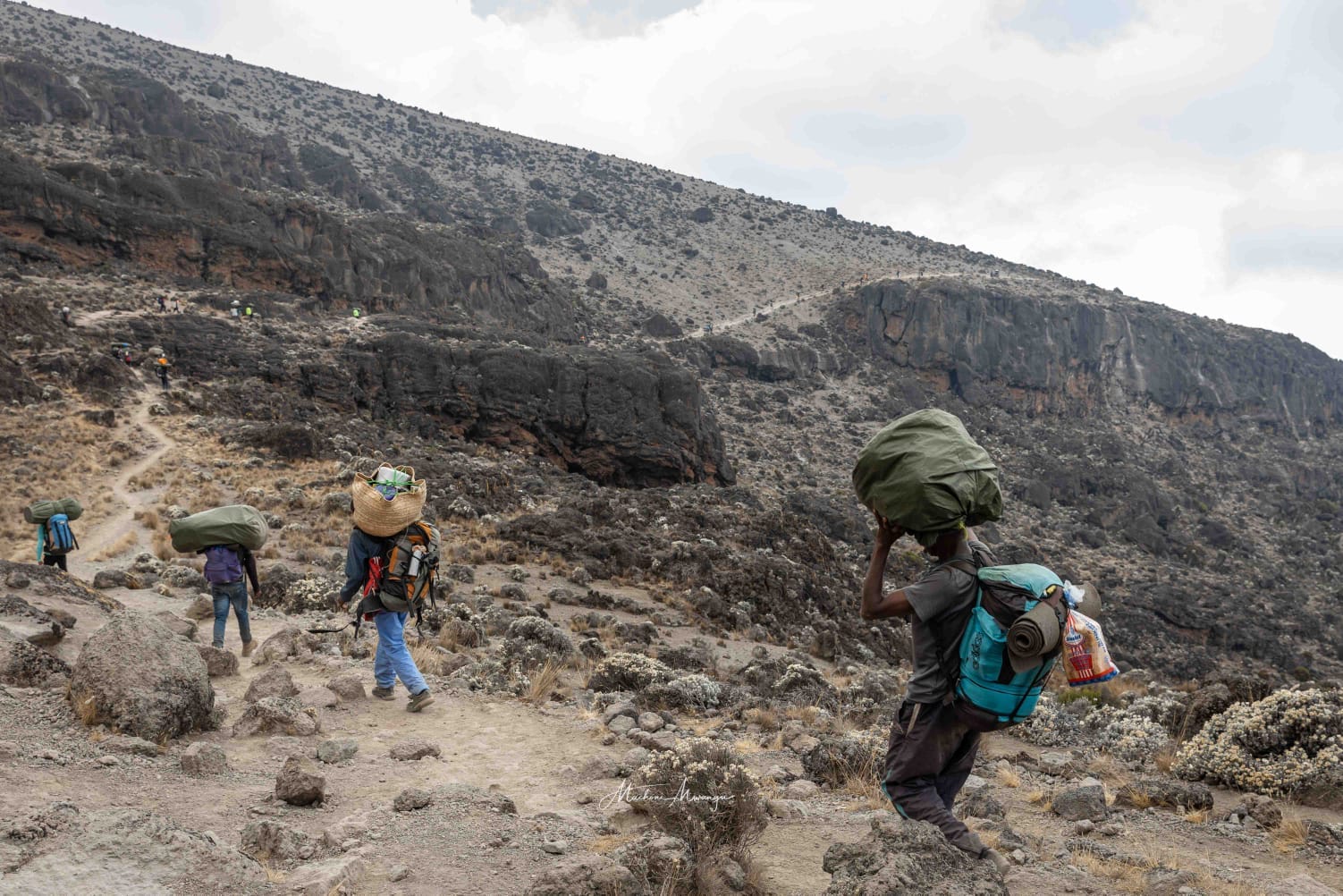
4. Porters
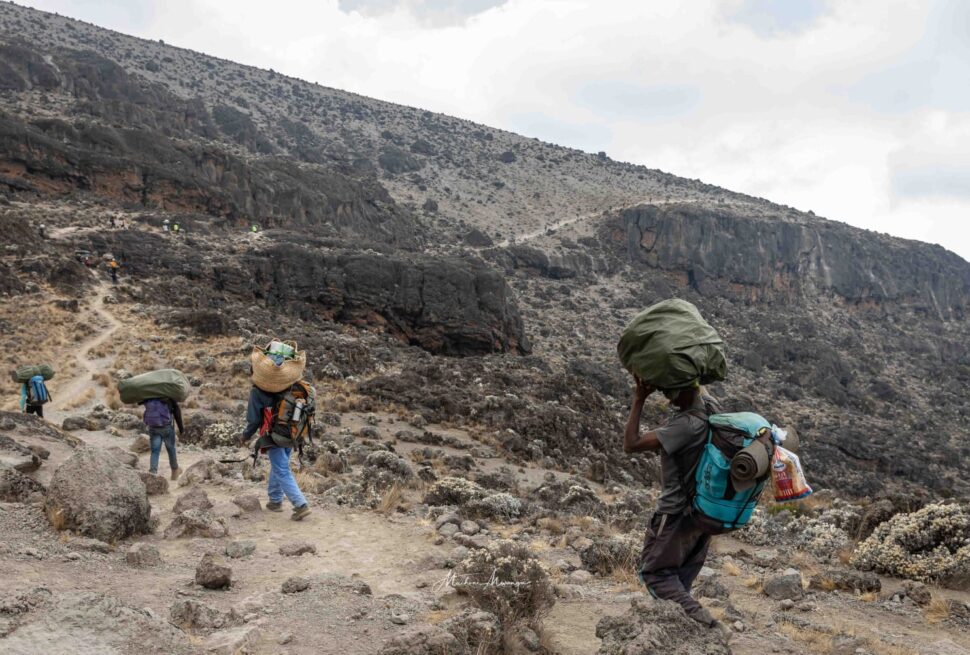
Porters carry much of the equipment required for the trek.
Depending on the arrangement, they may carry:
- Tents
- Food
- Cooking equipment
- Group equipment
- Camping supplies
- Water
- Other trekking equipment
Porters often start earlier than trekkers and may reach camp before the group.
A common guideline is:
$5–10 per porter per day.
Because trekking teams can include several porters, the total porter tip can become substantial.
Why Are There So Many Porters?
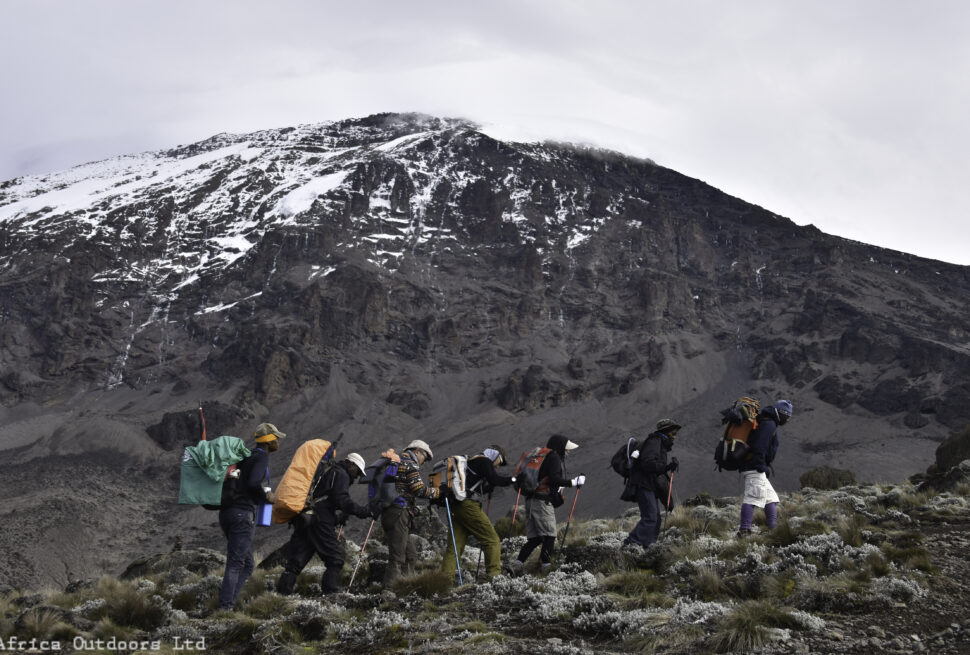
One reason climbers are sometimes surprised by the final tipping amount is that a Kilimanjaro expedition can involve considerably more staff than expected.
A group may have:
- 1 lead guide
- 1 or more assistant guides
- 1 cook
- Several porters
The exact number depends on factors such as:
- Group size
- Route
- Number of trekking days
- Amount of equipment
- Accommodation style
- Park regulations
- Group requirements
Therefore, ask for the expected team composition before your climb if you want to plan your tipping budget accurately.
Should You Tip Individually or as a Group?
Both approaches can be used, but group tipping is commonly organized at the end of the trek.
One practical method is to collect the group’s contribution and distribute tips according to the team’s roles.
For example, after completing the trek, the climbers can meet with the guides and present the tips collectively.
This can make the process easier, particularly when there are many porters.
When Should You Give the Tip?
Tips are generally given at the end of the trek, rather than every day.
A common arrangement is:
- Complete the summit and descent.
- Reach the final trekking point or park gate.
- Meet the trekking team.
- Thank the team.
- Distribute the tips.
Some groups prefer to give tips during a short tipping ceremony or team gathering.
Should You Tip in US Dollars or Tanzanian Shillings?
US dollars are widely used by international visitors in Tanzania, including for tipping.
However, Tanzanian shillings can also be used.
If using US dollars:
- Bring clean notes.
- Avoid heavily damaged notes.
- Carry smaller denominations where possible.
- Keep your tipping money separate from your general spending money.
You can also ask your trekking organizer before departure whether the team prefers dollars or Tanzanian shillings.
Is Tipping Mandatory?
Tipping should generally be viewed as a gratuity for good service, not as a mandatory government fee.
However, tipping is an established part of the Kilimanjaro trekking culture, and climbers should budget for it before the trek.
The advertised trekking price and your tipping budget should therefore be considered separately.
What If the Service Was Excellent?
If your guide, cook or porter provided exceptional service, you can give more than the suggested guideline.
For example, you may decide to give more because:
- The guide provided excellent support during the summit
- The team handled an emergency professionally
- The cook consistently prepared excellent meals
- Porters provided exceptional assistance
- The team went beyond the normal responsibilities
There is no requirement to stick rigidly to a particular amount.
What If the Service Was Poor?
Tipping does not mean you have to ignore serious problems.
If there were significant issues involving:
- Safety
- Respect
- Professional conduct
- Treatment of staff
- Unexplained charges
- Failure to provide agreed services
you should raise the issue with the trekking operator or appropriate authority.
A tip should reflect the service you actually received.
Example Tipping Budget for One Climber
Suppose you are joining a 7-day Kilimanjaro trek with:
- 1 lead guide
- 1 assistant guide
- 1 cook
- 6 porters
Using the middle of the suggested ranges:
| Team member | Daily guideline | 7 days |
|---|---|---|
| Lead guide | $25 | $175 |
| Assistant guide | $20 | $140 |
| Cook | $12.50 | $87.50 |
| 6 porters | $7.50 each | $315 |
| Estimated total | $717.50 |
Divided among 5 climbers, that would be approximately:
$144 per climber.
This demonstrates why the number of staff matters when planning your tipping budget.
A More Practical Way to Budget
Instead of trying to calculate everything before you know the team size, budget approximately:
Shorter 5–6 day trek
About $100–$180 per climber
7-day trek
About $120–$200 per climber
8-day or longer trek
About $150–$250+ per climber
These are planning ranges rather than official rates. Your actual amount can be higher or lower depending on the team size and the service received.
Tips for Fairly Distributing Tips
If you are travelling in a group, agree on the tipping budget before reaching the mountain.
You can ask:
“How many guides, assistant guides, cooks and porters will be in our team?”
Then calculate the approximate total before departure.
This avoids surprises at the end of the trek.
It is also useful to make sure that tips intended for porters are actually distributed to the individual porters rather than simply handing one large amount to one person without knowing how it will be shared.
Kilimanjaro Tipping Checklist
Before your trek, budget for:
- ✅ Lead guide
- ✅ Assistant guide(s)
- ✅ Cook
- ✅ Porters
- ✅ Cash in appropriate denominations
- ✅ Separate tipping money
- ✅ Extra amount for exceptional service
Remember that tips are separate from your trekking price unless your booking specifically states otherwise.
Final Kilimanjaro Tipping Guide
As a simple starting point:
Guide: $20–30/day
Assistant guide: $15–25/day
Cook: $10–15/day
Porter: $5–10/day
For many climbers, setting aside roughly $100–$200 per person for a typical Kilimanjaro trek is a reasonable starting budget, but the actual amount should be adjusted according to the trek duration, number of staff and quality of service.
The most important thing is to ask about the expected trekking team and tipping arrangements before you climb, so you know exactly what to budget.