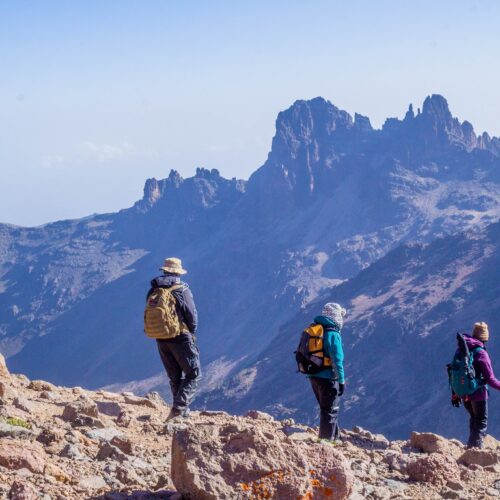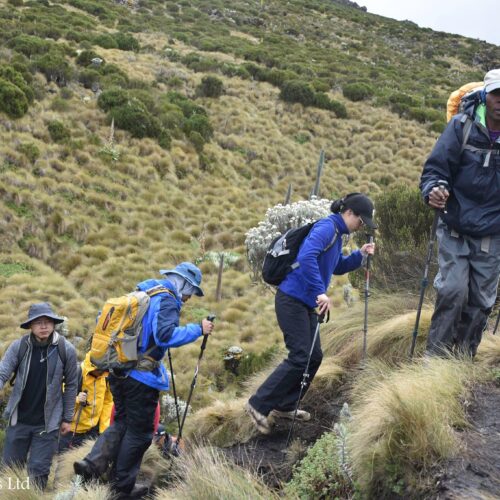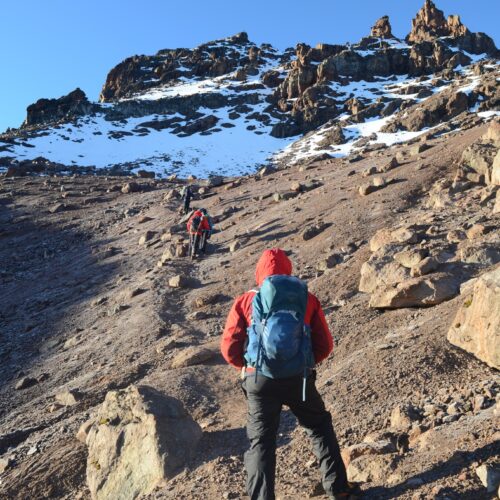
The 6-day Marangu Route is one of the classic ways to climb Mount Kilimanjaro and is the only standard route where trekkers sleep in mountain huts rather than tents. The additional acclimatization day at Horombo is an important advantage over the shorter 5-day itinerary.
| Day | Route | Altitude | Approx. walking |
|---|---|---|---|
| 1 | Marangu Gate → Mandara Hut | 1,860 → 2,720 m | 8 km / 3–5 hrs |
| 2 | Mandara → Horombo Hut | 2,720 → 3,720 m | 12 km / 5–7 hrs |
| 3 | Acclimatization at Horombo | 3,720 m | 4–6 km / 3–4 hrs |
| 4 | Horombo → Kibo Hut | 3,720 → 4,700 m | 9–10 km / 5–7 hrs |
| 5 | Kibo → Uhuru Peak → Horombo | 4,700 → 5,895 → 3,720 m | 18–21 km / 11–16 hrs |
| 6 | Horombo → Marangu Gate | 3,720 → 1,860 m | 18 km / 5–7 hrs |
Starting altitude: approximately 1,860 m
Mandara Hut: approximately 2,700–2,720 m
Distance: about 8 km
Walking time: 3–5 hours
Habitat: Montane rainforest
Overnight: Mandara Hut
After breakfast in Moshi, drive to Marangu Gate, where you complete park registration and meet the mountain crew.
The trek begins on a relatively gentle trail through the beautiful montane rainforest. The forest is lush and can be particularly wet, so rain protection is important.
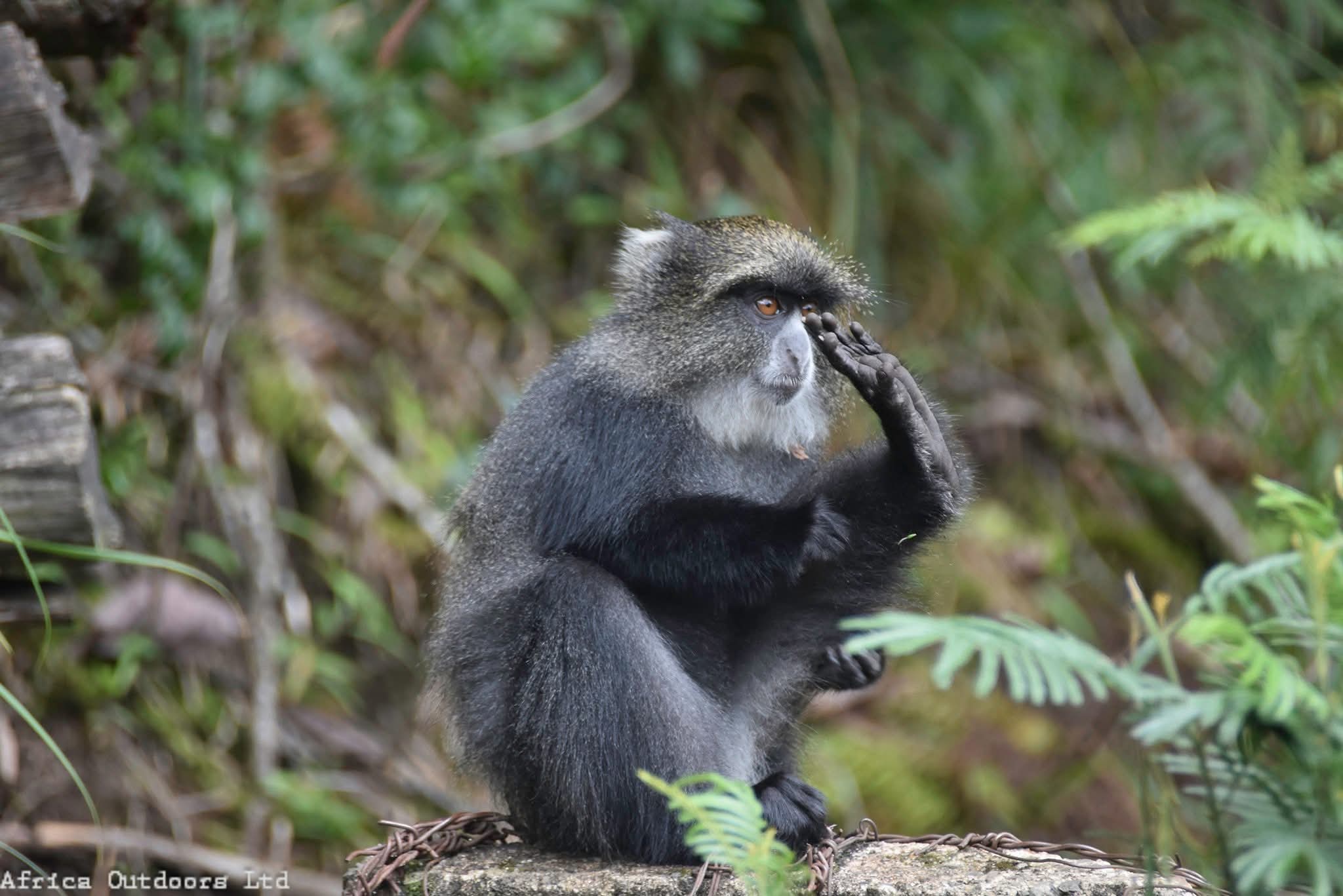
Along the way you may see birds and, depending on conditions, monkeys including black-and-white colobus monkeys.
The trail gradually climbs toward Mandara Hut. After arriving, you have time to settle into the mountain hut, have dinner and rest.
Optional Maundi Crater walk
If time and weather permit, your guide may take you on a short walk toward Maundi Crater. This provides views toward the surrounding landscape and is a pleasant way to spend the afternoon without undertaking a strenuous additional hike.
Dinner and overnight at Mandara Hut.
Starting altitude: approximately 2,720 m
Horombo Hut: approximately 3,720 m
Distance: about 12 km
Walking time: 5–7 hours
Habitat: Moorland and heath
Overnight: Horombo Hut
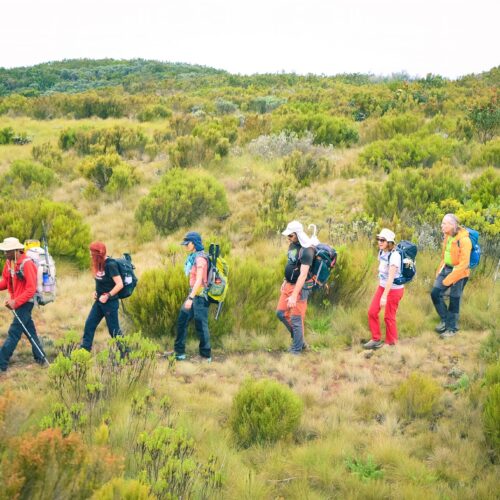
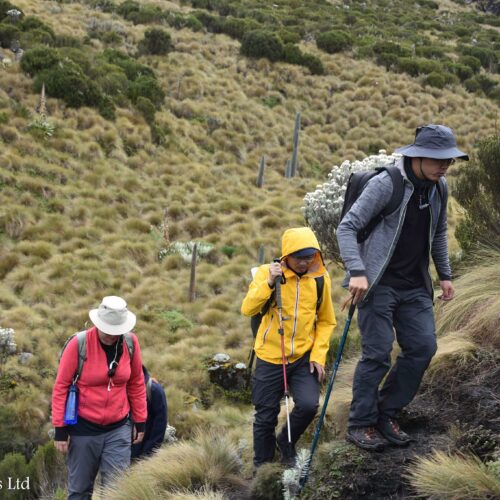
After breakfast, leave the rainforest behind as the vegetation gradually changes into heath and moorland.
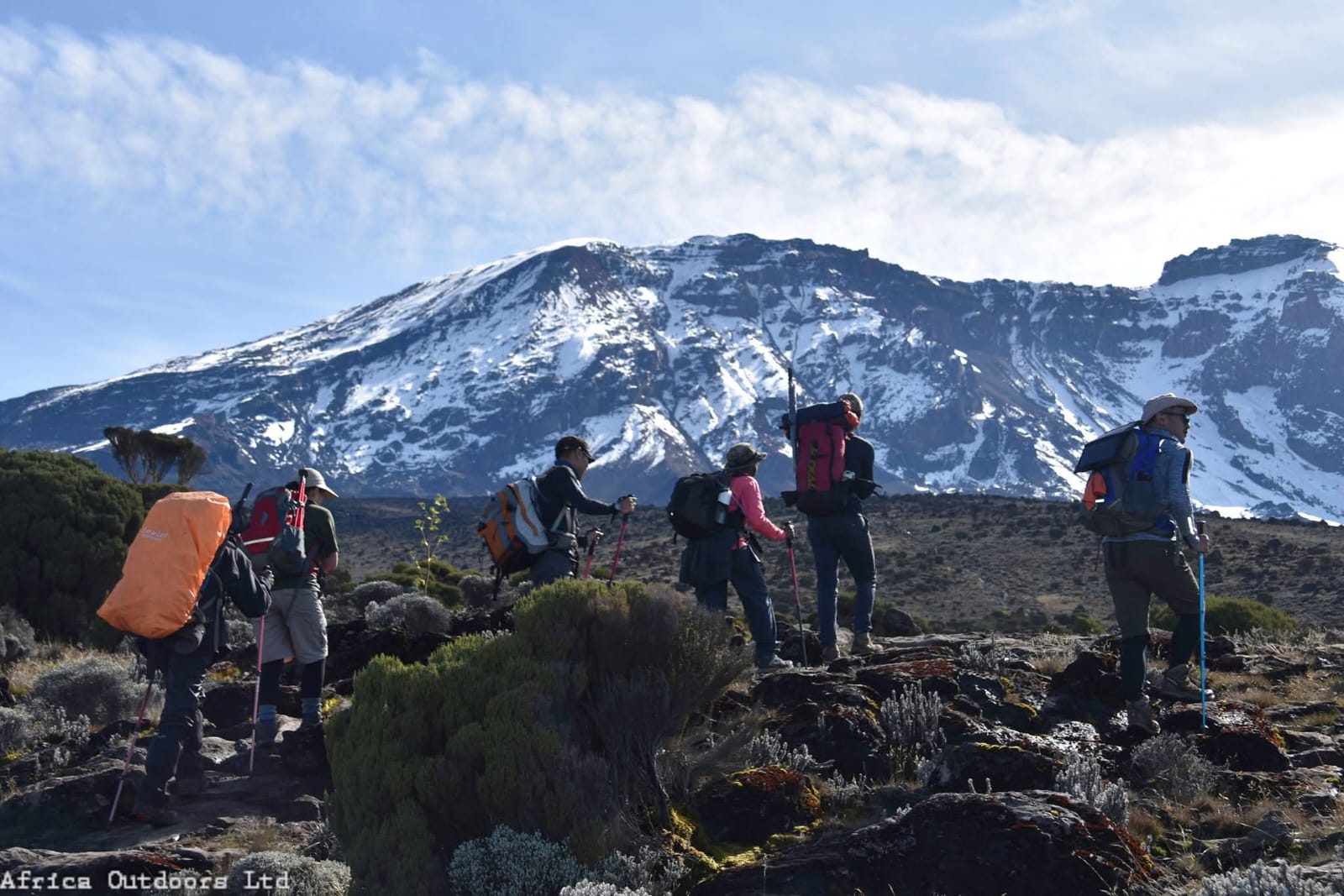
The trail becomes more open, providing increasingly impressive views of Kibo and Mawenzi, the two major volcanic cones of Kilimanjaro.
You continue gradually uphill toward Horombo Hut. Giant lobelias, groundsels and other high-altitude vegetation become increasingly common.
Because you are gaining significant altitude today, the pace should be deliberately slow.
"Pole pole" — slowly, slowly — is particularly important.
After arriving at Horombo Hut, enjoy dinner and rest.
Dinner and overnight at Horombo Hut.
Starting altitude: approximately 3,720 m
Highest point during acclimatization hike: approximately 4,000 m or higher depending on route
Walking time: about 3–4 hours
Overnight: Horombo Hut
This is the key difference between the 6-day and 5-day Marangu itineraries.
Instead of immediately continuing toward Kibo, you spend another night at Horombo to give your body additional time to adjust to altitude.
After breakfast, undertake a relatively short acclimatization hike.
A common option is hiking toward Zebra Rocks and the surrounding higher slopes. Depending on conditions and the guide's assessment, the hike can be extended toward the Mawenzi area.
The objective is not to exhaust yourself. The idea is to walk higher during the day and return to sleep at Horombo, allowing your body to adapt progressively.
Afternoon
Return to Horombo Hut for lunch and spend the afternoon relaxing.
Use this time to:
- Hydrate well
- Eat properly
- Rest your legs
- Check your summit clothing and equipment
- Discuss the summit plan with your guide
- Report any symptoms of altitude sickness
Dinner and overnight at Horombo Hut.
Starting altitude: approximately 3,720 m
Kibo Hut: approximately 4,700 m
Distance: approximately 9–10 km
Walking time: 5–7 hours
Habitat: Alpine desert
Overnight: Kibo Hut
After breakfast, begin the trek toward Kibo.
The landscape changes dramatically as you leave the vegetation behind and enter the high-altitude alpine desert.
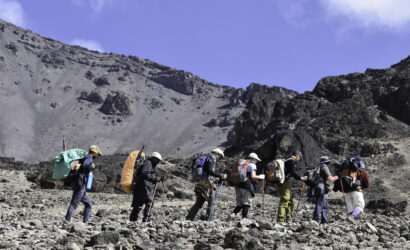
The trail crosses the famous Saddle, the broad area between Mawenzi Peak and Kibo Peak.
There is little vegetation here, and the environment becomes increasingly barren, dry and exposed.
You should maintain a slow and steady pace because you are now approaching 4,700 m.
The trail eventually reaches Kibo Hut, the final accommodation point before the summit attempt.
Afternoon and evening
Arrive at Kibo Hut, have an early dinner and prepare your equipment for the summit.
Your guide will normally explain:
- Summit departure time
- Clothing requirements
- Water requirements
- Headlamp use
- Summit safety procedures
- Signs of altitude sickness
Try to sleep as much as possible before the summit attempt.
Dinner and overnight at Kibo Hut.
Kibo Hut: approximately 4,700 m
Uhuru Peak: 5,895 m
Horombo Hut: approximately 3,720 m
Walking time: approximately 11–16 hours
This is the hardest day of the trek.
Midnight/early morning: Summit attempt
You normally wake around midnight, have a light snack or hot drink and prepare for the summit.
The climb begins in darkness.
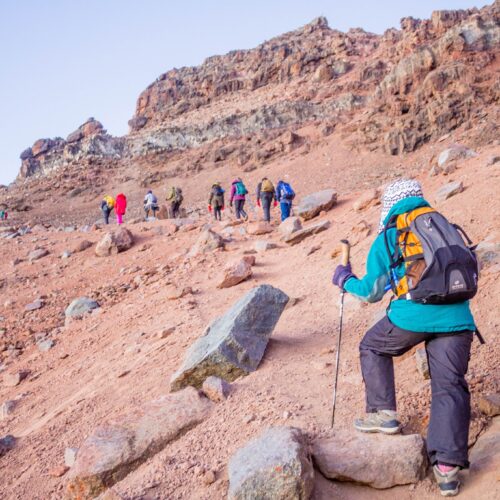
The trail becomes steep as you ascend the volcanic scree toward Hans Meyer Cave and then toward Gilman's Point on the crater rim.
The ascent is slow and physically demanding because of the altitude.
Your guide will encourage a very slow pace, often using the traditional pole pole approach.
Gilman's Point
At approximately 5,700 m, you reach Gilman's Point on the crater rim.
For some climbers, reaching Gilman's Point is already a major achievement.
From here, the trail continues around the crater rim toward Uhuru Peak.
Stella Point
You continue along the crater rim toward Stella Point, approximately 5,739 m.
From here, the final section toward Uhuru Peak follows the crater rim.
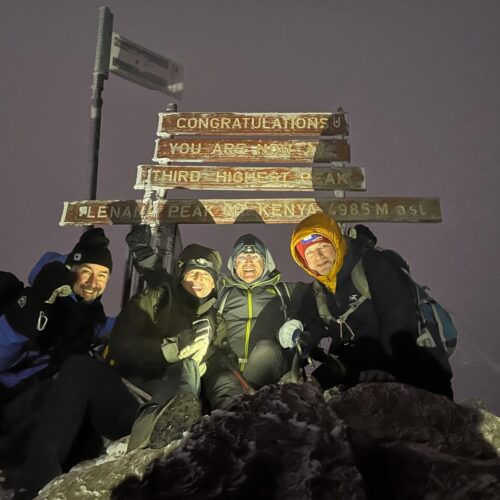
Uhuru Peak – 5,895 m
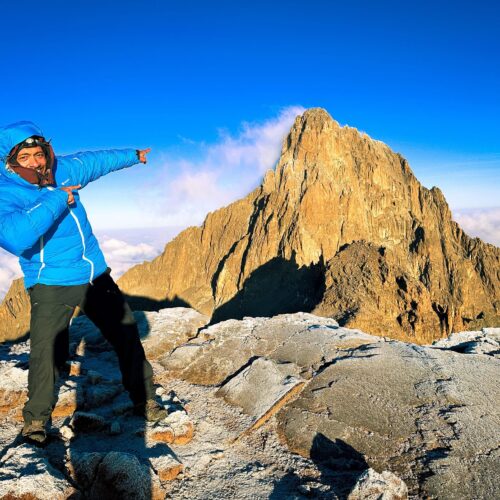
Eventually you reach Uhuru Peak, the highest point on Mount Kilimanjaro and the highest point in Africa.
Take time for photographs and enjoy the summit experience, but avoid staying unnecessarily long because of the extreme altitude and cold.
After the summit, begin the descent.
Descent to Kibo Hut
Descend from the summit toward Kibo Hut.
The descent is usually much faster than the ascent, although the loose volcanic scree can make it tiring.
At Kibo Hut, take a short rest, eat and drink.
Kibo Hut – Horombo Hut
After resting, continue down toward Horombo Hut.
This is a very long day, but descending to approximately 3,720 m provides significant relief from the extreme altitude of the summit zone. Typical published itineraries put the entire summit day at roughly 12–16 hours.
Dinner and overnight at Horombo Hut.
Starting altitude: approximately 3,720 m
Marangu Gate: approximately 1,860 m
Distance: approximately 18 km
Walking time: 5–7 hours
Habitat: Moorland → rainforest
After breakfast, begin the final descent.
You retrace the trail through the moorland toward Mandara Hut, where you normally stop for a short break or lunch.
From Mandara, the trail continues downhill through the beautiful rainforest.
The atmosphere is very different from summit day: temperatures become warmer, vegetation becomes greener and oxygen levels increase as you descend.
Eventually you arrive at Marangu Gate.
After completing the park exit procedures, your guide and crew will normally complete the farewell arrangements.
Summit certificates
Successful climbers can receive their appropriate summit certificates at the gate, depending on the summit point reached.
You then meet your transfer vehicle and drive back to Moshi.
End of the 6-day Marangu Route trek.