
Rongai Route at a Glance
| Item | Details |
|---|---|
| Duration | 6 days / 5 nights on the mountain |
| Starting point | Rongai/Nalemoru Gate |
| Starting elevation | Approximately 1,950–2,360 m, depending on gate/itinerary |
| Summit | Uhuru Peak – 5,895 m |
| Descent | Marangu Gate |
| Accommodation | Mainly mountain tents; hut accommodation may be used on the descent |
| Route character | Remote northern approach, open moorland and alpine desert |
| Difficulty | Moderate to challenging, particularly summit day |
| Main camps | Simba, Kikelewa, Mawenzi Tarn, Kibo, Horombo |
| Total walking distance | Approximately 70–75 km, depending on the exact itinerary |
Published itineraries differ slightly in camp elevations, distances and whether the final pre-summit night is at Kibo Hut or School Hut, so the exact figures should be confirmed with the operator before booking.
Mount Kilimanjaro Rongai Route – 6 Days
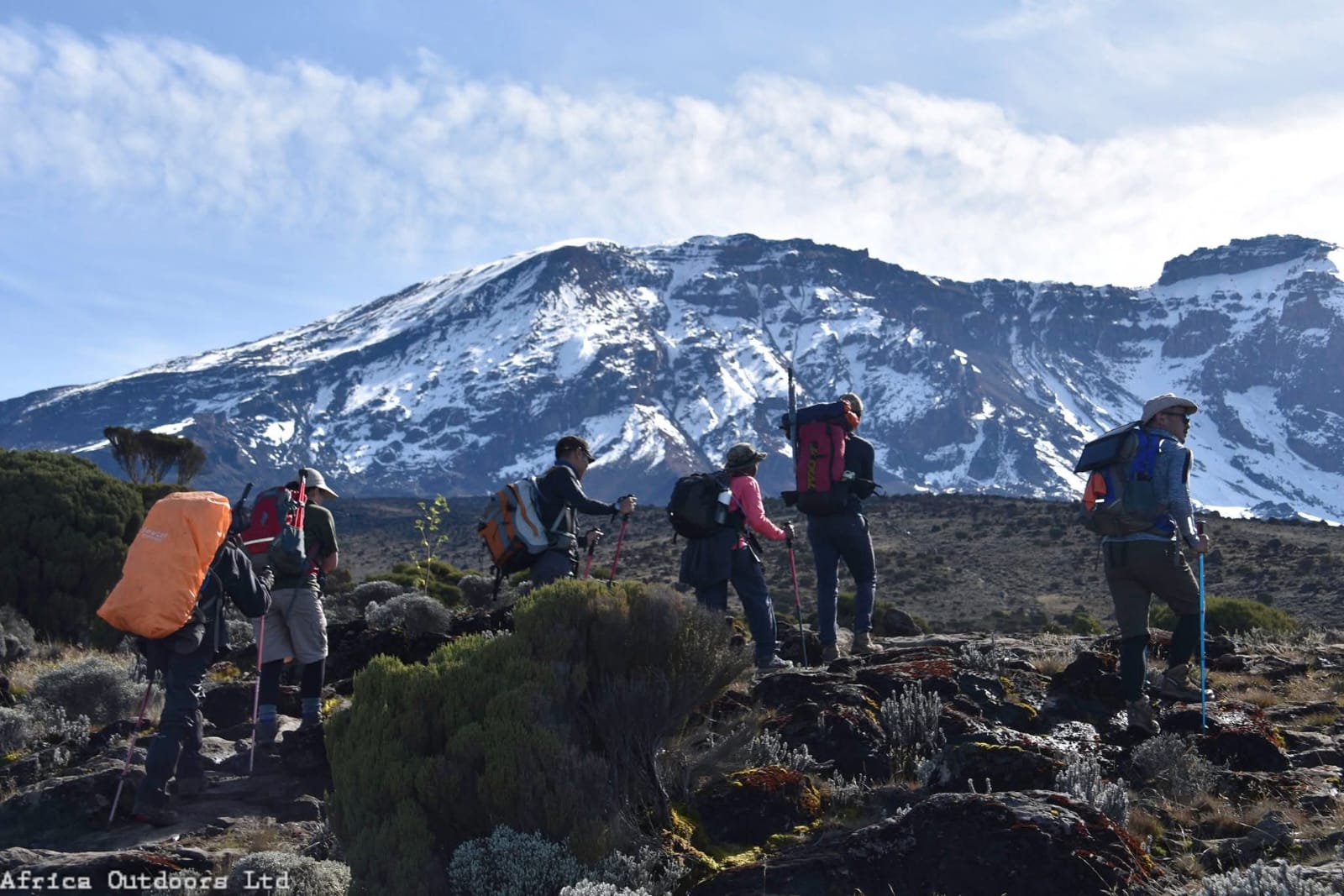
The 6-day Rongai Route is a north-side approach to Mount Kilimanjaro and is one of the quieter routes on the mountain. It starts near the Kenya–Tanzania border at Rongai/Nalemoru Gate and normally descends on the southern side through the Marangu Route, giving climbers a north-to-south traverse of Kilimanjaro. Uhuru Peak is 5,895 m (19,341 ft)
Elevation: approximately 1,950–2,650 m
Walking distance: approximately 8–9 km
Hiking time: 4–5 hours
Habitat: Cultivated land / montane forest
After breakfast in Moshi, you drive toward the northern side of Kilimanjaro and complete registration at Rongai/Nalemoru Gate.
The trek begins gradually through farmland before entering the forest. The northern side is generally quieter than some of Kilimanjaro's more heavily used southern approaches.
As you gain elevation, the forest becomes thinner and eventually opens toward moorland. From the higher sections you can begin to see the plains toward Kenya.
Overnight
Simba Camp – approximately 2,600–2,700 m
Dinner and overnight in your mountain tent.
Starting elevation: approximately 2,600–2,700 m
Ending elevation: approximately 3,600 m
Distance: approximately 10–15 km, depending on itinerary
Hiking time: 6–8 hours
Habitat: Moorland
After breakfast, the trail continues steadily upward.
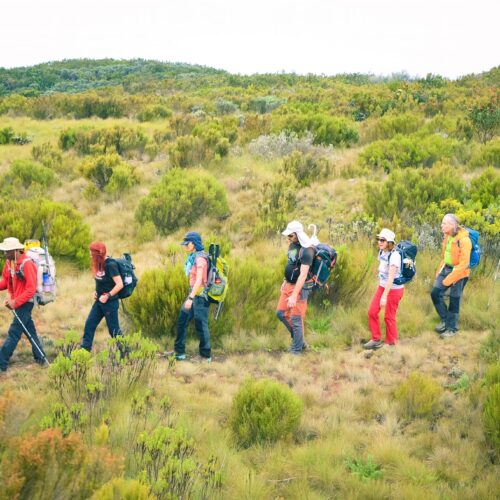
You leave the forest behind and enter the moorland zone, where the vegetation becomes shorter and the landscape more open.
A common route passes through Second Cave, which provides a useful rest and lunch stop before continuing toward Kikelewa.
The views toward Mawenzi Peak become increasingly impressive as you approach camp.
The second half of the day can feel considerably harder because of the altitude gain, so maintaining a slow, steady pace is important.
Overnight
Kikelewa Camp – approximately 3,600 m
Dinner and overnight in tents.
Elevation: approximately 3,600 → 4,300–4,330 m
Distance: approximately 5–8 km
Hiking time: 3–5 hours
Habitat: Moorland / alpine desert
This is a shorter but steeper day.
The trail climbs through increasingly sparse vegetation toward Mawenzi Tarn, one of the most spectacular camps on the Rongai Route.
Mawenzi Tarn is located beneath the dramatic rock formations of Mawenzi Peak, which rises to 5,149 m.
The afternoon gives you an opportunity to rest and allow your body to adjust to the increasing altitude.
Some itineraries include an acclimatization walk around Mawenzi Tarn.
Overnight
Mawenzi Tarn Camp – approximately 4,300 m
Dinner and overnight in tents.
Elevation: approximately 4,330 → 4,700 m
Distance: approximately 7–8 km
Hiking time: 4–6 hours
Habitat: Alpine desert
After breakfast, you leave Mawenzi Tarn and cross the famous Saddle, the broad alpine desert between Mawenzi and Kibo.
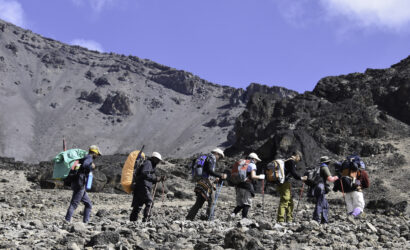
There is very little vegetation here, and the landscape becomes increasingly rocky and barren.
You gradually approach Kibo, the highest of Kilimanjaro's three volcanic cones.
The afternoon is deliberately quiet because you need to conserve energy for the summit attempt.
You have an early dinner and prepare your summit clothing and equipment before going to sleep.
Overnight
Kibo Hut – approximately 4,700 m
You normally rest for several hours before beginning the summit climb around midnight.
The Summit Day
Kibo Hut: ~4,700 m
Uhuru Peak: 5,895 m
Horombo Hut: ~3,720 m
Total hiking: approximately 12–16+ hours
This is the longest and most physically demanding day of the trek.
You normally wake around midnight, have a light meal or hot drink and begin climbing in darkness.
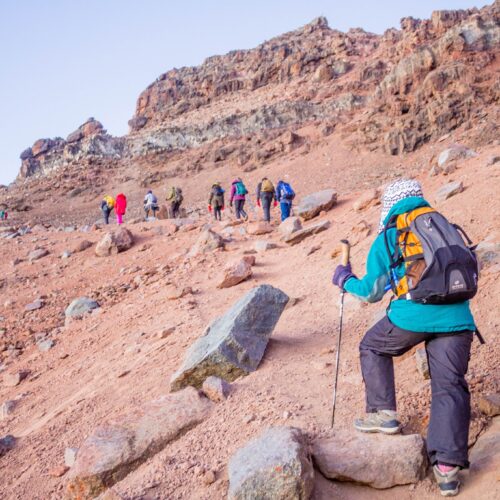
The trail becomes steep and rocky as you approach the crater rim.
Kibo Hut → Gilman's Point
The climb is slow because of the altitude.
The trail leads upward through loose volcanic scree toward the crater rim.
Gilman's Point is approximately 5,681 m.
From here, you are on the crater rim.
Gilman's Point → Stella Point
You continue around the crater rim toward Stella Point, approximately 5,739 m.
Depending on weather, fitness and altitude response, this section can be extremely demanding.
Stella Point → Uhuru Peak
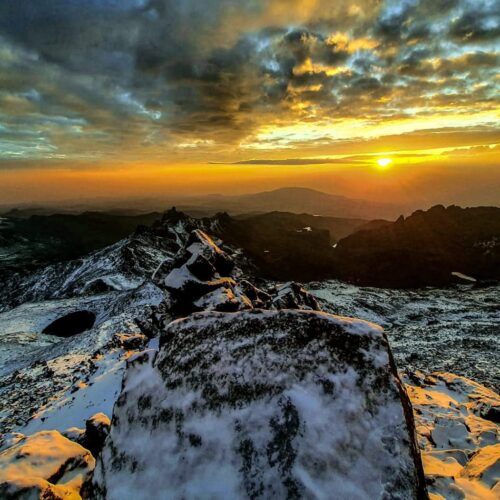
From Stella Point, the trail continues around the crater rim toward Uhuru Peak, the highest point in Africa.
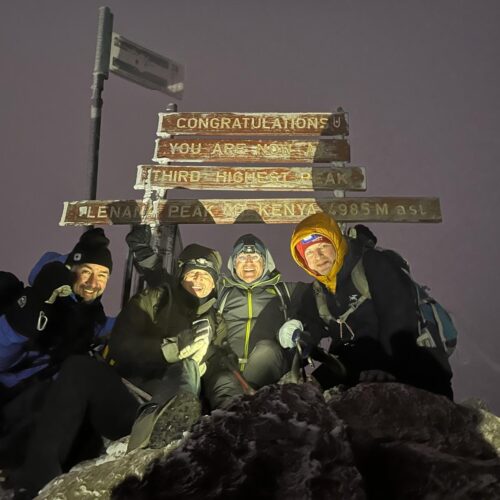
Uhuru Peak – 5,895 m
You normally spend a short time at the summit for photographs and to appreciate the views before beginning the descent.
Uhuru Peak → Kibo Hut
The descent is considerably faster than the ascent, but the loose volcanic scree can make it tiring.
You return to Kibo Hut for a short rest and refreshments.
Kibo Hut → Horombo Hut
After resting, you continue descending toward Horombo Hut.
This is still a long day, so climbers are usually tired by the time they reach Horombo.
Overnight
Horombo Hut – approximately 3,720 m
Dinner and overnight.
The standard 6-day itinerary places the summit attempt on Day 5 and then descends to Horombo.
Starting elevation: approximately 3,720 m
Marangu Gate: approximately 1,860–1,900 m
Hiking time: 5–7 hours
Habitat: Moorland → rainforest
After breakfast, you begin the final descent.
The trail passes through the moorland before entering the lush montane rainforest.
As you descend, the vegetation becomes thicker and the temperature warmer.
Eventually you reach Marangu Gate, where you complete the park exit procedures.
After completing the trek, you meet your vehicle and transfer back to Moshi or your onward accommodation.